

The next time you find yourself wedged between a stranger’s elbow and a departure board’s glare, take a moment to marvel—not at the cramped legroom, but at the quiet hostility baked into every airport seat. It’s not the kind that announces itself with barbed wire or a no-trespassing sign. Instead, it’s a calculated, almost surgical indifference, woven into the ergonomics, the angles, the very materials that cradle millions of travelers daily. Airport seating isn’t designed to comfort; it’s engineered to regulate, to nudge, to subtly enforce the rhythms of transit without ever raising its voice. This is the invisible architecture of discomfort, a silent choreography of angles and edges that shapes how we wait, how we move, and ultimately, how we surrender to the system.
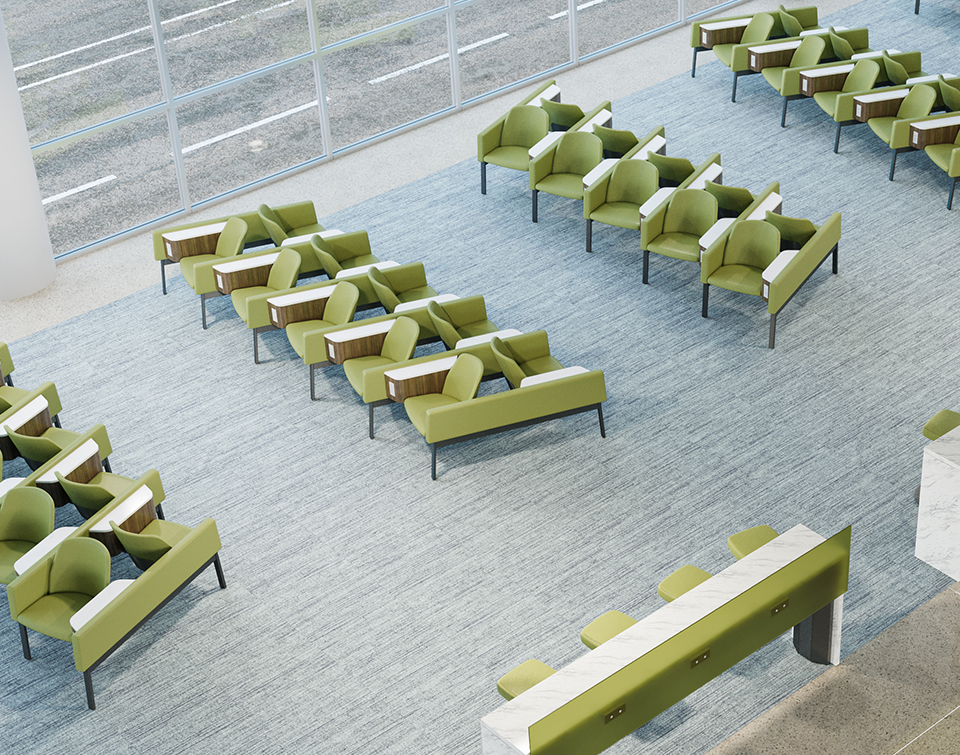
The Tyranny of the Right Angle: Why 90 Degrees Is the Ultimate Power Move
Picture the standard airport seat: a rigid rectangle, its back a perfect perpendicular to the seat, its edges sharp enough to double as a paperweight. This isn’t an accident of design—it’s a statement. The 90-degree angle is the architectural equivalent of a raised eyebrow: it says, “You are here to wait, not to linger.” Unlike the reclined embrace of a theater seat or the plush surrender of a living room couch, airport seating refuses to cradle. It insists on upright posture, a subtle reminder that you are neither guest nor resident, but a transient in transit.
This geometry isn’t just aesthetic; it’s behavioral. Studies on human posture in public spaces reveal that sharp angles discourage prolonged occupation. Your spine protests. Your shoulders tense. The body, ever the reluctant participant in social engineering, begins to fidget—shifting weight, crossing legs, seeking escape. The seat doesn’t need to be uncomfortable; it only needs to be uninviting. In this way, the right angle becomes a silent sentinel, ensuring that no one overstays their welcome in the purgatory of gate B12.
The Illusion of Choice: How Partitions and Dividers Shape Solitude
Modern airports have elevated this hostility to an art form with the introduction of seating partitions—those slender, often transparent barriers that slice through rows like the teeth of a comb. At first glance, they appear to offer privacy, a modicum of personal space in the chaos of crowds. But look closer. These dividers don’t just separate; they isolate. They transform what could be a shared experience of collective exhaustion into a series of solitary islands, each passenger marooned in their own orbit of anxiety.
The psychological effect is profound. In a space where human connection might soften the edges of stress, the partitions enforce a cold individualism. You can’t share a glance with the traveler beside you. You can’t form an impromptu alliance against the delayed flight. Instead, you’re left to confront your own reflection in the glass or the polished metal of the divider, a constant reminder of your aloneness in the machine. Even the act of leaning toward a neighbor to ask for the time becomes an awkward negotiation, a breach of the unspoken rules etched into the seat’s design.

The Material Paradox: Hard Surfaces and the War on Comfort
Run your fingers along the edge of an airport seat. Feel the cool, unyielding plastic or the slick, unforgiving metal. These aren’t materials chosen for their ability to cradle; they’re chosen for their durability and ease of cleaning. Spills, sweat, and the occasional errant shoe polish must be wiped away with surgical precision. Comfort is secondary to impermeability. The result? A surface that repels rather than receives, that offers no give, no forgiveness for the weary traveler’s frame.
Even the upholstery, when it exists at all, is a study in minimalism. Thin, tightly woven fabric stretched over unforgiving foam does little to cushion the impact of hours spent in transit. It’s not designed to lull you into relaxation; it’s designed to keep you alert, to prevent the deep, restorative sleep that might make you miss your boarding call. The message is clear: this is not a place to sleep. This is a place to endure.
The Subtle Art of Discomfort: Temperature, Light, and the Unseen Hand
Hostility in airport seating isn’t confined to physical form. It’s also embedded in the environment that surrounds it. The air conditioning, blasted at arctic levels, ensures that no one dares to doze off. The overhead lighting, harsh and unrelenting, strips away the illusion of coziness. Even the floor beneath your feet is part of the design—a smooth, seamless expanse that offers no traction, no respite from the endless shuffle of shoes and wheels.
Consider the placement of power outlets and USB ports. They’re never within arm’s reach of the seat itself, forcing passengers to either stand awkwardly in the aisle or sprawl across the floor like a starfish to charge their devices. It’s a small inconvenience, but one that compounds the sense of being at the mercy of the space. The message is consistent: you are here to move, to wait, to adapt. The seat is not your ally.
From Hostility to Hospitality: Can Design Ever Be Kind?
If airport seating is a tool of control, then the question becomes: Can it ever be reimagined as a tool of kindness? Some airports are beginning to experiment. Curved seating that encourages conversation. Modular designs that allow for both solitude and connection. Materials that offer just enough give to ease the body’s protest. Even the partitions are being rethought—some now feature subtle curves or perforations that soften their edges without sacrificing the privacy they provide.
But these changes are slow, piecemeal. The inertia of airport design is vast, and the priorities—efficiency, cleanliness, crowd control—often outweigh the desire for comfort. Still, the shift is possible. It requires recognizing that travelers are not just bodies to be processed, but people to be accommodated. It requires asking not just how to move people through space, but how to make them feel less like cogs in a machine and more like guests in a transit lounge.

Next time you’re perched on an airport seat, take a moment to observe its design. Notice the angles, the materials, the way it shapes your posture and your mood. Recognize the quiet hostility in its refusal to comfort. But also, dare to imagine what it could be—a place of rest, of reflection, of fleeting connection in a world that moves too fast. The power to redesign isn’t just in the hands of architects and engineers; it’s in the hands of every traveler who dares to demand more from the spaces they occupy. The seat doesn’t have to be your adversary. It could be your ally. All it takes is the courage to ask for kindness in a system that has forgotten how.


Leave a Comment