

There’s something primal about watching molten metal transform from a shimmering liquid into a solid form, its edges sharp and unyielding. Sand casting, especially with Delft clay, brings that ancient alchemy into the home workshop, where the hum of a kiln replaces the roar of a foundry and the flicker of a torch stands in for the bellows of a master smith. It’s a process that feels both archaic and revolutionary—like bending time itself to coax creation from the earth. Whether you’re casting a delicate silver pendant or a rugged skull-shaped talisman, the method strips away the noise of modern life and leaves only the raw dialogue between fire, sand, and metal.
What draws people to sand casting at home isn’t just the promise of a finished piece. It’s the tactile rebellion against the sterile precision of 3D printing or the impersonal uniformity of mass production. In a world where everything is designed to be disposable, shaping molten metal by hand feels like an act of defiance. It’s slow craftsmanship in an age of instant gratification. And yet, beneath that defiance lies a deeper fascination: the way sand casting reveals the hidden geometry of objects, turning the mundane into the mythic with nothing more than patience and a steady hand.
The Allure of Delft Clay: Why This Sand is Different
Not all sands are created equal, and Delft clay—a fine, kaolin-rich molding sand—is the secret weapon of the home caster. Unlike coarse foundry sand, Delft clay holds intricate details with astonishing fidelity, allowing even the most delicate engravings to emerge unscathed from the casting process. Its grain structure is so uniform that it behaves like a liquid when compacted, flowing into every nook of a mold with the precision of a sculptor’s chisel. When dampened, it develops a velvety consistency, clinging to patterns like a second skin, yet it crumbles away effortlessly once the metal has cooled.
What makes Delft clay particularly enchanting is its dual nature. It’s both a medium and a collaborator. When you press a pattern into its surface, it doesn’t just accept the imprint—it seems to *invite* it, as if the clay itself is eager to reveal the hidden forms within. This responsiveness is why artists and artisans have favored it for centuries, from the Dutch potters of Delft (who gave the clay its name) to modern metalworkers chasing the perfect cast. The clay’s ability to capture the ephemeral—whether it’s the whisper of a leaf’s vein or the jagged silhouette of a skull—turns every mold into a temporary archive of intention.
Building the Flask: The Unsung Hero of Sand Casting
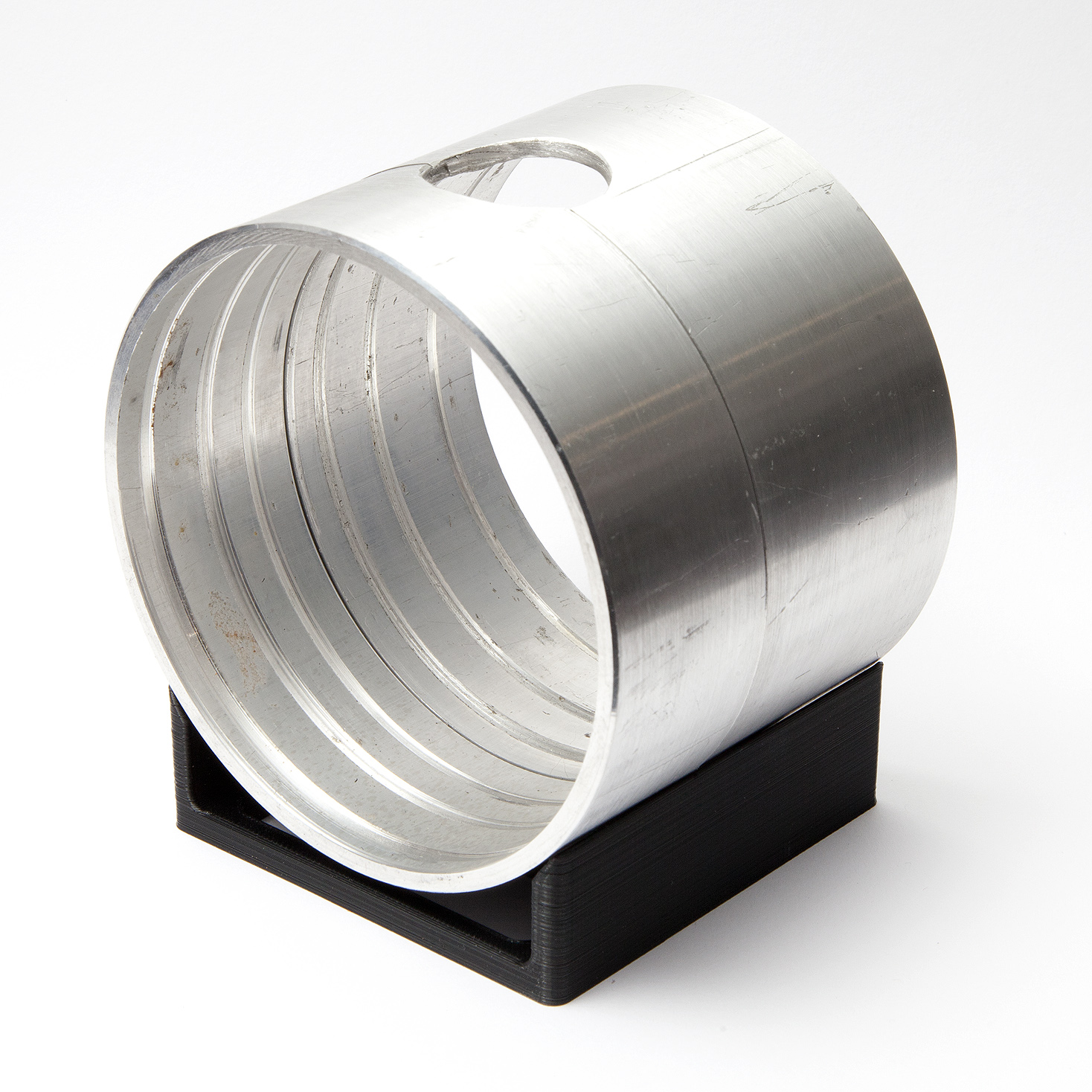
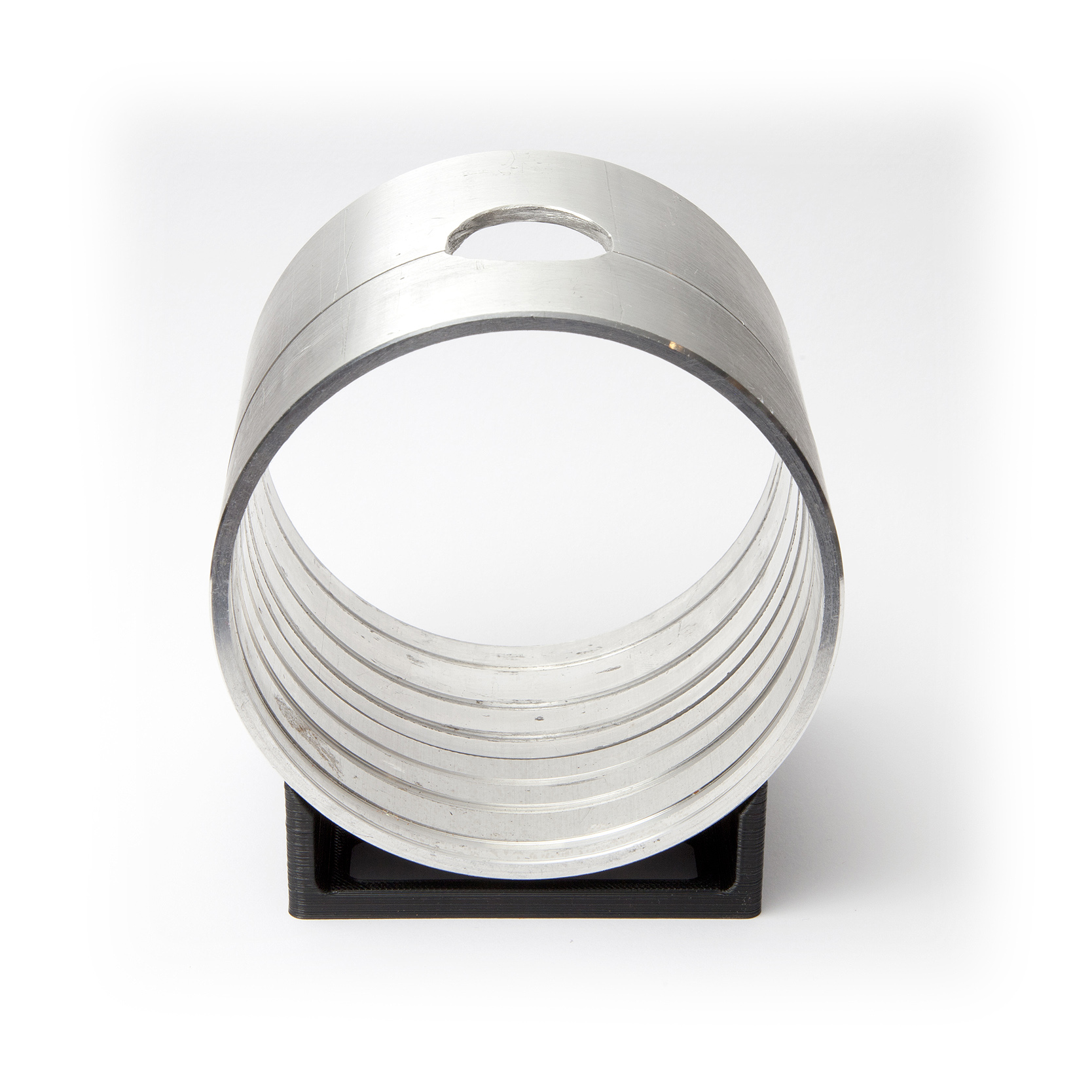
The flask, often overlooked in favor of the clay or the metal, is the silent guardian of the casting process. It’s the vessel that holds the chaos in check, ensuring that the sand doesn’t spill and the pattern doesn’t distort under the weight of molten silver. A well-constructed flask is a study in balance—sturdy enough to withstand the thermal shock of pouring, yet light enough to maneuver with ease. The large casting flask, like the one seen in the images, is a beast of burden in the workshop, capable of taming even the most ambitious projects.
Constructing a flask is less about brute force and more about geometry. The walls must be parallel, the corners square, and the clamps tight enough to prevent any seepage of liquid metal. Yet, within that rigidity lies a paradox: the flask must also be forgiving. It needs to release the sand cleanly once the casting is complete, leaving the hardened metal free to emerge like a phoenix from its sandy cocoon. The best flasks are often homemade, welded from steel or bolted together from plywood and aluminum, their imperfections adding character to the process. Each scratch, each dent, tells a story of previous casts, of lessons learned the hard way.
For the home caster, the flask is more than a tool—it’s a statement. It declares that this isn’t just a hobby; it’s a commitment to the craft. And when the first pour is successful, the flask becomes a trophy, its surfaces etched with the patina of heat and time.
The Pattern: From Concept to Mold in One Stroke
Every sand casting begins with a pattern, the blueprint that will dictate the final form of the metal. Patterns can be anything—a carved wooden block, a 3D-printed prototype, or even a found object like a shell or a bone. The key is in the translation: the pattern must be both an invitation and a boundary, guiding the metal into its desired shape while leaving room for serendipity. When working with Delft clay, the pattern’s surface texture becomes crucial. Smooth surfaces yield smooth casts, but rough, organic textures—like the grain of wood or the pitted surface of a skull—create casts with a tactile depth that machine-finished pieces can never replicate.
Carving a pattern is an exercise in patience. The material must be dense enough to withstand repeated impressions yet soft enough to yield under pressure. Wax, plaster, and even some plastics work well, but wood remains a favorite for its warmth and workability. The act of carving itself is meditative, a dialogue between the artist’s intent and the material’s resistance. Each stroke of the knife or gouge is a negotiation, a push-and-pull that reveals the hidden form within the block. And when the pattern is finally pressed into the clay, the moment of release is electric—the clay parts like a curtain, revealing the shape that was always there, waiting to be uncovered.
Melting the Metal: The Dance of Fire and Patience
There’s a moment in every casting session when the kiln or torch becomes the center of the universe. The metal, once dull and unassuming, begins to glow—first a faint amber, then a searing white-hot incandescence. This is the threshold where science and art collide. The temperature must be precise; too cool, and the metal won’t flow; too hot, and it will burn away the delicate details of the mold. For silver, the sweet spot hovers around 961°C (1762°F), a temperature that turns the metal into a shimmering, viscous liquid, capable of filling even the tiniest crevices of the mold.
The pouring itself is a ritual. The flask must be positioned just so, the metal stream steady and controlled. Too fast, and the sand will erode; too slow, and the metal will cool prematurely, leaving voids and imperfections. The sound of the pour is unforgettable—a hiss like a dragon’s breath, followed by the quiet sizzle of sand and steam. Then, the wait. The flask cannot be opened immediately; the metal must cool gradually to prevent cracking or warping. This is the purgatory of the casting process, where anticipation hangs thick in the air, and every tick of the clock feels like an eternity.
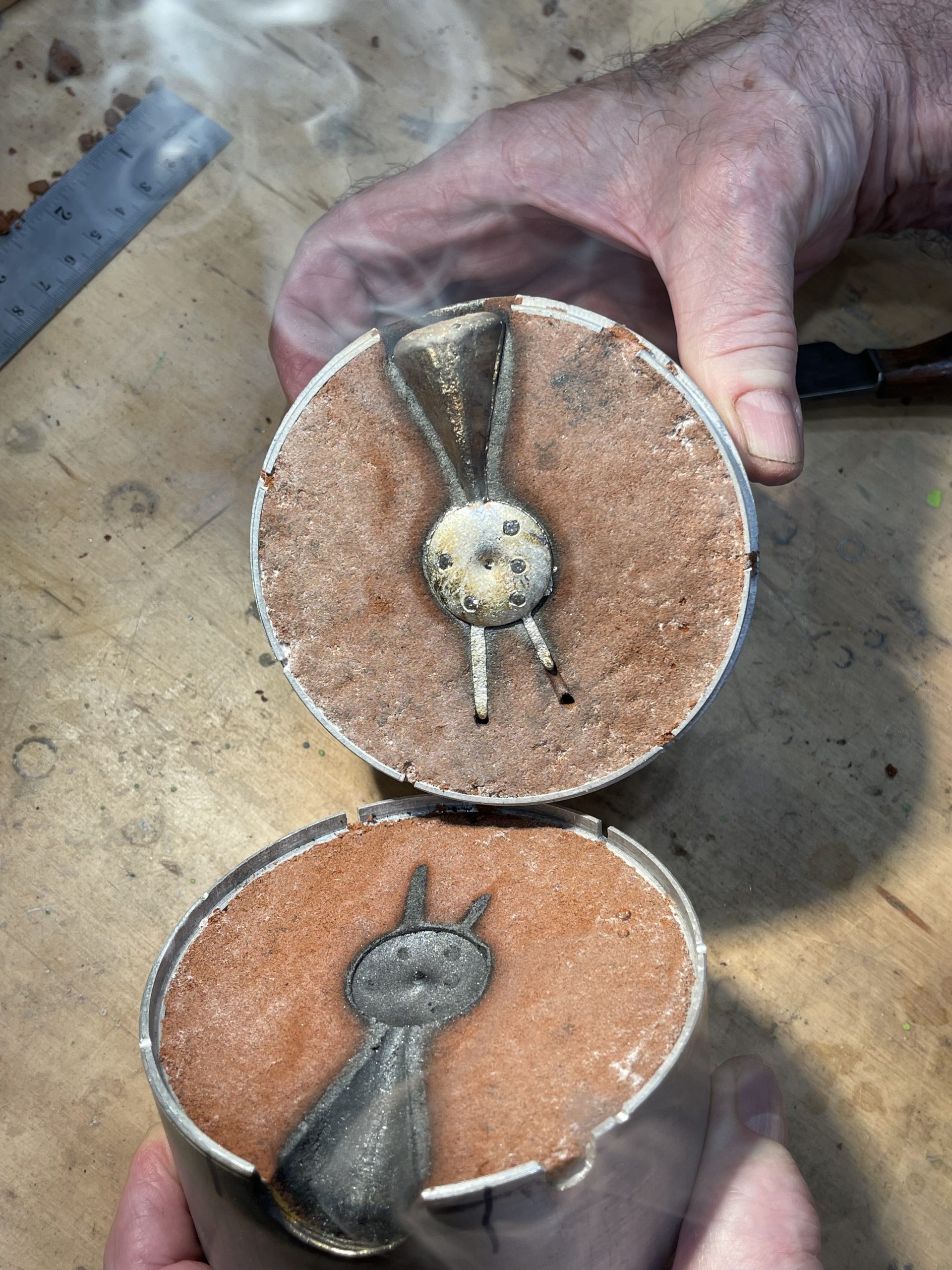
When the flask is finally cracked open, the reveal is always a surprise. Will the cast be perfect, or will the metal have found its own path, creating unexpected textures and flaws? The skull-shaped cast, in particular, seems to have a life of its own. Its hollow eyes and jagged jawline carry the weight of ancient rituals, as if it’s not just an object but a vessel for something deeper—a talisman, a relic, a piece of the unseen world made tangible.
The Aftermath: Finishing Touches and the Ghosts of the Process
Once the cast is freed from the sand, the real work begins. The sprues—the channels through which the metal flowed—must be sawed away, the rough edges filed smooth, and the surface polished to a mirror-like sheen or left with a raw, organic finish. For a silver skull, the choice of finish can dramatically alter its character. A high-polish finish makes it gleam like a relic from a lost civilization, while a brushed or matte surface gives it the gravitas of an artifact dug from the earth. The patina, too, plays a role. A light oxidization can deepen the shadows of the eye sockets and jaw, adding layers of mystery to the piece.
But the most fascinating part of the process is the evidence left behind in the sand. The mold, once a perfect negative of the pattern, is now a shattered relic, its fragments littered with tiny metal beads and veins of silver. These “sprue nuggets” are the ghosts of the pour, tangible proof of the energy expended to bring the cast to life. Some casters collect them, melting them down for future projects, while others display them as mementos of a successful pour. They’re a reminder that every casting is a collaboration between the caster and the material, a partnership where neither side emerges unchanged.
The Deeper Fascination: Why We’re Drawn to the Alchemy of Casting
Sand casting, at its core, is an act of controlled destruction. You start with a solid pattern, compress it into sand, and then melt it away with fire, only to have it reappear as something entirely new. It’s a metaphor for creation itself—something must be broken to make way for the next form. This cycle of destruction and rebirth is what makes the process so compelling. In a world where permanence is often prized above all else, sand casting embraces impermanence. The mold is temporary. The pattern is temporary. Even the metal, once cast, can be melted down and recast anew. There’s a freedom in that impermanence, a rejection of the idea that anything must last forever.
There’s also the element of risk. Sand casting is not for the faint of heart. One misstep in temperature, one flaw in the mold, and the entire project can be ruined. This unpredictability is part of its allure. It forces the caster to be present, to adapt, to trust their instincts. In an age of digital precision, where mistakes can be undone with a click, sand casting offers a raw, unfiltered experience. It’s a reminder that mastery isn’t about control—it’s about surrendering to the process and letting the material guide you.
And then there’s the object itself—the silver skull, the pendant, the talisman. These aren’t just pieces of metal; they’re vessels for meaning. A skull, in particular, carries centuries of symbolism. It’s a memento mori, a reminder of mortality, but it’s also a symbol of transformation. In alchemy, the skull represents the final stage of the magnum opus, the philosopher’s stone made manifest. When you hold a silver skull in your hand, you’re not just holding an object; you’re holding a piece of that ancient tradition, a fragment of the endless cycle of creation and decay.
That’s the real magic of sand casting at home. It’s not just about making things; it’s about participating in a ritual that’s as old as humanity itself. It’s about feeling the heat of the kiln, the weight of the flask, the cool touch of the finished metal. It’s about proving to yourself that you can shape the world, one grain of sand at a time.
The next time you see a piece of sand-cast metal, take a moment to consider what went into it. The hours of carving, the careful packing of the sand, the precise melting of the metal, the nerve-wracking pour, the slow reveal. It’s a process that demands patience, skill, and a willingness to embrace the unpredictable. But the reward—the moment when the sand falls away and the metal stands revealed—is worth every second. It’s a glimpse into the heart of what it means to create, to transform, to make something from nothing. And in the end, isn’t that what we’re all searching for?


Leave a Comment