

In the realm of handcrafted jewelry, few pieces command attention quite like a forged anticlastic cuff. These sculptural bracelets, born from the marriage of metal and imagination, are not merely accessories—they are declarations of artistry, resilience, and the raw beauty of imperfection. Yet, when the hammer meets the metal with less-than-stellar precision, the result can be a lumpy, uninspired lump that bears an uncanny resemblance to a humble tuber. Yes, your anticlastic cuff might just look like a potato. But fear not, intrepid metalworker. With a few strategic tweaks, that potato can transform into a masterpiece that turns heads and sparks conversations.
Let’s embark on a journey to understand why your anticlastic cuff might be masquerading as a spud—and, more importantly, how to elevate it from garden variety to gallery-worthy.
The Potato Paradox: Why Your Cuff Looks Like a Spud
At first glance, the anticlastic cuff is a marvel of geometry and metallurgy. Its curved, flowing form is designed to wrap elegantly around the wrist, catching the light and the eye in equal measure. But when the metal is overworked, under-annealed, or simply mishandled, the delicate balance of tension and form collapses. The result? A bracelet that sags in all the wrong places, bulges in others, and lacks the crisp, dynamic lines that define true anticlastic craftsmanship.
The culprit often lies in the early stages of forging. If the metal is not annealed frequently enough, it becomes work-hardened, losing its malleability and resisting the intended shape. The hammer strikes, instead of coaxing the metal into submission, merely distort it further, creating a surface that resembles the uneven contours of a russet potato. The edges may lack definition, the curves may feel forced, and the overall piece may lack the organic fluidity that makes anticlastic work so captivating.
Another common pitfall is the over-reliance on brute force over finesse. Anticlastic cuffs thrive on controlled, rhythmic hammering—a dance between the artisan and the metal. When the hammer becomes an instrument of destruction rather than creation, the metal rebels, warping into something unrecognizable. The key is to work with the material, not against it, allowing the grain structure to guide the form rather than dictate it.
The Alchemy of Annealing: Reclaiming Your Cuff’s Potential
If your cuff has already taken on a potato-like visage, all is not lost. The first step to redemption is annealing—a process as much about patience as it is about heat. Annealing softens the metal, restoring its ductility and allowing you to reshape it with intention. Heat the cuff to a dull red glow, then quench it in water or let it air-cool, depending on the metal. This thermal reset unlocks the metal’s potential, making it pliable once more.
But annealing is not a one-and-done solution. It’s a dialogue between you and the metal, a series of negotiations where you must listen as much as you act. After annealing, gently coax the cuff back into shape with light hammer blows, focusing on the areas that need refinement. Use a rawhide mallet or a nylon hammer to avoid marring the surface, and work in stages, annealing as needed to prevent work-hardening.
The goal is to restore the cuff’s structural integrity while preserving its character. A well-annealed cuff should feel alive in your hands, its curves responding to your touch with a kind of quiet resistance—like a dancer learning a new routine. The metal should flow, not fight, and the final piece should feel as though it was always meant to be.
The Geometry of Grace: Refining Your Cuff’s Form
Once the metal is malleable and responsive, it’s time to refine the form. This is where the true magic happens. Anticlastic cuffs are defined by their dynamic, three-dimensional curves, which create a play of light and shadow that is nothing short of mesmerizing. To achieve this, you’ll need to think in terms of planes and angles, not just lines and edges.
Start by establishing the primary curve—the gentle arc that will wrap around the wrist. This curve should be smooth and consistent, with no abrupt dips or rises. Use a mandrel or a curved stake to guide the metal, ensuring that the curve is even along its entire length. Next, focus on the anticlastic twist—the signature feature of these cuffs. This twist should be subtle but deliberate, creating a sense of movement and energy. Avoid over-twisting, as this can lead to a distorted, unbalanced piece.
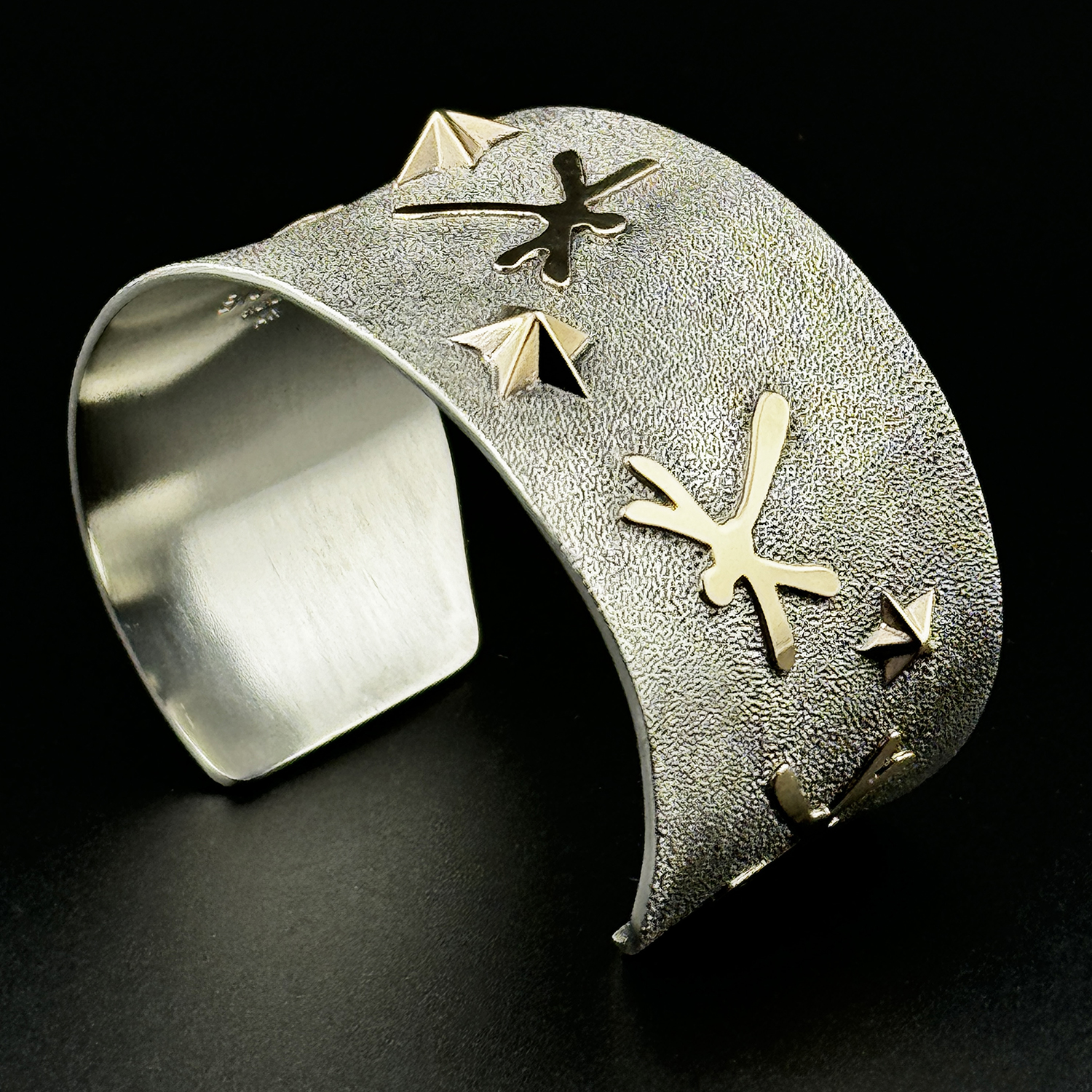
To refine the edges, use a file or a sanding stick to create crisp, clean lines. The edges should be sharp enough to catch the light but not so thin that they feel fragile. A well-finished edge is the hallmark of a masterful piece, a detail that elevates the cuff from mere accessory to wearable art.
The Finish That Elevates: Patina, Polish, and Presentation
A refined form is only half the battle. The finish of your cuff can make or break its appeal. A polished surface will catch the light and draw the eye, while a patina can add depth and character. The choice is yours, but the execution must be flawless.
For a bright, reflective finish, start with progressively finer grits of sandpaper, moving from 220 to 600 or higher. Then, use a polishing compound and a soft cloth to bring out the metal’s natural luster. For a more subdued, antique look, consider a liver of sulfur patina or a simple vinegar and salt solution. Apply the patina evenly, then seal it with a clear coat to protect the finish.
Presentation is also key. A well-crafted cuff deserves a presentation that does it justice. Consider a velvet-lined box or a sleek display stand. The way your piece is presented can enhance its perceived value and draw attention to its unique qualities.
From Potato to Masterpiece: The Final Transformation
With patience, precision, and a willingness to embrace the process, your anticlastic cuff can transcend its humble beginnings. What once looked like a potato can become a sculptural statement, a testament to the beauty of handcrafted metalwork. The key is to approach each step with intention, to listen to the metal, and to let the form emerge organically from the chaos.
Remember, every great piece begins as a rough idea, a lump of metal, a spark of inspiration. The difference between a potato and a masterpiece lies not in the material itself, but in the hands that shape it. So pick up your hammer, stoke the fire, and let the transformation begin. Your anticlastic cuff is waiting.


Leave a Comment