

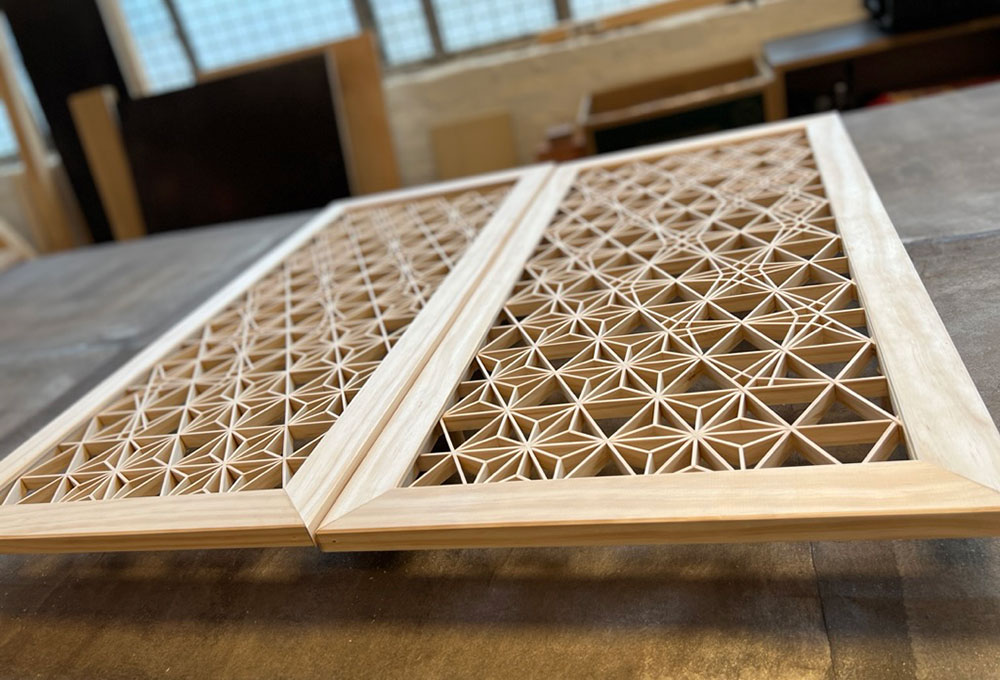
Imagine a lattice of light and shadow, where each sliver of wood is a brushstroke in an ancient masterpiece—this is the magic of a three-dimensional kumiko panel. Crafted without a drop of adhesive, these intricate wooden puzzles seem to defy gravity, their geometric patterns unfolding like a secret language of the craftsman. To build one is to dance with precision, to coax order from chaos, to make the rigid material whisper. It’s not just woodwork; it’s a silent symphony of patience and ingenuity.
The Alchemy of Interlock: Where Wood Becomes Geometry
At the heart of a 3D kumiko panel lies a paradox: wood, a material known for its rigidity, transformed into something fluid and dynamic. The secret? The art of interlocking joints, a dance of notches and tabs that hold the structure together without a single drop of glue. Each piece is a puzzle piece, designed to fit snugly against its neighbor, creating a lattice that seems to hover in midair. The magic begins with the choice of wood—tight-grained hardwoods like cedar or paulownia are ideal, their natural oils resisting warping while allowing the craftsman to carve with precision.
Think of the process as sculpting with light. When sunlight filters through the gaps, it casts intricate shadows that dance across the panel, transforming a static object into a living tableau. The angles of the joints are critical; too shallow, and the structure collapses. Too steep, and the wood splits under pressure. It’s a balancing act, a delicate negotiation between form and function. The craftsman must visualize not just the final piece, but the path each sliver of wood will take to reach its place in the puzzle.

The Silent Language of Joints: Carving Without Glue
Every kumiko panel is a testament to the power of geometry over adhesion. The joints—often mitered or dovetailed—are the unsung heroes of this craft. A well-cut joint is invisible, a seamless marriage of two pieces that belies the absence of glue. The craftsman begins by marking the wood with a fine-toothed saw, then uses a chisel to hollow out the notches with surgical precision. The goal isn’t just to cut, but to listen—to the wood’s resistance, to the way the grain responds to the blade.
There are no shortcuts here. A rushed joint will betray itself, the panel sagging under its own weight or warping with the seasons. Instead, the craftsman must embrace the rhythm of the work, letting the wood guide the hand. The beauty of this method lies in its permanence; without glue, the panel can be disassembled and reassembled, each piece a testament to the craftsmanship of its maker. It’s a dialogue between the artisan and the material, a conversation that unfolds in shavings and sawdust.
The Geometry of Illusion: Crafting Depth Without Depth
A 3D kumiko panel isn’t just a flat surface with holes—it’s a trompe-l’oeil masterpiece, a trick of the eye that makes the wood appear to recede into infinity. The key lies in the layering of the lattice. By offsetting the joints and varying the angles, the craftsman creates a sense of depth, as if the panel is a window into another world. The play of light becomes a collaborator in this illusion, highlighting the edges of each sliver and casting shadows that deepen the effect.
This isn’t just woodwork; it’s optical alchemy. The craftsman must think in three dimensions, visualizing how the light will interact with the panel from every angle. A panel that looks stunning from the front might reveal its secrets when viewed from the side, its layers unfolding like the pages of a book. The result is a piece that feels alive, a dynamic sculpture that changes with the time of day and the position of the viewer.
The Ritual of Assembly: Patience as the Ultimate Tool
Assembling a kumiko panel is a meditative act, a process that demands both focus and surrender. The craftsman begins by laying out the pieces in the order they will be inserted, a silent rehearsal for the final performance. Each piece is slid into place, its notches locking into the tabs of its neighbors. There’s a moment of tension as the last piece is coaxed into position, the entire structure holding its breath until the final joint clicks into place.
This is where the magic happens. Without glue, the panel relies entirely on the precision of the joints. A single misaligned piece can throw off the entire balance, creating gaps or warps that disrupt the illusion of depth. The craftsman must work slowly, adjusting each piece until the lattice is taut and true. It’s a test of patience, a reminder that the most beautiful things are often the ones that take the longest to create.
The Living Legacy: A Panel That Tells a Story
A kumiko panel isn’t just a decorative object—it’s a story etched in wood, a narrative of craftsmanship and creativity. Each panel is unique, its patterns a reflection of the maker’s vision and the wood’s natural character. Over time, the panel will age, its surface softening with the touch of hands and the patina of light. It will become a living part of the space it inhabits, its shadows shifting with the seasons and its joints settling into a quiet harmony.
This is the true appeal of a 3D kumiko panel: it’s not just a piece of art, but a conversation piece. It invites the viewer to look closer, to trace the lines of the lattice with their eyes, to wonder at the skill that went into its creation. It’s a reminder that beauty doesn’t always need to be loud or ostentatious—sometimes, it’s the quiet, intricate things that leave the deepest impression.
The journey of building a kumiko panel is one of discovery, a path that leads not just to a finished piece, but to a deeper understanding of the material and the craft. It’s a testament to the power of simplicity, to the idea that the most extraordinary things are often the ones that require the most patience. So take up your chisel, your saw, and your patience. The wood is waiting, and the shadows are ready to dance.


Leave a Comment