

The Workbench Vise Shootout: Leg Vise, Moxon, or Twin Screw?
Woodworking is as much an art as it is a science, where the tools you choose can elevate your craft from mere construction to something approaching mastery. Among these tools, the workbench vise stands as a silent sentinel, a steadfast ally in the relentless pursuit of precision. But not all vises are created equal. The traditional leg vise, the compact Moxon, and the versatile twin-screw vise each bring their own strengths to the workbench. Which one deserves a place in your shop? Let’s dive into a detailed comparison to help you decide.
The Leg Vise: A Time-Honored Titan of Stability
Few tools carry the weight of history like the leg vise. Born in the workshops of 18th-century craftsmen, this vise is a marvel of mechanical simplicity, relying on a massive wooden screw and a sturdy leg to anchor itself to the workbench. Its design is a testament to durability, with a jaw that can clamp large panels or stubborn stock without flinching. The leg vise excels when brute force meets brute material—think thick slabs of hardwood or wide tabletops where other vises might falter.
Yet, its very strength can be its Achilles’ heel. Installing a leg vise demands precision; the screw must align perfectly with the leg, and the bench itself must be robust enough to handle the lateral forces. Misalignment can lead to frustrating wobble, turning a once-reliable tool into a source of exasperation. For those who work primarily with solid, unwieldy stock, the leg vise remains unparalleled. But for delicate joinery or smaller projects, its sheer power may feel like overkill.
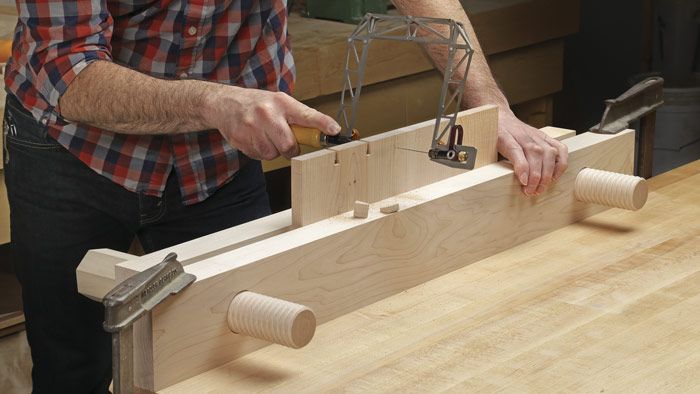
The Moxon Vise: The Compact Powerhouse for Precision
Enter the Moxon vise, a relative newcomer to the woodworking scene but one that has quickly earned a cult following. Named after its creator, Christopher Schwarz, this vise is a masterclass in efficiency. Unlike its bulkier counterparts, the Moxon is designed to clamp vertically, freeing up precious bench real estate while delivering jaw-dropping precision. Its compact size makes it ideal for smaller workshops or those who prioritize portability.
The Moxon’s genius lies in its simplicity. A single screw, often paired with a guide block or track, allows for smooth, repeatable clamping. It’s a vise that thrives on finesse—perfect for dovetail joints, small boxes, or any task where accuracy is paramount. The vertical orientation also means you can work on the edges of boards without the vise getting in the way, a feature that endears it to hand-tool enthusiasts and machine woodworkers alike.
Of course, the Moxon isn’t without its limitations. Its smaller size restricts the maximum thickness of stock it can handle, and the vertical clamping action may not provide the same sheer holding power as a leg vise for massive workpieces. But for those who value precision over brute force, the Moxon is a game-changer.
The Twin-Screw Vise: Versatility Meets Modern Ingenuity
If the leg vise is the heavyweight champion and the Moxon is the nimble contender, the twin-screw vise occupies the middle ground—a versatile hybrid that blends the best of both worlds. Characterized by two parallel screws, this vise offers balanced clamping pressure and the ability to handle a wide range of stock thicknesses. Its design is inherently more forgiving than the leg vise, with less risk of misalignment or wobble.
The twin-screw vise shines in scenarios where adaptability is key. Whether you’re flattening a board, holding a drawer front for dovetails, or securing a panel for planing, this vise adapts with ease. The dual screws distribute pressure evenly, reducing the risk of marring delicate surfaces—a boon for those who work with figured woods or highly finished pieces. Modern iterations often feature quick-release mechanisms or integrated stops, further enhancing their utility.
Yet, for all its versatility, the twin-screw vise can feel like a jack-of-all-trades, master of none. It may lack the raw power of a leg vise for massive stock or the surgical precision of a Moxon for fine joinery. But for the woodworker who values flexibility and ease of use, it’s a compelling choice.

Comparing the Contenders: Which Vise Fits Your Workflow?
Choosing between these vises isn’t just about specs—it’s about understanding your own work habits and the demands of your projects. If your shop is a cathedral of hand-tool woodworking, where every dovetail joint is a labor of love, the Moxon vise might be your ideal partner. Its precision and compactness align perfectly with the ethos of traditional craftsmanship.
On the other hand, if you’re a power-tool aficionado who routinely wrestles with 8/4 hardwood or massive panels, the leg vise’s unyielding strength could be the missing link in your workflow. Its ability to handle sheer force makes it a favorite among those who build furniture with a capital “F.”
For the woodworker who refuses to be pigeonholed—who toggles between hand tools and power tools, between delicate inlays and robust carcasses—the twin-screw vise offers a balanced solution. It’s the Swiss Army knife of workbench vises, adaptable enough to handle a variety of tasks without demanding a dedicated setup.
Beyond the Basics: Accessories and Customization
No vise exists in a vacuum. The true magic happens when you pair your vise with the right accessories. For the leg vise, consider adding a quick-release mechanism or a dedicated chop for planing. The Moxon vise can be enhanced with bench dogs or a sliding tail vise for even greater versatility. Twin-screw vises often benefit from replaceable jaw faces—softwood pads for delicate work, hardwood or metal for aggressive clamping.
Customization extends beyond accessories. The material of your vise also plays a role. Hardwood vises, like those made from maple or beech, offer durability and a classic aesthetic, while metal vises provide unmatched rigidity. Some woodworkers even experiment with hybrid designs, combining wood and metal for the best of both worlds.
The Final Verdict: Trust Your Instincts
At the end of the day, the “best” vise is the one that feels like an extension of your hands. It’s the tool that disappears into your workflow, leaving you free to focus on the wood, the grain, and the joinery. Whether you’re drawn to the leg vise’s unyielding strength, the Moxon’s surgical precision, or the twin-screw’s adaptability, the choice ultimately comes down to what resonates with your craft.
So, before you commit, spend some time with each type. Test their limits. Feel the difference in your grip, the resistance in the screw, the way the wood responds. A vise is more than a tool—it’s a partnership. And like any good partnership, it should inspire confidence, not hesitation.
Your workbench is your kingdom. Choose your sentinel wisely.


Leave a Comment