

The wedged mortise and tenon joint is more than just a mechanical connection—it’s a testament to the ingenuity of medieval woodworkers, a joint that marries simplicity with unyielding strength. Imagine a connection so robust that it can withstand centuries of stress, yet so elegant in its design that it has endured as a cornerstone of traditional joinery. This is the wedged mortise and tenon, a joint that doesn’t just hold wood together; it forges a bond that tightens with time. Whether you’re a seasoned craftsman or a curious enthusiast, understanding this joint will transform how you perceive woodworking forever.

The Anatomy of a Timeless Joint: Breaking Down the Wedged Mortise and Tenon
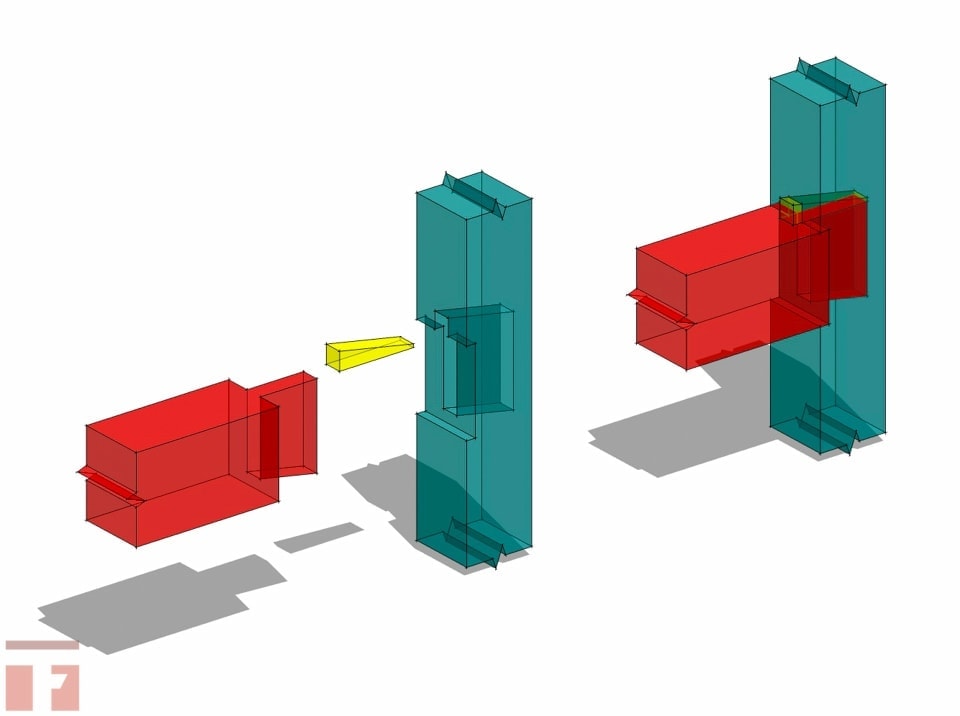
The wedged mortise and tenon is a marvel of geometric precision, where every angle and cut serves a purpose. At its core, the joint consists of two primary components: the mortise, a rectangular cavity carved into one piece of wood, and the tenon, a protruding tongue that fits snugly into the mortise. But the magic lies in the wedge—a tapered piece of wood or metal driven through a slot in the tenon, forcing it to expand and lock into the mortise with unshakable tenacity.
The tenon itself is no ordinary protrusion. It features a slight taper, wider at the base and narrower at the tip, which allows the wedge to drive it outward as it’s hammered in. This expansion creates a friction fit so tight that the joint becomes nearly inseparable. The wedge, often made from a harder wood like oak or maple, is driven through a pre-drilled hole in the tenon, splitting it slightly and ensuring a mechanical lock. This dual mechanism—friction and mechanical interlock—makes the wedged mortise and tenon one of the most reliable joints in woodworking history.
What sets this joint apart is its adaptability. It can be used in everything from furniture making to timber framing, where the demands on strength are uncompromising. The wedged mortise and tenon doesn’t just resist shear forces; it thrives under them, making it ideal for structures subjected to dynamic loads, such as barns, bridges, and heavy-duty workbenches.
Why This Joint Defies the Test of Time: Strength, Durability, and Forgiveness
Centuries-old timber-framed buildings still stand today, their joints as tight as the day they were assembled. The secret? The wedged mortise and tenon’s ability to adapt to wood movement while maintaining its grip. Unlike glued joints, which can weaken over time, or nailed connections, which loosen, this joint actually becomes more secure as the wood expands and contracts with humidity changes.
Wood is a living material, and its tendency to swell and shrink can spell disaster for rigid connections. But the wedged mortise and tenon is forgiving. The wedge allows slight adjustments, absorbing the stress without compromising the joint’s integrity. This is why it’s a favorite in outdoor applications, where exposure to the elements would destroy lesser joints. The wedge’s expansion compensates for any minor shifts in the wood, ensuring the connection remains snug for generations.
Moreover, the joint’s strength isn’t just theoretical—it’s been proven in the field. Traditional Japanese temples, European cathedrals, and even Viking longships relied on variations of this joint to withstand the brutal forces of nature. The wedged mortise and tenon doesn’t just hold; it endures, making it a favorite among preservationists and restorers who seek to maintain historical structures with authentic techniques.
From Blind to Through: Exploring the Variations of the Wedged Mortise and Tenon
Not all wedged mortise and tenon joints are created equal. The joint’s versatility has spawned several variations, each tailored to specific applications and aesthetic preferences. The most common types include the through-wedged mortise and tenon, the blind-wedged mortise and tenon, and the drawbored wedged mortise and tenon—each with its own strengths and challenges.
The through-wedged mortise and tenon is the most visually striking. Here, the wedge is driven all the way through the tenon, protruding from the opposite side of the mortise. This creates a dramatic, decorative element, often seen in furniture and exposed timber framing. The through-wedge not only secures the joint but also serves as a visual signature, a mark of the craftsman’s skill. However, its exposed nature means it’s less forgiving in applications where aesthetics are secondary to strength.
The blind-wedged mortise and tenon is the stealthy counterpart. In this variation, the wedge is driven into a pre-drilled hole in the tenon, hidden from view once the joint is assembled. This makes it ideal for furniture and cabinetry, where clean lines and hidden fasteners are paramount. The blind wedge offers the same mechanical advantage as its through-wedged cousin but with a refined, understated appearance. It’s a favorite among fine woodworkers who prioritize both form and function.
The drawbored wedged mortise and tenon introduces another layer of complexity. Here, the tenon is deliberately offset from the mortise, and a drawbore pin is used to pull the joint together before the wedge is inserted. This creates an even tighter fit, as the offset forces the tenon to compress against the mortise walls when the pin is removed. The drawbore technique is a hallmark of traditional Japanese joinery and is often used in high-stress applications, such as temple construction, where every ounce of strength matters.
Each variation serves a purpose, whether it’s the raw, unapologetic strength of the through-wedge or the refined subtlety of the blind-wedge. Choosing the right type depends on the project’s demands, but one thing is certain: the wedged mortise and tenon can be adapted to nearly any scenario.
Mastering the Craft: Techniques and Tools for Flawless Execution
Creating a wedged mortise and tenon joint is as much an art as it is a science. It requires patience, precision, and an understanding of wood’s behavior. The process begins with careful layout and marking, where the mortise and tenon are cut to exacting tolerances. A slight miscalculation can mean the difference between a joint that slides together effortlessly and one that refuses to budge.
The first step is cutting the mortise. This can be done with a chisel, a mortising machine, or even a drill for rough work, but the goal is a clean, rectangular cavity with straight sides. The tenon, meanwhile, must be cut to fit snugly but not so tight that it splits when the wedge is driven in. A well-made tenon has slightly rounded edges to prevent splitting and a slight taper to accommodate the wedge’s expansion.
The wedge itself is where the magic happens. It should be cut from a harder wood than the joint, such as oak or maple, and shaped to a precise angle—typically around 5 to 10 degrees. The wedge is driven into a pre-drilled hole in the tenon, splitting it slightly and forcing it outward against the mortise walls. The key here is to drive the wedge slowly and evenly, ensuring the tenon expands uniformly without cracking.
For those new to wedged mortise and tenon joints, practice is essential. Start with softwoods like pine or cedar, which are more forgiving than hardwoods. As your skills improve, you can move on to denser woods like oak or walnut, where the joint’s strength will truly shine. And remember: the wedge should be driven in just enough to secure the joint, but not so hard that it splits the tenon. Finesse is the hallmark of a master craftsman.

Beyond the Workshop: Real-World Applications of the Wedged Mortise and Tenon
The wedged mortise and tenon isn’t confined to the workshop—it’s a joint that thrives in the real world, where strength and durability are non-negotiable. One of its most common applications is in timber framing, where entire structures are held together by a network of these joints. Unlike modern fasteners, which can corrode or loosen over time, the wedged mortise and tenon forms a permanent bond that only grows stronger with age.
In furniture making, this joint is a favorite for pieces that demand both beauty and resilience. Workbenches, tables, and chairs often incorporate wedged mortise and tenon joints in their legs and aprons, where the connection must withstand years of use without wobbling. The joint’s ability to resist racking forces makes it ideal for chairs, which are constantly subjected to lateral stress.
Even in boatbuilding, where wood is constantly exposed to moisture and movement, the wedged mortise and tenon has been a trusted ally. Traditional wooden boats, from Viking longships to classic sailboats, relied on this joint to keep their hulls intact under the relentless pounding of waves. The wedge’s expansion compensates for the wood’s natural tendency to swell when wet, ensuring the joint remains tight even in the harshest conditions.
For restoration work, the wedged mortise and tenon is a godsend. When repairing centuries-old structures, modern adhesives and fasteners often fail to match the original craftsmanship. By using traditional joinery techniques, restorers can preserve the integrity of historical buildings without compromising their authenticity. The joint’s durability ensures that repaired sections will stand the test of time, just as the original builders intended.
The Modern Revival: Why Woodworkers Are Falling in Love with an Ancient Joint
In an era dominated by power tools and synthetic adhesives, the wedged mortise and tenon stands as a rebellion against disposable craftsmanship. More and more woodworkers are rediscovering this ancient joint, not just for its strength, but for the connection it fosters between maker and material. There’s something deeply satisfying about driving a wedge into a tenon and feeling the joint lock into place, knowing that it will outlast you.
This revival isn’t just about nostalgia—it’s about practicality. In a world where fasteners rust and glues degrade, the wedged mortise and tenon offers a solution that’s both elegant and enduring. It’s a joint that doesn’t just hold wood together; it tells a story of craftsmanship, patience, and respect for the material. For those who value heirloom-quality work, the wedged mortise and tenon is more than a technique—it’s a philosophy.
Moreover, the joint’s adaptability makes it a favorite among hybrid woodworkers, those who blend traditional techniques with modern tools. CNC machines can cut the mortise and tenon with precision, while hand tools ensure the wedge is driven with the finesse of a master. This fusion of old and new is breathing new life into the wedged mortise and tenon, proving that some traditions are worth preserving.
As sustainability becomes a priority in woodworking, the wedged mortise and tenon offers another advantage: it requires no metal fasteners or synthetic adhesives. This makes it an eco-friendly choice for those who want to minimize their environmental impact without sacrificing strength or longevity. In a craft that often relies on disposable materials, the wedged mortise and tenon is a refreshing return to fundamentals.
Whether you’re building a workbench, restoring a barn, or crafting a heirloom-quality piece of furniture, the wedged mortise and tenon is a joint that refuses to fail. It’s a connection that tightens with time, a testament to the enduring power of good design. And in a world where everything seems temporary, that’s a rare and beautiful thing.
The wedged mortise and tenon isn’t just a joint—it’s a legacy. And it’s waiting for you to carry it forward.


Leave a Comment