

Have you ever found yourself hunched over a tiny piece of fabric, your wrist screaming in protest, only to realize your embroidery hoop feels more like a medieval torture device than a creative companion? You’re not alone. What starts as a meditative escape can quickly morph into a wrist-wracking ordeal, leaving you questioning whether your hands were ever meant to wield a needle. The culprit? Your embroidery hoop—and the way it’s demanding your wrist to contort into a pretzel. But fear not, fellow stitcher. There’s a fix that doesn’t involve sacrificing your passion (or your wrists) on the altar of tradition. Enter: the embroidery hoop stand, the unsung hero of pain-free stitching.
Imagine this: you’re mid-stitch, your posture is impeccable, your wrist is relaxed, and your fabric stays perfectly taut without so much as a whisper of a complaint. Sounds like a fantasy? It’s not. With the right stand, you can transform your embroidery from a wrist-destroying marathon into a fluid, enjoyable dance of needle and thread. But before we dive into the solution, let’s unravel the problem—and why your current setup might be the silent saboteur of your stitching serenity.
The Ergonomic Nightmare: Why Your Hoop Hates Your Wrist
Let’s talk about the elephant in the room—or rather, the hoop in your hand. Traditional embroidery hoops are designed with one thing in mind: holding fabric taut. What they’re not designed for? Your wrist’s well-being. When you grip a hoop, your hand is forced into a fixed position, often at an awkward angle. Your wrist bends, your fingers cramp, and your forearm muscles scream for mercy. Over time, this repetitive strain can lead to tendonitis, carpal tunnel syndrome, or just a general sense of wrist betrayal.
But here’s the kicker: the problem isn’t just the hoop itself—it’s the lack of support. When you’re stitching freehand, your wrist is doing all the heavy lifting, bearing the brunt of every stitch. And let’s not forget the fabric tension. If your hoop isn’t snug enough, you’re constantly adjusting it, which means more wrist movement, more strain, and more frustration. It’s a vicious cycle: the tighter you grip, the more your wrist suffers; the looser the hoop, the more you have to fight with it. No wonder your stitches start looking like they were stitched by a caffeinated squirrel.
So, what’s the alternative? Do you just accept the agony and hope for the best? Absolutely not. The key to wrist salvation lies in rethinking your setup entirely. And that’s where the embroidery hoop stand comes in—a game-changer that turns your stitching from a workout into a breeze.
The Stand Solution: How a Hoop Stand Can Save Your Wrists
Picture this: your embroidery hoop is no longer a handheld device but a fixture, mounted on a stand that does the heavy lifting for you. Your hands are free to glide over the fabric, your wrist stays neutral, and your stitches flow like a river. This isn’t some futuristic embroidery gadget—it’s a simple, elegant solution that’s been around for centuries but somehow got lost in the shuffle of modern stitching trends.
A good hoop stand does more than just hold your fabric in place. It elevates your work to a comfortable height, allowing you to stitch without hunching or craning your neck. It stabilizes the hoop, so you’re not constantly readjusting tension. And most importantly, it takes the strain off your wrist, letting you stitch for hours without the dreaded “pins and needles” creeping in. Whether you’re working on a delicate floral motif or a bold, modern design, a stand gives you the freedom to focus on your artistry—not your anatomy.
But not all stands are created equal. The best ones are adjustable, sturdy, and designed to accommodate different hoop sizes. They should be easy to set up and even easier to use. Think of it as the Swiss Army knife of embroidery tools: versatile, reliable, and always ready to save the day. And the best part? Once you go stand, you’ll never go back. Your wrists will thank you, your stitches will thank you, and your embroidery will thank you.
From Handheld to Hands-Free: The Transition to Stitching Bliss
Switching to a hoop stand might feel like a leap of faith at first. After all, you’ve spent years perfecting your handheld technique. But trust me, the transition is smoother than you think. Start by mounting your hoop on the stand and positioning it at a height that feels natural—your elbows should be slightly bent, your wrists relaxed. If you’re used to stitching in your lap, this might feel strange at first, but give it a few minutes. You’ll quickly notice how much easier it is to maintain even tension and consistent stitches.
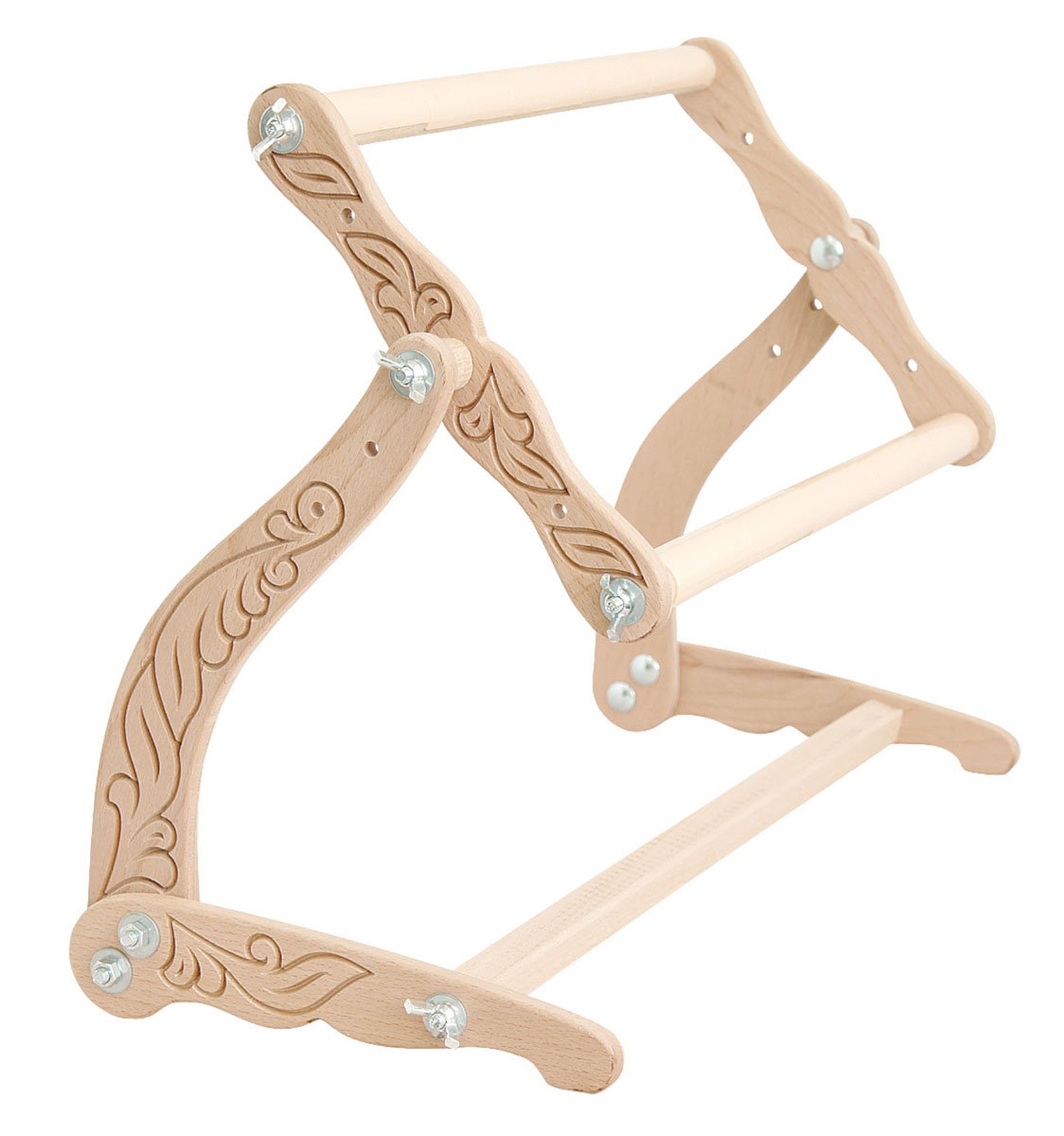
One of the biggest advantages of a stand is the ability to work on larger pieces without the hoop slipping or the fabric bunching up. No more wrestling with a hoop that’s too small for your project or fighting to keep it from rotating mid-stitch. With a stand, your fabric stays put, your hoop stays put, and your hands stay put—right where they belong. Plus, you can easily rotate the stand to access different angles of your work, which is a game-changer for complex designs.
Of course, there’s an adjustment period. Your muscle memory will need time to catch up, and you might find yourself reaching for the hoop out of habit. But once you get the hang of it, you’ll wonder how you ever stitched without one. The freedom to move your hands naturally, without the constant grip and tension, is liberating. It’s like trading in a clunky, outdated tool for a sleek, modern one—suddenly, everything just works.
Beyond the Wrist: The Unexpected Perks of a Hoop Stand
While the primary benefit of a hoop stand is wrist relief, the perks don’t stop there. Have you ever struggled to see the back of your work because your hoop was too close to your face? A stand elevates your fabric to eye level, giving you a clear view of both sides. This is especially helpful for checking stitch tension, counting threads, or admiring your progress without squinting like a detective in a noir film.
Another unexpected advantage? Portability. Many stands are lightweight and foldable, making them perfect for stitching on the go. Whether you’re traveling, visiting a friend, or just moving from room to room, your stand can come with you. No more lugging around a bulky lap frame or worrying about your hoop rolling away mid-project. It’s stitching without the stress—literally.
And let’s not forget the creative boost. When your setup is comfortable and efficient, your mind is free to wander—to experiment, to innovate, to push the boundaries of your craft. No longer will you be held back by wrist pain or frustration. Instead, you’ll find yourself diving deeper into your projects, trying new techniques, and maybe even discovering a newfound love for embroidery that you thought was lost forever.
Choosing the Right Stand: What to Look For
Not all hoop stands are created equal, and the wrong one can be just as frustrating as no stand at all. So, what should you look for when shopping for your wrist-saving savior? First, consider the material. Wooden stands are sturdy and aesthetically pleasing, but they can be heavy. Metal stands are lightweight and durable, but they might not have the same charm. Plastic stands are affordable and portable, but they can lack stability. Choose what fits your needs and your style.
Adjustability is key. Your stand should accommodate different hoop sizes, from tiny 3-inch hoops to massive 12-inch ones. Look for a stand with a clamp or screw mechanism that’s easy to tighten and release. Some stands even come with built-in lighting or magnifying glasses, which can be a lifesaver for detailed work. And don’t forget about portability—if you plan to take your stand on the road, opt for one that’s compact and lightweight.
Ease of use is another critical factor. A stand should be intuitive to set up and adjust. If you’re constantly fighting with it, it’s not doing its job. Read reviews, ask fellow stitchers for recommendations, and if possible, test a stand before committing. The right stand should feel like an extension of your workspace, not a clunky add-on.
Finally, consider your budget. Stands range from budget-friendly options under $20 to high-end models that cost upwards of $100. While price doesn’t always equate to quality, it’s worth investing in a stand that will last. After all, your wrists (and your sanity) are priceless.
The Final Stitch: Embracing a Future Without Wrist Woes
So, what’s the verdict? Is the embroidery hoop stand the holy grail of stitching? Not quite—but it’s pretty darn close. It’s a simple, effective solution to a problem that’s plagued stitchers for generations. And the best part? It’s not just about avoiding pain. It’s about enhancing your craft, elevating your comfort, and rediscovering the joy of embroidery without the physical toll.
If you’ve been gritting your teeth through every stitch, if your wrists ache by the end of a project, if you’ve ever considered quitting embroidery altogether because of the discomfort—stop. Give a hoop stand a try. Start small, experiment with different setups, and give your wrists the break they deserve. You might just find that your stitching improves, your creativity flourishes, and your embroidery sessions become something you look forward to—not something you dread.
Embroidery is meant to be a source of relaxation, a canvas for expression, a moment of peace in a chaotic world. Don’t let a stubborn hoop stand in the way of that. Embrace the stand. Embrace the comfort. And most importantly, embrace the stitches.


Leave a Comment