

In an era where digital footprints are as critical as physical ones, the humble business card has evolved from a simple exchange of contact details into a battleground of first impressions. Yet, despite the relentless march of technology, many professionals still cling to an outdated ritual: slapping a QR code onto their business cards like a digital afterthought. It’s time to retire this relic of the early 2020s and embrace something far more potent—a solution that doesn’t just connect, but captivates.
Imagine this: you hand someone your card, and instead of fumbling with their phone to scan a pixelated square, they pause. Their eyes linger on your name, your title, perhaps a clever tagline. There’s no confusion, no wasted time, no awkward silence. That’s the power of a well-designed business card—one that doesn’t just deliver information but creates an experience. So, why do so many still default to QR codes? The answer lies in a mix of convenience, misplaced tech enthusiasm, and a fundamental misunderstanding of what a business card is truly meant to do.
The QR Code Paradox: Why It’s a Half-Hearted Solution
QR codes on business cards are the digital equivalent of a handshake that never quite lands. They promise seamless connectivity, yet in practice, they often deliver frustration. The issue isn’t the technology itself—it’s the execution. A QR code forces the recipient into a series of steps: unlock their phone, open a scanning app, aim the camera, wait for the link to load. By the time they’ve navigated this gauntlet, their initial interest has likely waned. Worse, many people don’t even know how to scan a QR code, turning what should be an effortless exchange into a mini-lesson in digital literacy.
Beyond the friction, QR codes lack personality. They’re generic, impersonal, and forgettable. A business card should reflect your brand, your values, and your professional identity. A QR code does none of that. It’s a one-size-fits-all solution that treats every connection as if it were the same, stripping away the nuance that makes networking meaningful. In a world where first impressions are increasingly visual and emotional, a QR code is the digital equivalent of a blank stare.
The Art of the Unforgettable Business Card
So, what’s the alternative? A business card that doesn’t just hand over information but tells a story. One that’s tactile, visually striking, and effortlessly shareable. The key is to design a card that does the heavy lifting for you—so the recipient doesn’t have to think, they just feel.
Start with the fundamentals: your name, title, and contact information should be crystal clear. But don’t stop there. Add a touch of creativity—a bold color scheme that aligns with your brand, a minimalist logo, or even a subtle embossed texture that invites touch. The goal is to make your card something they’ll want to keep, not toss into the abyss of their wallet or the digital trash bin.
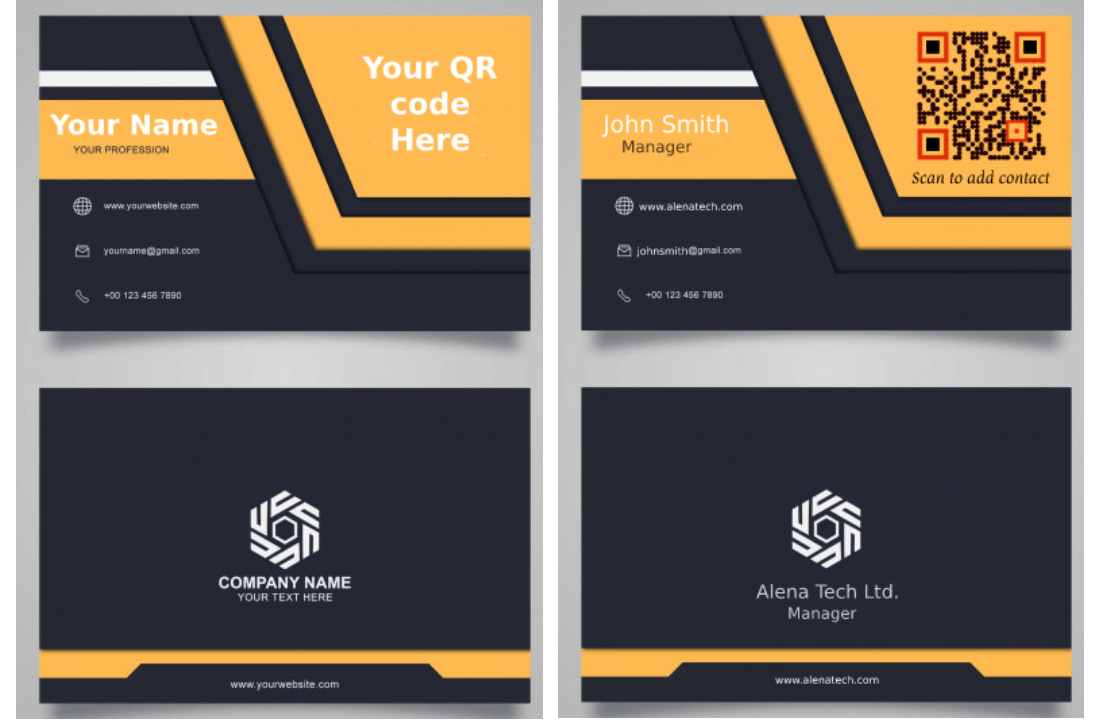
Consider incorporating a QR code, but only if it serves a purpose beyond mere convenience. For example, link to a personalized video introduction, a portfolio, or a dynamic landing page that updates with your latest work. This transforms the QR code from a gimmick into a gateway to something more engaging. But even then, use it sparingly—your card should stand on its own merits.
Beyond the Card: The Digital Ecosystem
A business card is just the beginning. The real magic happens when your physical and digital identities align seamlessly. Instead of relying on a QR code, think of your card as a portal to a larger digital ecosystem. Include a clean, professional email address and a LinkedIn profile that’s up-to-date and engaging. If you’re in a creative field, a personal website or online portfolio can be a game-changer. The idea is to make it as easy as possible for someone to learn more about you without ever feeling like they’re being sold to.
Another powerful tactic is to use a custom domain. Instead of a long, unwieldy URL, something like yourname.com looks polished and is far easier to remember. You can direct this domain to your LinkedIn, portfolio, or a simple landing page with your contact details. It’s a small touch that conveys professionalism and attention to detail.
For those who want to push the envelope, consider adding a NFC chip to your card. Tap-to-connect technology is still in its infancy, but it offers a glimpse into the future of networking. With a simple tap, your contact details can be saved directly to their phone—no scanning, no apps, just instant connectivity. It’s the kind of innovation that sets you apart from the crowd.
The Psychology of First Impressions
There’s a deeper reason why QR codes on business cards feel so unsatisfying: they ignore the psychology of first impressions. Humans are wired to respond to visual and tactile cues. A well-designed business card engages multiple senses—sight, touch, even smell (yes, the texture and finish of a card can evoke emotions). A QR code, by contrast, is purely functional. It doesn’t spark curiosity or delight. It doesn’t make the recipient feel special or valued.
Think about the last time you received a business card that stood out. Chances are, it wasn’t because of the information on it, but because of how it made you feel. Maybe it was the weight of the paper, the elegance of the typography, or the clever use of space. Those are the details that linger in memory long after the interaction is over. A QR code can’t compete with that.
In a world where digital interactions often feel sterile and transactional, the tactile experience of a business card is a rare opportunity to create a genuine connection. It’s a reminder that behind every email address and LinkedIn profile is a real person with a story to tell. Don’t let that story get lost in the noise of a QR code.
Case Studies: The Power of a Thoughtful Design
Consider the case of a freelance graphic designer who ditched the QR code in favor of a card with a die-cut design shaped like a paintbrush. The card was memorable, shareable, and perfectly aligned with her brand. Clients often commented on it, and she found that people were more likely to reach out because they remembered her.
Or take the example of a consultant who included a small, elegant QR code on his card—but only as a link to a short video where he introduced himself. The video added a personal touch that a static QR code never could. Recipients felt like they already knew him, making the follow-up conversation much smoother.
These examples underscore a simple truth: the best business cards are those that reflect the individuality of the person behind them. They’re not just tools for exchanging information; they’re extensions of your personal brand. And in a world where everyone is vying for attention, standing out isn’t just a luxury—it’s a necessity.
The Future of Networking: What’s Next?
As technology continues to evolve, so too will the way we network. But one thing will never change: the power of a great first impression. While QR codes and NFC chips have their place, they’re not the endgame. The future lies in creating seamless, memorable experiences that bridge the physical and digital worlds without sacrificing the human touch.
Imagine a business card that, when held under a specific light, reveals a hidden message or a QR code that dynamically changes based on the recipient’s interests. Or a card embedded with a tiny sensor that plays a personalized greeting when tapped. These might sound like science fiction, but they’re not as far-fetched as they seem. The key is to stay ahead of the curve while never losing sight of what makes networking meaningful: connection.
For now, the best advice is simple: stop putting QR codes on your business cards. Instead, invest in a design that reflects who you are and what you stand for. Make it something people will want to hold onto, share, and remember. Because in the end, the most powerful tool in your networking arsenal isn’t a piece of technology—it’s your ability to make a lasting impression.
So go ahead. Rip off the QR code. And start building connections that matter.


Leave a Comment