

There exists a captivating allure in Yto Barrada’s “Garden of Forking Paths” at the French Pavilion—a magnetic pull that draws visitors into an enigmatic realm where history, myth, and memory converge. This work is more than a visual installation; it is a multifaceted narrative that beckons us to wander through its labyrinthine layers. Observers often find themselves ensnared by the piece’s intricate interplay of images and stories, sparking curiosity and reflection. But what underpins this fascination? Could it be the way Barrada conjures a space that inhabits the liminal zones of identity and temporality? It is within these intertwined avenues that the true essence of the work unfolds.
A Labyrinth of Symbolism and Memory
Barrada’s “Garden of Forking Paths” does not betray itself through straightforward depiction. Instead, it thrives on symbolic fragmentation, encouraging viewers to piece together its meanings like a puzzle. Each photograph and each frame is imbued with a sense of archival depth, evoking lost histories and cultural intersections. The installation acts as a maze where memories diverge, much like the metaphorical “forking paths” of which the title alludes.
Here, the allure lies in the invitation to ponder the myriad possibilities that history might have taken. The title itself references the famous short story by Jorge Luis Borges, a tale that explores the concept of multiple realities and the branching trajectories of decision-making. Barrada harnesses this literary motif to explore the complex identities and histories embedded in the postcolonial Maghreb, specifically in her native Morocco. The result is a space where the viewer becomes a participant in navigating alternate temporalities and narratives.
The Intersection of Past and Present
Within the French Pavilion, the installation challenges the conventional separation between the past and the present. Barrada’s work is a repository of overlooked stories—phantoms of a Morocco caught between colonial legacy and contemporary transformation. The juxtaposition of archival elegance with raw textures evokes a sense of time unmoored, simultaneously anchored in historical specificity and universal resonance.
This convergence compels us to reassess the linear progression of history. Barrada’s meticulous curation transforms the exhibit into a palimpsest, where layers of meaning superimpose and obscure one another, urging the audience to look beyond the surface. The photographs do not merely depict; they insinuate and provoke. Gaze upon them and you encounter the vestiges of colonial architecture, urban shifts, and intangible cultural memories that refuse to be forgotten.
The installation’s ability to blur temporal boundaries speaks to a deeper fascination: the human penchant for grappling with disjointed legacies and the ceaseless unfolding of possibility.
Visual Poetry in Photographic Form
The aesthetic strategy of “Garden of Forking Paths” is nothing short of poetic. Barrada’s lens captures the singular beauty of everyday objects, decaying edifices, and subtle gestures of life in Morocco, inviting the observer into a carefully composed visual narrative. The photographs, rich in texture and contrast, evoke a tactile experience—the rust of iron, the peeling of paint, the soft decay etched by time.
These images do not scream for attention but whisper secrets. The slow rhythm of the twisted and fractured compositions compels patience and contemplation, a rarity in our fast-paced digital era. Thus, their charm lies in their quiet insistence that one must look long and intently, fostering a meditative state where meaning reveals itself gradually.
A Dialogue Across Cultures and Histories
By situating this work within the French Pavilion, Barrada initiates an intrinsic dialogue between two entwined cultures. The pavilion itself, as a symbol of national identity and projection, becomes a stage for deconstructing prevailing narratives about colonialism and cultural exchange. Barrada reclaims this space, offering counterpoints and interruptions to monolithic Western perspectives.
The exhibition acts as a confluence of voices—those silenced by historical forces and those emerging to redefine identity in a globalized age. The “Garden of Forking Paths” becomes a metaphorical meeting ground where questions of belonging, displacement, and hybridity unfold. It is a testament to the resilience of cultural memory and the creative potency born from intersections.

Embodying Complexity Through Spatial Arrangement
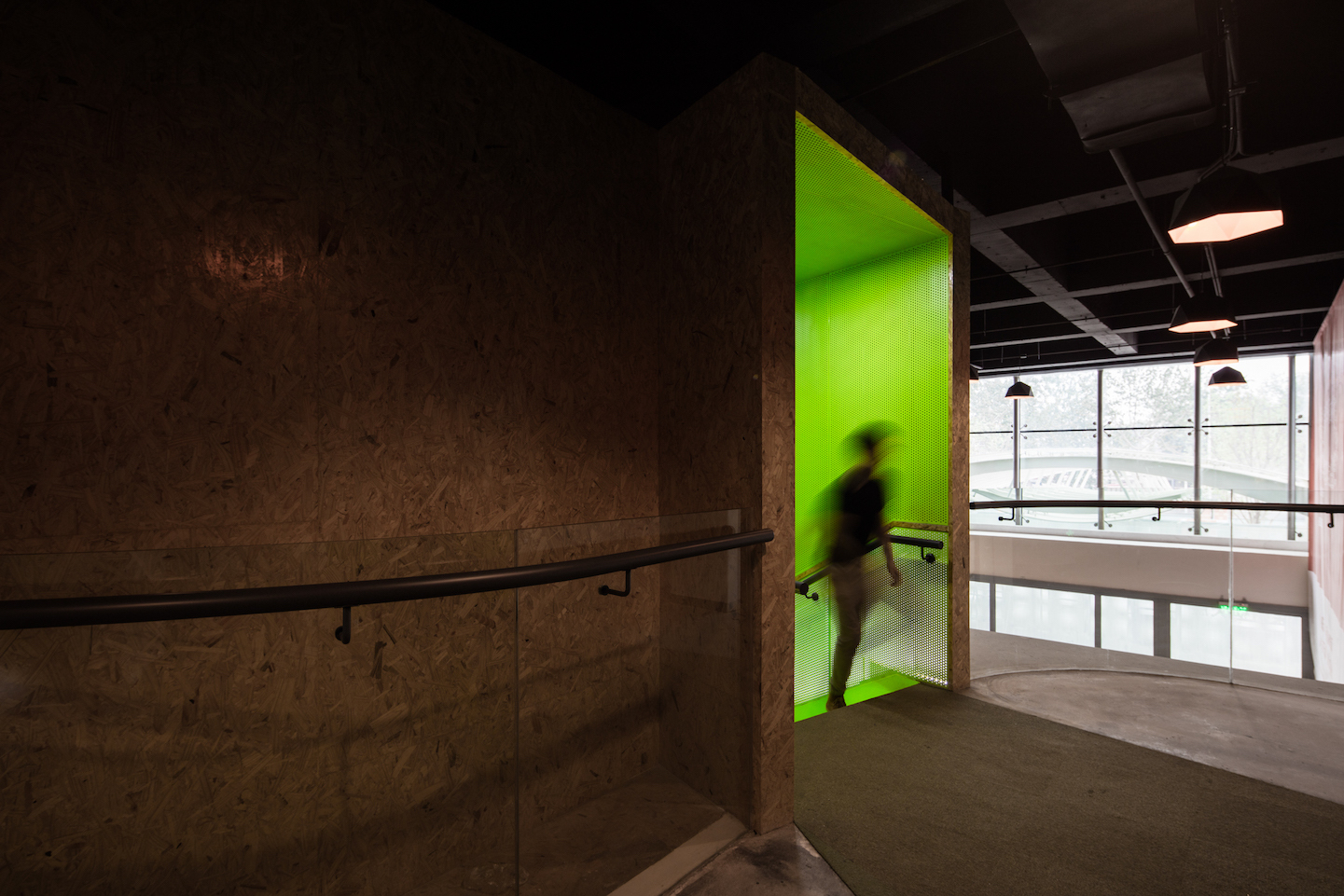
The spatial configuration of the installation itself is an act of storytelling. Through a careful orchestration of light, shadow, and physical movement, Barrada molds the viewer’s journey. Visitors are encouraged not merely to observe but to traverse the space as if navigating a divergent path themselves.
Spaces open and close, invite and disorient, echoing the very structure of forking paths—decisions that lead to different destinations but always retain the memory of the crossroads. This embodiment of complexity resonates with anyone who has ever encountered life’s bewildering choices, and in turn, it casts light on the broader historical and cultural crossroads explored in the work.

Ultimately, “Garden of Forking Paths” embodies the paradox of human experience: the simultaneous certainty and uncertainty of our journeys. It captivates because it mirrors the complexities of identity, memory, and history—elements that are at once deeply personal and profoundly collective. Barrada’s work lingers in the mind long after one leaves the pavilion, inviting endless reflection on the myriad paths that define us all.


Leave a Comment