

What happens when sound becomes not just a medium but a muse—when the echoes reverberate through a space designed to amplify not only noise but nuance? The echo chamber, a curious acoustic phenomenon, transcends its literal meaning within the Pavilion, morphing into a fertile ground for sound art composed in a minor key. This playful enigma poses a compelling challenge: can an echo chamber, often associated with repetition and homogeny, inspire depth, introspection, and innovation when wielded by an audacious artist? The echo chamber of the Pavilion invites us into a realm where sound is sculpted, time is stretched, and sonic shadows linger longer than expected, inviting an exploration that is as much cerebral as it is sensory.
The Architecture of Sound: Designing the Echo Chamber
The Pavilion’s echo chamber is not an accidental byproduct of construction but a meticulously crafted acoustic labyrinth. Its architecture orchestrates the trajectories of sound waves, encouraging them to bounce, warp, and entwine in unpredictable harmonies. Unlike conventional auditoriums designed for optimal clarity and crispness, this space leverages resonance and reverberation as compositional tools. The chamber’s geometry—curved walls, reflective surfaces, and carefully positioned barriers—ensures that every note, every whisper, is caught in a prolonged embrace of sonic repetition.
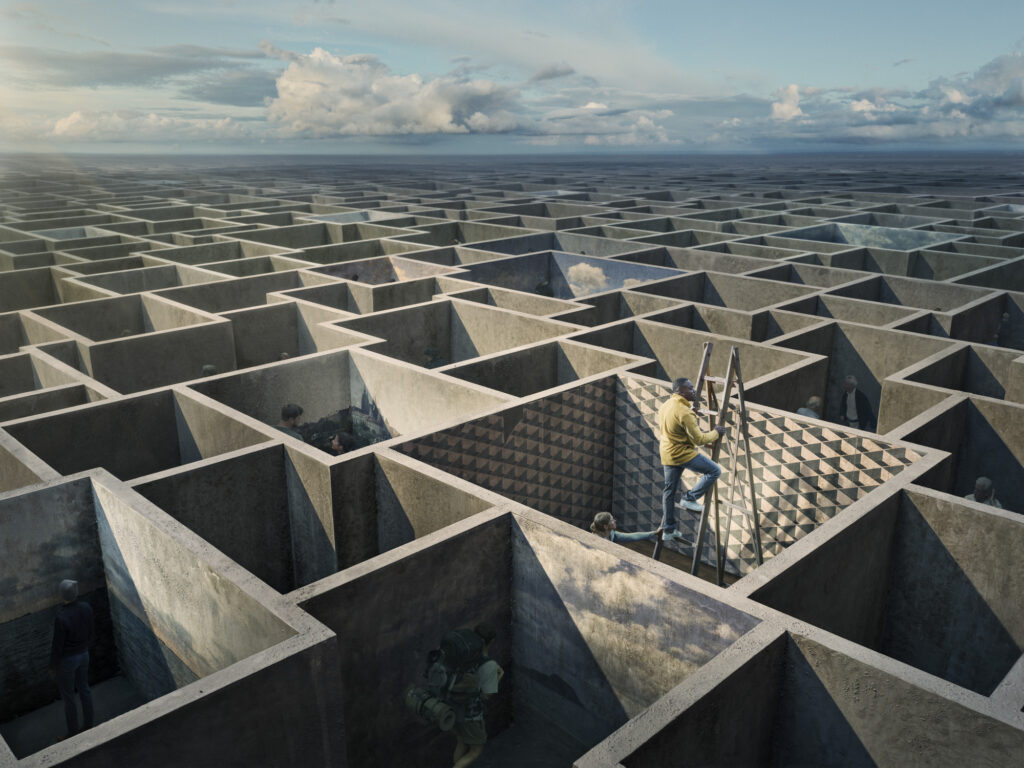
Architecturally, the echo chamber challenges the listener to perceive time differently. Sound is slowed down, elongated past the ephemeral moment of performance into a lingering sensory experience. This delay is not a defect but a deliberate invitation to reconsider the temporal nature of sound itself.
Sound Art in a Minor Key: A Sonata of Shadows
Sound artists who compose within this echo chamber do not merely fill silence; they conjure atmospheres. Choosing a minor key—a tonality often associated with melancholy, introspection, and subtle tension—enhances the chamber’s reflective qualities. The minor modality imbues the space with emotional complexity, allowing the reverberations to swell with feelings that are plaintive yet resolute.
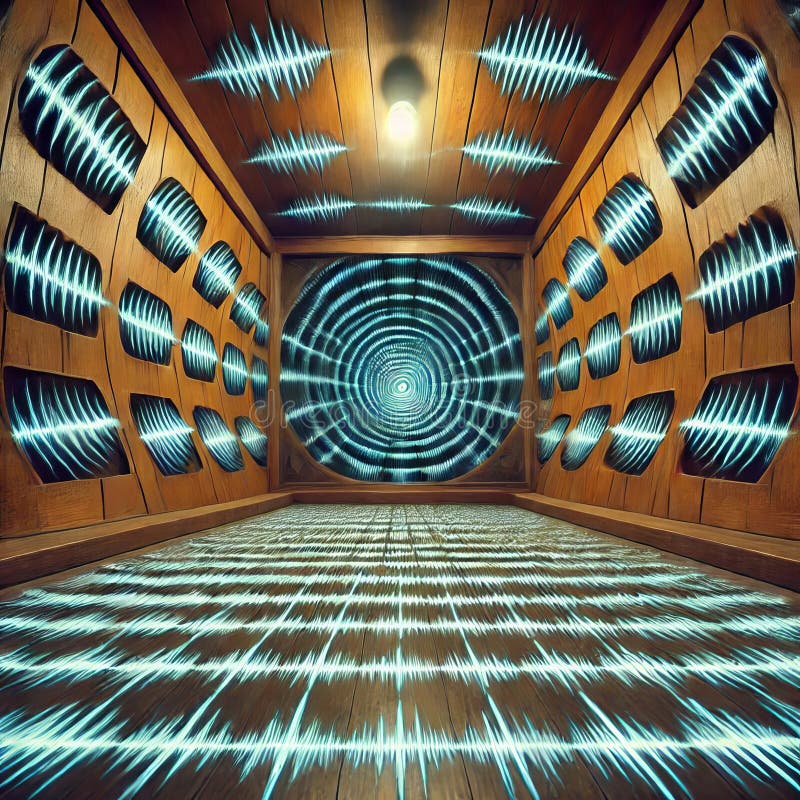
Here, sound becomes a dialogue between presence and absence; a motif repeated not to enforce redundancy, but to open fissures in perception. The echo chamber seems to whisper secrets, each reflection a delicate variation rather than mere duplication. This delicate interplay renders the minor key not sorrowful but provocatively contemplative—a welcome challenge to listeners accustomed to the major key’s assertive optimism.
Playful Paradoxes: Echo Chamber as Challenge and Playground
At first glance, the concept of an echo chamber presents a curious paradox. Traditionally, echo chambers are critiqued for fostering closed loops, stifling diversity, and amplifying singular viewpoints to excess. Yet within this Pavilion’s echo chamber, sound artists transform this challenge into a playground of innovation. How can repetition—often viewed as the enemy of novelty—spawn fresh perspectives?
The answer lies in the chamber’s capacity to fragment and reassemble sound waves across space and time. The echo does not merely replicate but refracts the original signal, introducing variance and unexpected resonances. Artists exploit these quirks, performing with echoes almost as performers themselves, crafting compositions that evolve organically with layered rhythmic and harmonic complexity.
This playful tension between constraint and creativity illustrates a broader philosophical question: can structures designed for containment become catalysts for liberation? Within this sonorous crucible, the echo chamber ceases to be a trap and becomes a matrix for new possibilities.
Immersive Experiences: Engagement Beyond Hearing
Engaging with sound art in the Pavilion’s echo chamber is not a passive act; it demands active participation. The listener’s movement, position, and even anticipation shape the unfolding auditory experience. Sound behaves like a living entity, responding to human presence with nuanced shifts in amplitude and timing.
This immersive quality enhances the minor key’s inherent emotional depth, inviting listeners to explore internal landscapes previously cloaked by the mundane cadence of everyday sound. The chamber invites a form of sonic meditation, where echoes become mnemonic devices, evoking memories and emotions layered with a sense of mystery and ambiguity.

The result is an embodied experience of sound art—one that transcends traditional listening and moves toward holistic sensorial engagement. The Pavilion’s echo chamber thus becomes a sanctuary for sonic wanderers and seekers of aural nuance.
Conclusion: Echoes of the Future
The echo chamber of the Pavilion offers more than reverberated sound; it offers a provocative challenge to understand sound as both material and metaphor. By embracing the minor key and the architectural design of reverberation, this space redefines the echo chamber from a mere acoustic phenomenon into an arena of artistic inquiry.
As sound waves spiral and dance through the chamber’s contours, they remind us that repetition need not breed stagnation. Instead, it can uncover hidden depths, generate new meanings, and inspire creative resilience. The Pavilion’s echo chamber stands as a testament to the power of sound to be playful, profound, and transformative—a place where minor chords resonate major truths.


Leave a Comment