

In 2026, the word “finished” carries a curious weight—it’s no longer a simple declaration of completion but instead resonates with ambivalence, hesitation, and often an unspoken discomfort. Why has “finished” morphed into a term almost feared, or at least approached with caution? This phenomenon is more than a linguistic quirk; it reflects profound shifts in how society perceives progress, success, and the intricate dance between endings and beginnings. The aversion to “finished” signals a cultural pivot where finality challenges the fluidity of modern aspirations and continuous evolution.
The Illusion of Finality: Why “Finished” Feels Misleading
“Finished” traditionally connotes closure—a moment when an endeavor has reached its endpoint, its value crystallized and unchanging. Yet, in 2026, this notion seems increasingly incongruent with reality. In a world brimming with rapid innovation, perpetual connectivity, and evolving paradigms, anything truly finished implies a halt, a cessation that feels antithetical to the current zeitgeist.
Take a glance at a calendar marked 2026, adorned with vibrant tools of creation and collaboration (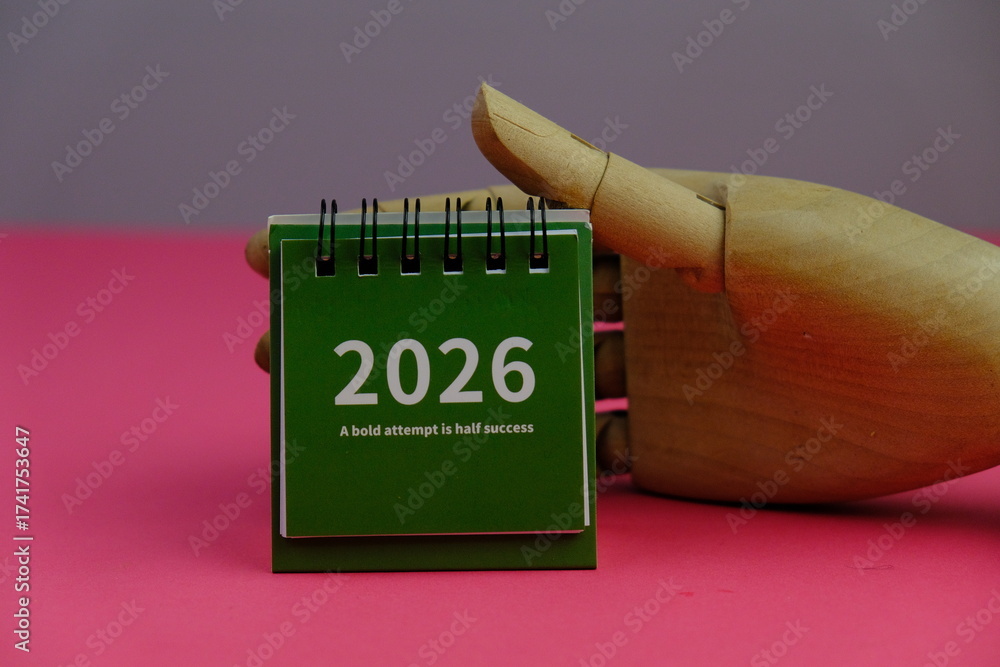 ). Each moment appears charged with promise, where endings are synonymous not with rest but with transformation. Thus, “finished” feels less like a reassuring stamp of accomplishment and more like a limiting boundary.
A Cultural Shift Toward Perpetual Progress
The 2020s ushered in an era defined by fluidity, adaptability, and constant self-optimization. Human lives, professional trajectories, and creative ventures are seldom linear. Instead, they oscillate and morph. In this context, “finished” can feel like a confinement to stasis—a finality that undermines the underlying drive toward perpetual progress.
As gold shimmer lights up the new year in an evocative burst of hope and luxury (img src=”https://as2.ftcdn.net/v2/jpg/18/30/34/65/1000_F_1830346552_Jkt4Ldi6nXhofUxfA5U5nOFO1dzJABYR.jpg” alt=”Gold text 2026 on a shimmering black background”>), it symbolizes not just wealth but the shining ideal of continuous growth. “Finished” in this glittering narrative is a contradiction to a world enthralled by reinvention and untapped potential. It’s no surprise that this word now carries a subtle stigma, viewed as incompatible with the ethos of evolving excellence.
The Psychological Discomfort of Completing
Completing a task or phase can evoke unexpected turmoil. The void left by conclusion often triggers an existential pause—the question, “What next?” looms large. This liminal discomfort can make “finished” feel like an unwelcome invitation to uncertainty.
Moreover, the emotional landscape of achievement in 2026 acknowledges an intrinsic paradox: celebration of success is invariably tinged with anxiety about obsolescence. In a hypercompetitive world, being “finished” can signal vulnerability, a moment when one’s relevance is questioned, and the safety net of ongoing engagement disappears. Therefore, people gravitate away from the word itself, wary of the psychological implications of absolute closure.
“Finished” vs. “Evolving”: The Lingering Fascination with Impermanence
“Finished” contrasts starkly with terms like “evolving,” “iterating,” and “refining.” These alternatives embody a dynamic process that never quite settles, turning life and work into continuous journeys rather than destinations.
The allure of impermanence fuels fascination and motivation. Society increasingly embraces states of becoming rather than being. Take the colorful, playful imagery of the year 2026 framed by vibrant alphabets on a verdant canvas (img src=”https://as1.ftcdn.net/jpg/17/03/67/66/1000_F_1703676617_F77BNInAodCpD7m6MREqtztZ8HVN2XMa.jpg” alt=”word 2026 on green background with colorful alphabets as a 2026″>)—a visual metaphor for creativity in motion, the endless permutations of ideas yet to be crystallized definitively. In this light, “finished” might feel like a dull punctuation mark rather than an exclamation.
Economic and Technological Drivers Reinforcing Aversion to “Finished”
Technological advancements have also played a pivotal role in the discomfort surrounding finality. AI, augmented reality, and continuous software updates have normalized a cycle where products and projects are always “in beta,” eternally subject to refinement.
Economically, the gig and creator economies are predicated on the ability to pivot and reinvent. In this environment, announcing something as “finished” could mean missed opportunities for growth, collaboration, or market relevance. The marketplace no longer prizes closure; it rewards agility.
Reimagining the Meaning of Completion in 2026
The evolving relationship with “finished” invites us to reconsider what completion truly signifies. Instead of an endpoint, it can be reframed as a gateway, a brief intermission that sets the stage for the next chapter. This reframing can imbue the word with new meaning—one that harmonizes with the continuous, nonlinear nature of contemporary life.
By embracing this philosophy, individuals and organizations alike can mitigate the stigma around “finished,” transforming it from a “dirty word” to a pragmatic milestone—a pause to gather momentum rather than a full stop.
Ultimately, the hesitation around “finished” in 2026 reflects a deeper fascination with the human condition: our insatiable desire to keep shaping, dreaming, and transcending limits. It’s a testament to our refusal to accept neat conclusions in a world that thrives on complexity and transformation. As the calendar turns and vibrant alphabets continue to dance across the canvas of time, “finished” remains a nuanced, evolving idea—never quite dirty, but decidedly complicated.


Leave a Comment