

In a world increasingly dominated by mechanization and digital uniformity, there arises a magnetic allure towards things crafted by human hands—objects that bear the marks of imperfection, spontaneity, and the unpredictable beauty of chaos. This magnetic pull is not mere nostalgia or aesthetic whimsy but rather a profound engagement with what might be called Chaoticism. This emerging ethos champions the messy, the unplanned, and the vibrantly irregular as a political and cultural statement against the homogenizing forces of industrialization and mass production. The handmade, therefore, is not only an artifact but a battleground where identity, resistance, and ideology intersect.
The Allure of the Imperfect: A Common Observation
Most people can instantly recognize the difference between something made by a machine and something wrought by a human hand. The latter carries a unique signature—a slight lopsidedness in pottery, a frayed edge of a woven textile, an uneven brushstroke. These “flaws” or irregularities often evoke a sense of warmth, authenticity, and humanity that no factory line can replicate. It is a common observation that the handmade feels inherently more precious, even when the mass-produced counterpart is functionally identical. Why is this so?
The answer reaches beyond superficial aesthetics. At the heart of the fascination lies a craving for connection—to the hands that crafted the object, to the history and tradition embedded in its making, and to the values that the handmade represents. In a digitized culture where virtual experiences increasingly substitute for tactile realities, these imperfect objects anchor us to the tangible world. They function as reminders that creation is an inherently chaotic process, one that embraces unpredictability rather than suppressing it.
Chaoticism: Embracing Disorder as Creative Force
The philosophy of Chaoticism valorizes disorder, spontaneity, and complexity as vital components of creativity. It challenges the Enlightenment ideals of rationality, symmetry, and control that have long governed artistic and cultural production. Instead of seeing chaos as a problem to be tamed, Chaoticism elevates it to a source of vitality and innovation. This paradigm is particularly visible in the realm of handmade art and craft, where each item is a negotiation between intention and chance.
Handmade works inherently contain the trace of the maker’s decisions, hesitations, and accidents. This volatile interplay creates textures and forms that cannot be reduced to uniform templates. Chaoticism finds beauty in this variability and revels in the tension between structure and entropy. This embrace of chaos is also a subtle but powerful political maneuver—it subverts the industrial model that prizes predictability and efficiency above all else.

The Handmade as Political Act
To engage with the handmade is to participate in a political discourse. In contemporary society, production methods are deeply entwined with power structures, labor conditions, and economic inequities. Mass production, for all its convenience and accessibility, often conceals exploitative labor practices and perpetuates environmental degradation. Handmade craft, in contrast, reasserts the value of human labor, skill, and cultural heritage.
This reinvestment in handcraft can be seen as a form of resistance against corporate monopolies and globalization’s flattening effects. By choosing handmade goods, individuals align themselves with ethical consumption and the preservation of localized economies. Each stitch, carve, or paint stroke becomes an embodied political statement advocating for diversity, sustainability, and social justice.
Moreover, handmade objects often carry embedded narratives that reflect the identity and struggles of marginalized communities. Craft traditions are frequently custodians of intangible cultural heritage, passed down through generations. In reclaiming and re-contextualizing these traditions, artisans challenge dominant cultural paradigms and amplify voices often sidelined by mainstream discourse.
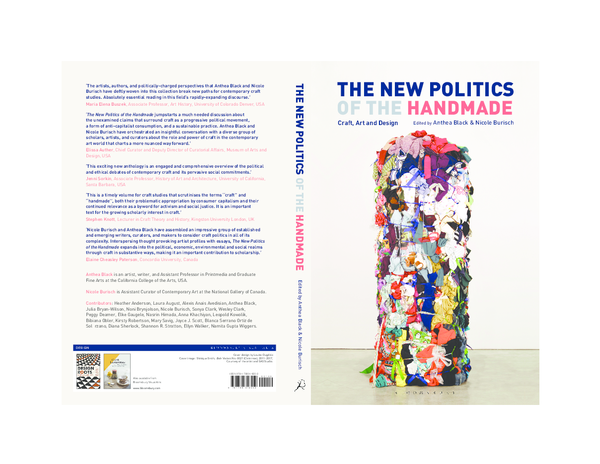
The New Politics of the Handmade: Craft, Art, and Design
In recent years, the boundaries between craft, art, and design have blurred, generating a vibrant discourse on the politics of making. The handmade is no longer relegated to the status of quaint hobby or utilitarian function but has been embraced as a dynamic arena for critical intervention. This evolution reflects a shift in how society values knowledge systems, modes of production, and aesthetic priorities.
Contemporary makers fuse traditional techniques with innovative approaches, sparking dialogues about authorship, authenticity, and consumerism. The handcrafted object thus becomes a palimpsest that records cultural upheaval and adapts to contemporary exigencies. This hybridity exemplifies the fluidity and resilience of chaotic creative processes.

Deeper Fascinations: Identity, Control, and Meaning
While the handmade’s appeal can be superficially recognized in its aesthetics, there is a deeper psychological and existential enigma at play. The fascination often hints at humans’ perennial desire to assert control and meaning in a world marked by chaos and ambiguity. Crafting by hand is, in a sense, a ritual of order-making, a way to impose form and intention upon an unruly material world.
Yet, paradoxically, it also accepts—and even celebrates—impermanence, unpredictability, and failure. This duality resonates with contemporary anxieties about the pace and complexity of modern life. Engaging with the handmade becomes a meditative act that fosters mindfulness, patience, and humility. It reconnects individuals to a slower temporal rhythm in opposition to the frenetic acceleration of technology.
Conclusion: Crafting a Future Beyond Uniformity
Chaoticism and the politics of the handmade invite us to reconsider not only what we produce but how and why. They prompt us to question the values embedded in our consumption and creation practices. Beyond mere craft, handmade objects become agents of cultural and political transformation, portals into richer, more chaotic modes of existence that acknowledge human complexity.
In embracing the unpredictable textures of the handmade, society embraces an ethic that values diversity, labor dignity, and ecological mindfulness. The fascination that these objects inspire is far from trivial; it is a profound reflection of our collective yearning for meaning in an increasingly mechanized and controlled world. Ultimately, the handmade teaches that within chaos lies not only disorder but also boundless possibility.


Leave a Comment