

Have you ever wondered how artists can capture the essence of a flowing river when there isn’t a single drop of water to be found? Imagine a world where water scarcity becomes the norm—a “drying planet” scenario that challenges not only our environment but also the creative expressions that celebrate nature’s abundance. This intriguing paradox leads us straight into the realm of waterless painting, a technique as fascinating as it is timely. Can art evolve to meet ecological urgency without losing its soul? Let’s dive into the myriad aspects of waterless painting and explore how it reshapes artistic innovation in an arid age.
The Genesis of Waterless Painting: An Artistic Response to Environmental Urgency
Waterless painting emerges as a revolutionary approach that defies the conventional dependency on water—historically the lifeblood of millions of painting techniques. Traditionally, water serves as the diluent, the medium by which colors mingle and breathe. But as water becomes an increasingly precious commodity, artists and innovators are compelled to reconstruct artistic methods in ways that conserve this vital resource. Waterless painting isn’t merely a novel technique; it is an ecological commentary, an act of rebellion against wastefulness and a commitment to sustainability. By extracting water from the equation, artists provoke us to scrutinize our relationship with natural resources anew.
Techniques That Defy Tradition: Crafting Color Beyond Water
At the heart of waterless painting lies an ingenious manipulation of materials. Artists harness mediums such as oil paints, acrylic gels, and powders, which require minimal or no water to activate. Oil paints, with their rich oil base, naturally repel the need for aqueous solutions, allowing brilliant pigments to flourish on the canvas. Acrylic gels and pastes, thick and textured, offer a multidimensional quality that often surpasses the flatness achievable with water-based paints.
Moreover, innovative “dry” techniques are flourishing, utilizing pigment powders combined with binders other than water to create vivid, lasting effects. These methods evoke a tactile immediacy—almost sculptural—that breathes vitality into dry earth-toned landscapes, abstract compositions, or surrealistic narratives. The absence of water encourages a heightened focus on texture, layering, and blending methods that employ heat, air, or natural solvents, thereby expanding the artist’s toolkit beyond liquid media.
Waterless Painting in the Context of Climate Consciousness
Why does waterless painting matter in the dialogue around climate change? The drying planet metaphor is not abstract; it is alarmingly real. Water conservation has become a preeminent survival strategy globally, and industries—from agriculture to manufacturing—are reinventing their processes accordingly. Artistic production, however, is often overlooked in this narrative. Waterless painting shifts this paradigm by embodying the principles of environmental stewardship through creative expression. It challenges artists to consider every brushstroke as a statement of sustainability, transforming artwork into a medium of advocacy.
This form of painting resonates especially powerfully in communities facing drought or water restrictions. It helps to foster environmental consciousness and establishes a tangible link between ecological issues and artistic innovation. In doing so, waterless painting transcends aesthetics and enters the realm of activism, raising awareness through visual storytelling.
Case Study: Niroj Bade’s Waterless Landscape Explorations
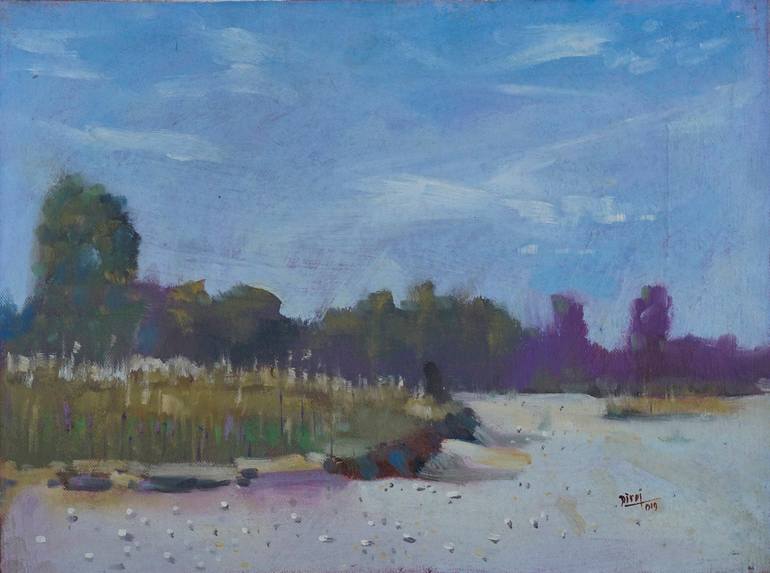
Among contemporary artists pioneering waterless techniques, Niroj Bade stands out with his evocative “waterless river” paintings. These artworks depict parched riverbeds and barren landscapes, rendered with a haunting beauty that speaks volumes about vanishing waterscapes worldwide. The absence of water within his materials paradoxically amplifies the thematic focus on water’s absence in reality.
Bade’s technique incorporates oil-based paints layered onto textured surfaces, where dry brushwork and impasto create a sensory depth suggestive of cracked earth and the memory of flowing water. His pieces invite viewers to confront a dry future and inspire reflection on the preciousness of aquatic ecosystems. The luminous quality of his paintings attests to how waterless mediums can produce striking visual narratives that compel emotional and intellectual engagement.

Tools and Materials: Navigating the Dry Palette
Diving into waterless painting necessitates an understanding of alternative supplies that maintain pigment integrity without water’s role in spreading or blending. High-quality oil paints, natural waxes, and acrylic mediums modified for thin layering are essentials. Specialized brushes featuring synthetic fibers optimize paint application by reducing absorption while maintaining precision.
Artists also explore unconventional surfaces that interact differently with these dry materials. Canvas, wood panels, and even textured papers become canvases of experimentation, each altering the paint’s adhesion and finish. Some practitioners employ heat guns or infrared lamps to accelerate drying times, reducing the risk of cracking or uneven curing—a common concern when deviating from traditional aqueous techniques.
Additionally, waterless painting sets are becoming more accessible for beginners, providing curated pigments and instructional guidance to ignite creativity without compromising ecological responsibility.
Challenges and Triumphs: Mastering the Dry Art
Mastering waterless painting is no walk in the park—it demands a deliberate, meticulous approach quite distinct from watery brushwork spontaneity. Without water as a forgiving medium, every stroke counts, every pigment load calibrated. The artist’s intimacy with the medium becomes paramount; errors cannot simply be diluted away.
However, this constraint often breeds unexpected creativity. The tactile and physical engagement with paints fosters a meditative process, compelling artists to slow down, to reflect, and to craft with mindful intention. The triumph lies in creating vivid, enduring artwork with fewer environmental costs—a balancing act between artistic ambition and ecological responsibility.
The Future of Waterless Painting: Artistic Sustainability and Innovation
What lies ahead for waterless painting? The technique’s potential extends far beyond conservation into realms of technological synergy and cross-disciplinary innovation. Nanotechnology-enhanced pigments offering unprecedented durability, biodegradable synthetic binders, and eco-friendly varnishes all hint at an evolving landscape where art and ecology converge seamlessly.
Educational institutions are increasingly incorporating sustainable art practices within their curricula, inspiring a new generation to embrace not only environmental ethics but also material ingenuity. Galleries and collectors are responding positively, recognizing the societal and ecological narratives embedded within waterless artworks.
Ultimately, waterless painting represents an emblem of adaptation—a creative evolutionary step that champions resilience, ingenuity, and reverence for a drying world.
As the planet evolves, so too must our artistic languages. Waterless painting is not just a technique; it is a poetic dialogue between the artist, the environment, and the viewer. It beckons us to reconsider scarcity, beauty, and innovation in a world where water is no longer an endless resource but a treasure to honor and preserve. In this fascinating juncture, creativity flourishes not despite limitations, but because of them—painting a future that is at once dry, vibrant, and profoundly alive.


Leave a Comment