

In the heart of the Arabian Desert, where the sun paints the sands in hues of gold and amber, a new architectural symphony rises—a beacon of innovation and artistic audacity. The Guggenheim Abu Dhabi is not just a museum; it is a monument to imagination, a celestial ship anchored in the shifting sands, designed by the visionary maestro Frank Gehry. This desert masterpiece transcends conventional boundaries, inviting visitors on a journey through the convergence of art, culture, and the ethereal beauty of its surroundings.
The Genesis of a Desert Vision
Imagine a mirage that transforms into reality—a structure that dances with the desert breeze yet stands as a titan of modern design. Guggenheim Abu Dhabi’s inception is rooted in a deep desire to craft a cultural cornerstone for the Middle East. Frank Gehry, renowned for his sculptural approach to architecture, envisioned a space where art and environment coalesce seamlessly. His design philosophy here is akin to a desert flower blooming amidst the arid expanse: delicate yet defiant, organic yet meticulously engineered.

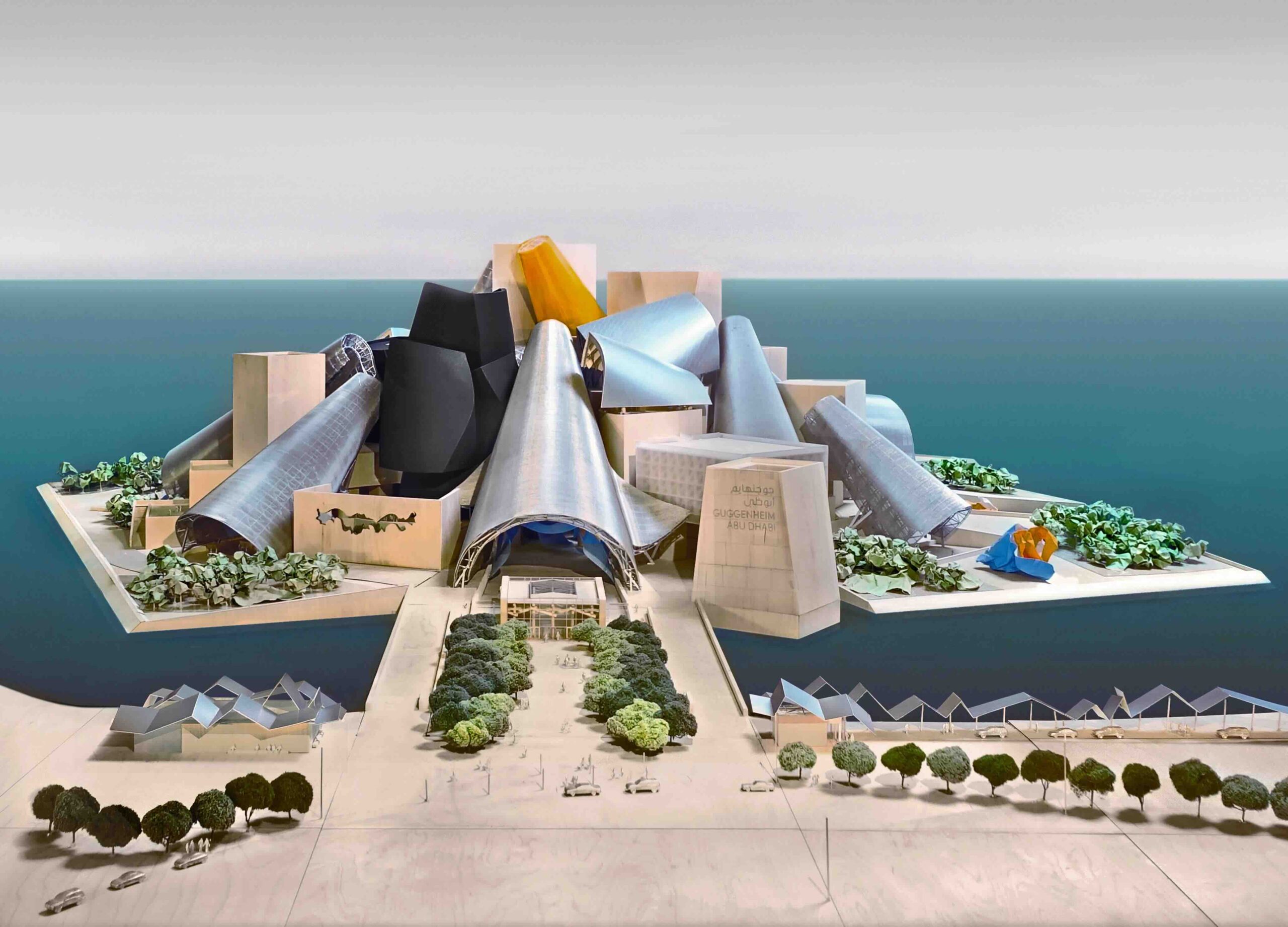
The project sought to create a cultural oasis, a haven for contemporary art that simultaneously reflects Abu Dhabi’s heritage and ambitions. Gehry’s blueprint challenges the desert’s harshness by embracing fluidity and lightness, offering a sanctuary that elevates the human spirit and the artistic experience.
Architectural Poetry in Motion
Guggenheim Abu Dhabi’s design can be described as an eloquent sonnet crafted in steel, glass, and stone. Gehry’s trademark undulating forms evoke the swirling dunes and the calligraphy of Arabic script. These curves do not merely serve an aesthetic purpose; they orchestrate a dynamic play of shadow and illumination, transforming the museum into a living canvas that reacts to the sun’s pilgrimage across the sky.
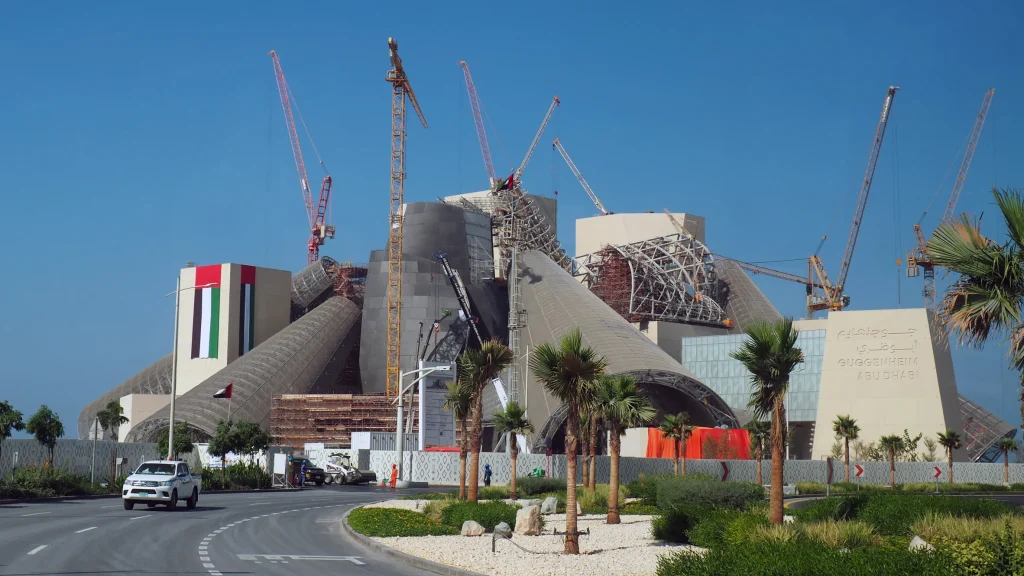
The layout invites an introspective pilgrimage, guiding visitors through interconnected galleries that ripple like water around central courtyards. This spatial choreography fosters an intimate dialogue between art and spectator. Gehry’s use of natural light is particularly ingenious: skylights and solariums punctuate the building, ensuring that daylight becomes a collaborator in presenting the artworks, shifting perceptions as hours unfurl.
A Cultural Confluence in the Sands
The Guggenheim Abu Dhabi does not exist in isolation; it is a cultural crucible born from international collaboration. This institution aims to showcase modern and contemporary works predominantly from the Middle East, North Africa, and South Asia—regions often marginalized in global art narratives. The museum’s collections and exhibitions promise to be an epic tale woven from diverse threads of tradition and innovation.
Through this initiative, Abu Dhabi asserts itself as a nexus of creative exchange, where identities and stories converge and proliferate. Gehry’s creation thus acts as a vessel—not just for art, but for the collective memory and future aspirations of a vibrant, evolving region.

Engineering Marvel Meets Environmental Harmony
Constructing such an audacious vision in the demanding desert environment called for groundbreaking engineering. The museum’s complex, latticed exteriors are designed to withstand fierce winds and solar radiation, balancing durability with aesthetic finesse. The structure employs cutting-edge materials that reflect and diffuse heat, creating a microclimate that preserves both art and visitor comfort.
Complementing the architectural prowess is a commitment to sustainability. Innovative shading devices mimic the palm fronds ubiquitous in the region, casting intricate patterns that cool and shelter simultaneously. This ecological sensitivity transforms the Guggenheim into a beacon of green innovation, demonstrating that environmental stewardship and artistic ambition are not mutually exclusive, but rather symbiotic principles.
The Living Legacy of Frank Gehry
Frank Gehry has long been celebrated for reframing the possibilities of architectural expression, effortlessly blending sculpture with structure. The Guggenheim Abu Dhabi stands as a crescendo in his illustrious career, embodying his restless pursuit of form, light, and narrative. Here, Gehry challenges the desert’s timeless canvas, sketching a story that honors tradition while boldly venturing into the avant-garde.
This masterpiece promises to be more than an architectural wonder; it is a transformative experience. Visitors will find themselves enveloped in Gehry’s poetic dialogue between nature and design, art and space. It’s an invitation to lose oneself amidst curves that mimic the desert winds and galleries that echo the whispers of centuries-old tales.
Conclusion: A Beacon for the Future of Art
The Guggenheim Abu Dhabi illuminates a path forward, a radiant fusion of artistic ambition, cultural depth, and architectural genius. Frank Gehry’s desert masterpiece stands not only as a sanctuary for art but as a lighthouse guiding the cultural renaissance of the region. It beckons the world to witness a new chapter—one where the desert’s infinite horizon meets humanity’s boundless creativity.
As the sun sets over the Arabian Peninsula, painting the Guggenheim in a fiery glow, this architectural marvel will continue to inspire, challenge, and captivate. It is a testament to what is possible when visionaries dare to dream beyond conventional confines, turning sand into a canvas and stone into poetry.


Leave a Comment