

Have you ever wondered why contemporary art seems so fascinated with bodies that melt, morph, and stretch beyond familiar human contours? What compels artists to distort the human figure, bending it until it flows like liquid or warps into unrecognizable shapes? This playful question unfolds into a profound challenge: to understand the impulse behind these surreal transformations and what they reveal about our modern experience of identity, existence, and perception.
The Anatomy of Distortion: Breaking the Mold
At the heart of distorted figures lies a deliberate departure from classical representation. Traditional art glorified the human body through balance, symmetry, and idealized forms, celebrating harmony and perfection. In contrast, contemporary artists disrupt this visual comfort zone, employing melting shapes and stretched limbs as a metaphorical toolkit to explore fragility, instability, and flux within the human condition. These figures don’t merely break apart physically; they fracture psychologically, making visible the intangible emotions and anxieties bubbling beneath the surface.


The melting clocks and distorted bodies in surreal landscapes create a sense of temporal and corporeal unreality. They challenge the viewer’s perceptions of time, space, and physicality, evoking a world where everything familiar melts away, leaving only a fluid essence that defies convention.
Metamorphosis as Metaphor: Identity in Flux
Why morph and stretch bodies in such grotesque yet enchanting ways? One powerful answer lies in the desire to visualize identity as malleable and multifaceted. Contemporary society, saturated with digital personas and shifting social roles, often feels fragmented. Distorted figures symbolize this personal and cultural metamorphosis — the continuous reshaping of the self in response to external pressures and internal evolutions.
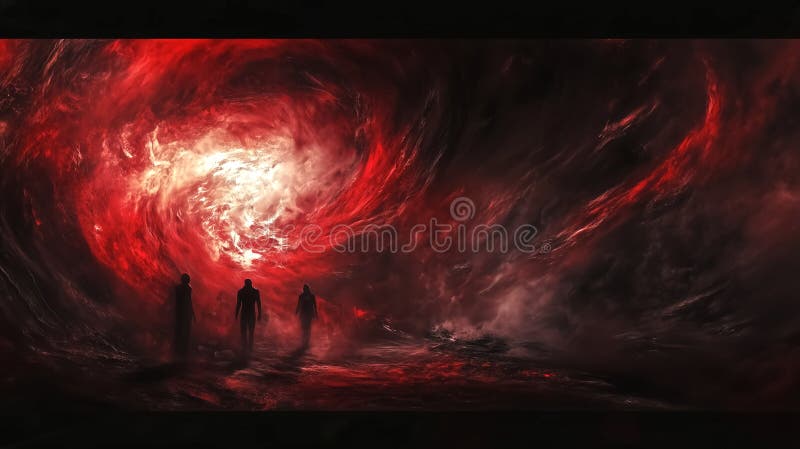
In this surreal nightmare scene, distorted human figures drip and dissolve, mirroring existential dread and the surreal dislocation of modern life. The figures’ melting acts as a powerful allegory for vulnerability and impermanence, suggesting that who we are is always slipping through our grasp.
Embodying Emotion: The Physicality of Psychological States
Distortion is not merely an aesthetic choice but a visceral expression of psychological landscapes. When bodies twist and turn in unnatural ways, they externalize emotions that are otherwise invisible—anguish, elation, fragmentation, despair. Stretching limbs might insinuate yearning or desperation. Melting forms can connote surrender or dissolution. This corporeal exaggeration magnifies the intangible, granting form to what usually lies beneath consciousness.
Such imagery challenges the viewer to empathize beyond surface appearances and to confront the fluid, often chaotic inner world that defines contemporary existence. It invites us to see our own fractured emotions reflected back in these unnatural shapes — a creative mirroring of the often disjointed human psyche.
The Influence of Surrealism and Digital Culture
The artistic lineage of distorted figures traces back to surrealism, where the bizarre and illogical converged to reveal hidden truths about the subconscious. Contemporary manifestations, however, also bear the imprint of our digital era. Software allows artists to digitally manipulate forms, creating seamless yet unsettling transformations that pulsate with cybernetic energy.

This painting of individuals surrounded by haze symbolizes not only emotional haze but also the toxic saturation of information and stimuli in contemporary life. The distorted and melting figures seem swallowed by the environment, embodying the overwhelming nature of modern existence where boundaries between self and world are increasingly porous.
Challenging Perceptions: The Play of Reality and Illusion
Distorted figures compel us to question reality itself. When bodies elongate or melt into their surroundings, they blur lines between solid and liquid, reality and dream. This visual ambiguity mirrors our own ambivalence toward truth in a postmodern context where facts can be fluid, and narratives abound in competing versions. The challenge lies in grasping an ever-shifting reality without fixed anchors, much like trying to hold a melting sculpture in one’s hands.
By destabilizing our habitual ways of seeing, these images open up new possibilities for understanding and imagining. They encourage viewers to embrace uncertainty and to find beauty not in fixity but in transformation.
An Invitation to Embrace Change
The proliferation of melting and morphing bodies in contemporary art invites us into a dynamic dialogue about change—both external and internal. These fantastical distortions suggest that rigidity is not only impossible but undesirable, pushing us toward a mindset of fluidity and adaptability.
In a world defined by rapid technological advances, social upheaval, and growing ecological threats, the distorted figure becomes a potent symbol of survival through transformation. Instead of clinging to static identities or expectations, we are invited to melt, stretch, and redefine ourselves in response to ever-evolving challenges.
Ultimately, the melted, morphed, and stretched bodies that appear in modern visual culture serve as vivid metaphors for the human experience at the dawn of the 21st century. They ask us to reconsider what it means to inhabit a body, to possess an identity, and to exist in a shifting, often surreal landscape of time, emotion, and meaning. So, the next time you encounter a distorted figure, lean into the enigmatic beauty of its form and ask yourself: what are you willing to let melt away to reveal a new shape of being?


Leave a Comment