

Surrealism is an enigmatic dance between the conscious and the subconscious, a visual symphony that entices viewers into a liminal realm where dreams bleed effortlessly into reality. As the year 2026 unveils new canvases drenched in surrealist allure, decoding these paintings becomes an invitation to journey through labyrinths of symbolism, evocative imagery, and metaphoric delicacies. Each brushstroke whispers a story, luring the observer to decipher a multi-layered narrative where nothing is quite as it seems. But how does one read a surrealist painting in this modern milieu? Let us embark on an odyssey into the dream narrative, exploring the nuances that allow these pieces to simultaneously mystify and bewitch.
Understanding the Language of Dreams
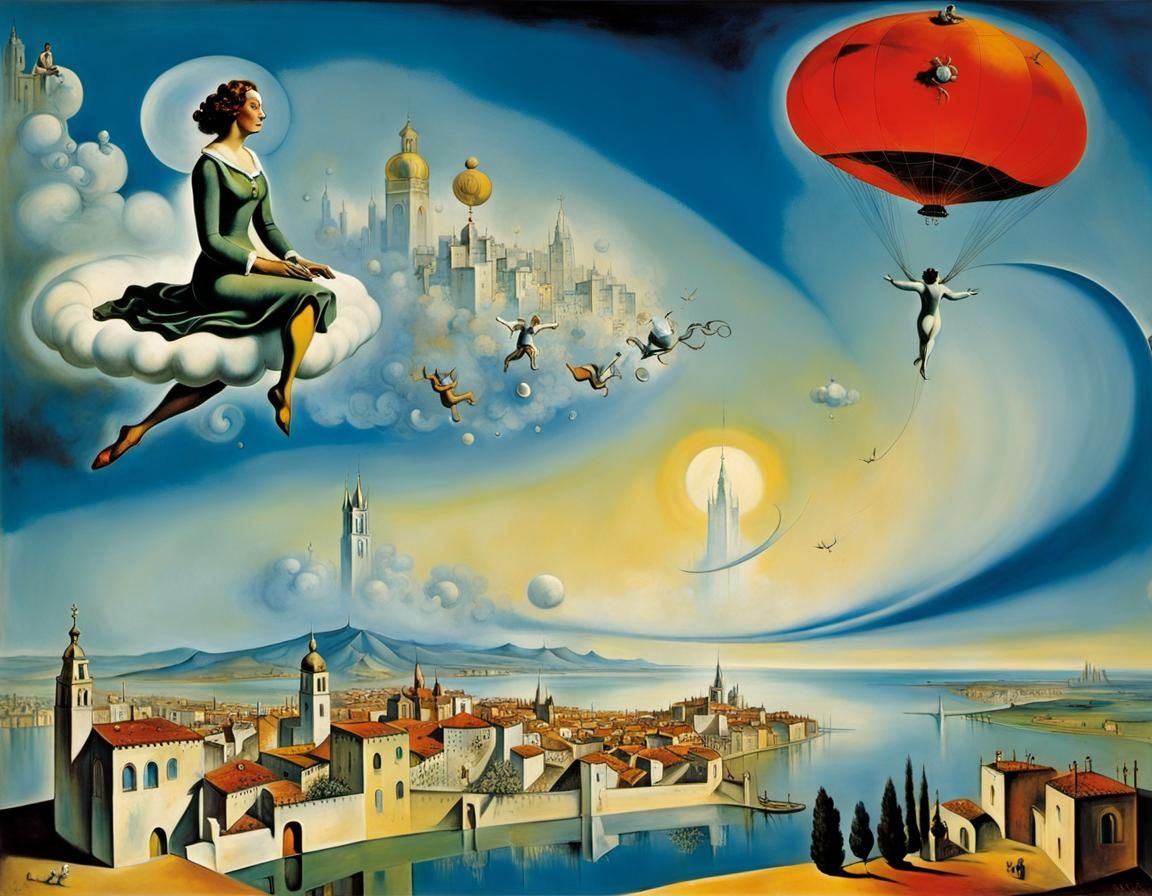
Surrealism is, at its core, an artistic transcription of dreams—wild, unfiltered, and dripping in symbolic resonance. Like an ancient manuscript written in the dialect of slumber, these paintings require viewers to cultivate a sensitivity akin to dream interpretation. Rather than seeking logical coherence, approach these works as if you are deciphering a reverie. Objects morph, shores dissolve, and gravity forgets its duty. Human figures fragment or merge with landscapes. The illogical becomes a language of its own, an intricate metaphorical tapestry. Allow your mind to linger on the uncanny juxtapositions—why does a melting clock cling to barren branches? What do floating cities signify against a turbulent sky? These deliberate incongruities whisper the psyche’s secrets, emblematic of universal yearnings and fears.
The Metaphoric Matrix: Symbols and Their Illusive Meanings
Every motif in a surrealist painting functions as a charismatic cipher, beckoning the viewer to unlock a deeper narrative. Unlike literal art, where objects often stand in for themselves, surrealist symbols evoke emotional and psychological truths. A bird might not merely be a creature of flight; it can signify freedom, the soul’s transcendence, or the elusive nature of inspiration. The recurring use of water may not just be naturalistic but represents the subconscious tide, endlessly caressing the shores of conscious thought. Even mundane objects can acquire otherworldly significance when reframed in strange contexts—a telephone handset melting as a metaphor for dissipating communication or fragmented human faces symbolizing fractured identity. Discovering these metaphorical currents is an essential step to reading 2026’s surrealist paintings in their full sublime depths.
The Unique Appeal: Why Surrealism Continues to Captivate in 2026
At first glance, surrealist paintings from the modern era might appear as nostalgic relics of a past century’s avant-garde, yet their allure intensifies in an age riddled with information overload and existential ambiguity. Surrealism, with its unrestricted flights of fancy and subconscious excavation, offers a refuge and a mirror. It draws viewers into a dialogue with their own fragmented perceptions and latent anxieties. In 2026, the appeal lies in this juxtaposition: a hyperconnected world demanding logic encounters paintings that rebel against it by plunging into irrational, poetic dreamscapes. This clash produces an intoxicating tension—each piece becomes a playground for the imagination and a profound meditation on human experience. The aesthetic paradox of crisp, modern techniques infused with timeless surrealist motifs invigorates these works, making them not only visually arresting but psychically resonant.
Decoding Composition: Navigating Spatial Surrealities
In surrealist paintings, spatial relations often defy classical perspective, bending to the whims of psychic truth rather than physical laws. The arrangement of elements is not arbitrary—it is a deliberate game of layering realities and temporalities. When a horizon line tilts unnaturally or objects float disconnected from ground, it demands that the viewer discard traditional rules. Instead, the painting’s architecture invites you into a more fluid experience, where time folds and moments coexist. This distortion crafts a dreamlike atmosphere that speaks to the elasticity of memory and emotion. Observing how shapes overlap, dissolve, or reflect one another can reveal keys to the painting’s thematic core—whether it be alienation, metamorphosis, or transcendence. Mastery of this visual syntax is crucial to unfolding the dream narrative embedded within.
The Emotional Cadence: Feeling Beyond Form
Beyond symbols and composition lies the visceral undercurrent of emotion. Surrealist paintings evoke a sensory echo that lodges deep within the psyche. They stir unease, curiosity, wonder, or nostalgia—sometimes all at once. These emotional reverberations act as the painter’s unspoken language, guiding the viewer toward personal interpretation. Sometimes, the ambiguity induces discomfort, mirroring the subconscious struggle with paradoxes and uncertainties inherent in life. Other times, the imagery blooms with poetic lyricism, inspiring liberation from rigid thought. The emotional cadence of a surrealist piece plays out in color choice, brushstroke texture, and the starkness or fluidity of forms. In 2026, this sensibility is increasingly prized, as audiences seek not just observation, but emotional immersion—a key part of reading the dream narrative unfolds in the heart as much as in the mind.
Engaging with the Modern Surrealist Experience
Reading a surrealist painting today goes beyond passive viewing; it is an active, intimate engagement. It invites curiosity, imagination, and openness to paradox. Begin by letting go of preconceived notions about realism and narrative coherence. Absorb the image with all senses, lingering on details that beckon your mind. Challenge yourself to hypothesize stories or emotions the painting evokes. Write down impressions or share your interpretations aloud; surrealism thrives in dialogue and multiplicity of meaning. Contemporary surrealist works often infuse this tradition with new symbols drawn from digital culture, environmental anxieties, and evolving identities, adding layers to the narrative labyrinth. Embracing this intricate interplay between past and present enriches the experience, transforming each encounter into a personal and evolving story.
The dream narrative embedded in surrealist paintings of 2026 invites us to step off the edge of waking logic and glide through realms where metaphor reigns, and imagination knows no boundary. By attuning to the symbolism, spatial distortions, and emotional echoes, one can decode the cryptic language of the subconscious made visible. In doing so, these artworks become more than images; they become living dreams etched onto canvas—enigmatic, mesmerizing, and profoundly human.


Leave a Comment