

Venice is a city that defies simple aesthetics. Beneath its labyrinthine waterways and venerable palazzos lies a visual and philosophical tension—one that captivated countless artists and architects alike: the politics of the visible seam. When one speaks of seams in Venice, it’s not merely a metaphor for urban cracks or material junctures; it is the pulsating heartbeat of chaotic order, an assemblage where the accidental and deliberate intersect with exquisite complexity. This fascination with visible seams—both literal and symbolic—invites us to explore chaoticism as a lens through which Venice’s unique identity unfolds.
The Paradox of the Visible Seam
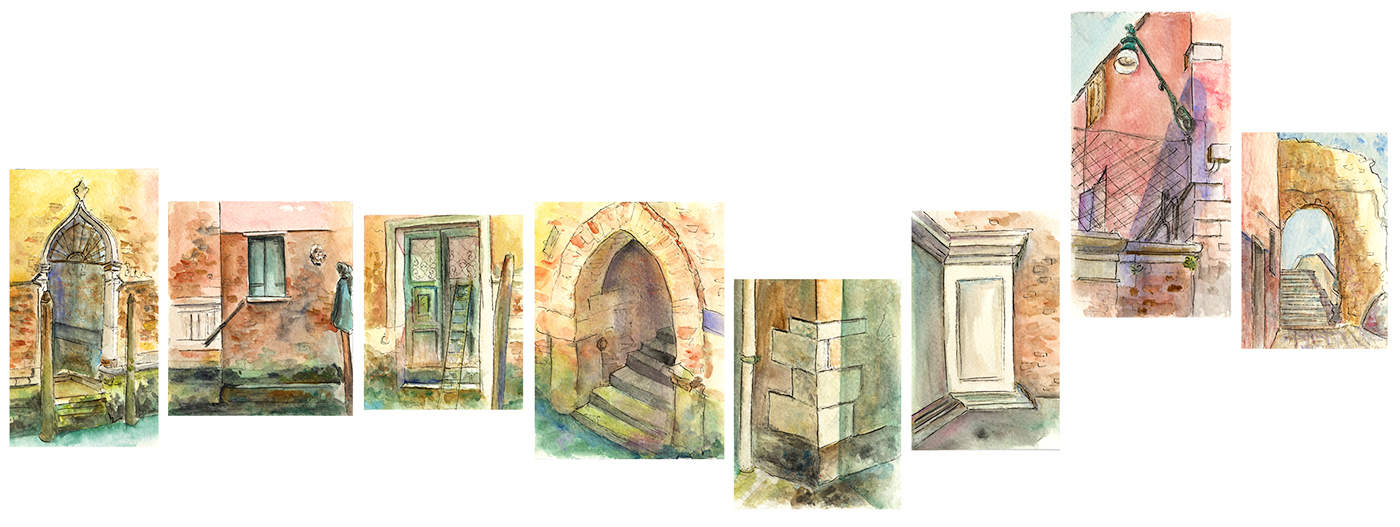
In the traditional architectural vocabulary, seams are often concealed, smoothed over to create a uniform façade. Venice, however, thrives on an aesthetic counterpoint, where seams are boldly visible, almost celebrated. These exposed junctions between building materials, styles, and epochs shout of histories embedded in the stones. The seemingly haphazard alignments and overlapping designs embody more than mere construction method—they narrate tales of adaptation, resilience, and evolution.
This paradoxical embrace of chaos is what imbues Venice’s façades with an unparalleled charisma. It challenges the seductive allure of pristine perfection and points to something far more human: imperfection as identity, the unapologetic display of accumulated history. The visible seam becomes an emblem of Venice’s multilayered past—scars and stitches laid bare in stone.
Chaoticism: The Aesthetic Philosophy in Venetian Urbanity
Chaoticism—an aesthetic and philosophical framework celebrating disorder and spontaneity—provides a compelling portal into Venice’s visual culture. It acknowledges that beauty and meaning frequently emerge from irregularities and disruptions. Venice embraces this through its vernacular architecture, where centuries of construction reflect not a rigid master plan but continuous negotiation with environment, politics, and commerce.
The city itself behaves like a living palimpsest, where layers of additions, repairs, and adaptations form a chaotic mosaic. Narrow alleyways meet wide piazzas with no predictable symmetry. Gothic windows peer beside Renaissance arches; brickwork contrasts with stuccoed walls. Each visible seam, crack, and overlap becomes a brushstroke in a grand, dynamic canvas that refuses stasis. Chaos here is not mere randomness—it is the deliberate coexistence of discord, a visual rhetoric challenging controlled uniformity.
The Political Economy of Visibility
Visible seams in Venice carry profound socio-political undertones. The act of revealing or obscuring junctions reflects power dynamics, social negotiations, and class distinctions. For centuries, Venetian patricians used architecture to assert status, often commissioning elaborate façades that masked underlying dilapidation. Conversely, working-class edifices displayed more conspicuous joins and repairs, not out of neglect but necessity.
This visibility of seams disrupts the sanitized narratives of elite Venetian beauty and exposes the city’s uneven social fabric. It gestures towards a democratic truth: the city’s survival hinges on collective maintenance, informal economies, and everyday interventions. The fissures and overlaps legitimize the urban experience of diverse inhabitants, whose mark on the cityscape is tangible and irrevocable.

Materiality, Memory, and the Seam as Archive
Every seam in Venice is a silent archivist of its material past. The juxtaposition of ancient stones with modern reinforcements reveals not only tectonic adjustments but the emotional labor of communities preserving their heritage. Faded mortar, weathered metal, and patched brick evoke a tactile narrative, a mnemonic geography encoding stories of flood, fire, and social upheaval.
Visible seams function as palimpsests, anchoring collective memory in physical form. They call attention to the fragile balance between preservation and innovation, tradition and progress. An exposed joint is a temporal fissure, a portal through which one glimpses the continuous flux of Venetian existence—a vibrant dialogue between past and present.
Visual Complexity as a Cultural Magnet
There is an undeniable magnetism in Venice’s layered visual complexity. Visitors find themselves mesmerized by the interplay of surfaces where no seam is insignificant. This intrigue stems from a deeply human fascination with impermanence and entropy. The visible seam activates a sense of discovery—a puzzle inviting contemplation of the city’s complex socio-political and environmental history.
Moreover, this aesthetic chaos disrupts expectations and compels a reassessment of notions such as beauty, order, and authenticity. Each exposed joint becomes an invitation to dwell within asymmetry, to embrace ambiguity, and to celebrate the artistry of imperfection. This entices a diverse audience, from architects and historians to artists and casual wanderers, drawn into Venice’s enigmatic narrative.

Conclusion: Embracing the Seam as a Metaphor
The politics of the visible seam in Venice transcends architectural discourse, seeping into cultural identity and collective memory. It epitomizes chaoticism not as disorder but as a sophisticated, ethical embrace of complexity and contingency. Venice’s exposed seams refuse to be neatly categorized; they embody stories of survival and resilience against environmental volatility and human folly.
To witness these seams is to engage with the city’s multilayered soul—where chaos and order interlace, and boundaries dissolve into rich tapestries of existence. This fascination with visible seams invites us to reconsider our own thresholds of perception and acceptance, urging us to find beauty not in erasure, but in the magnificent, unruly texture of life itself.


Leave a Comment