

In recent years, a dynamic and electrifying force has emerged within the global art scene—Middle Eastern artists are increasingly recognized as pioneering leaders in the Chaoticist Movement. This newfound prominence sparks curiosity and beckons a profound examination beyond superficial observation. What is it about this region, with its intricate history and tumultuous present, that fuels such an impassioned engagement with chaos as an artistic philosophy? The answer lies in a confluence of cultural heritage, socio-political upheaval, and an intrinsic drive toward reinterpreting disorder as a form of profound beauty and critical commentary.
Unraveling the Magnetic Attraction to Chaos
The Chaoticist Movement thrives on the interplay of unpredictability, fragmentation, and complex narratives. At first glance, it may seem a perplexing or even anarchic aesthetic. Yet, for Middle Eastern artists, chaos does not merely represent disarray; it embodies the layered realities of their lived experiences and historical context. From ancient civilizations marked by conquests and cultural amalgamations, to contemporary societies grappling with geopolitical turmoil, the Middle East is a crucible of contradiction and transformation.
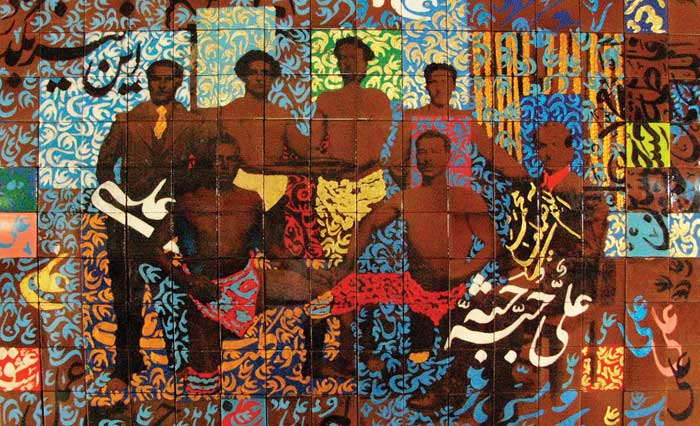
Artists channel this turbulence into works that are both visceral and reflective. Their canvases, sculptures, and installations become palimpsests of memory, identity, and resistance. What captivates audiences is how these creations resonate on a universal scale—offering not just a visual feast, but a narrative full of paradoxes, challenging viewers to reconsider their own understandings of order and disorder.
Historical Underpinnings: A Soil Rich With Complexity
It’s crucial to appreciate the historical substratum from which this vanguard art springs. The Middle East has always been a nexus of cultural, religious, and intellectual confluences. Empires rose and fell, philosophies clashed, and languages interwove—producing an extraordinary tapestry rife with contradictions. This bedrock of complexity nurtures artists who inherently see the world through multifaceted lenses.
These historical depths provide fertile ground for Chaos as a metaphor. It serves not just as an aesthetic or thematic choice but as a symbolic navigation through centuries of upheaval and synthesis. The Chaoticist Movement echoes the region’s longstanding tradition of questioning linear narratives, honoring instead the kaleidoscopic nature of human experience.
Socio-Political Turmoil as Creative Catalyst
Beyond history, the immediacy of ongoing socio-political struggles ignites a heightened sensibility toward chaos. The persistent instability within many Middle Eastern nations—be it due to war, displacement, or socio-economic challenges—means that chaos is not abstract; it’s tangible, palpable, ingrained in everyday existence.
Rather than retreating into escapism, Middle Eastern artists harness this reality, transforming trauma and disorder into powerful statements of resilience and hope. Their art conveys a refusal to be subdued by chaos, instead embracing it as a generative force that exposes hidden truths and nurtures new possibilities. This perspective offers an alternative paradigm, where chaos coexists with creation, disorder with meaning.

Revolutionizing Western Perceptions through Chaoticist Aesthetics
As Middle Eastern artists ascend the ranks of modern art influencers, they simultaneously catalyze a paradigm shift in Western perceptions of both the region and contemporary art. The Chaoticist Movement, as steered by this cohort, disrupts conventional aesthetics rooted in symmetry, order, and minimalism. It invites an embrace of complexity, unpredictability, and even discomfort.
This artistic insurgency not only dismantles reductive stereotypes about the Middle East but also enriches the Western art canon with fresh perspectives. The fusion of traditional motifs with avant-garde expressions crafts an innovative dialogue between East and West. The chaotic forms challenge the Western gaze, prompting reflection on the limitations of linear narratives and the beauty inherent in multiplicity and flux.
Technological Innovation as a Medium for Chaos
The cutting edge of digital and installation art has become an ideal conduit for Chaoticist ideals. Middle Eastern artists frequently integrate technology—augmented reality, digital layering, soundscapes—to create immersive experiences that mimic the unpredictable rhythms of contemporary life. These multidimensional works harness chaos not as static visual noise, but as kinetic energy that envelops and engages audiences.
Technology allows for new layers of narrative complexity, blurring the lines between creator, medium, and observer. This multiplicity of interaction mirrors the chaotic interconnections of the artists’ milieus, making the art an active dialogue rather than a passive artifact.

The Philosophical and Existential Dimensions
Deeper still, the Chaoticist Movement echoes philosophical and existential inquiries native to Middle Eastern intellectual traditions. The art provokes contemplation on the ephemeral nature of existence, the fluidity of identity, and the tension between fate and free will. Chaos, here, becomes an emblem for the fragility and resilience of human condition.
This philosophical grounding distinguishes Middle Eastern contributions to the movement, infusing their chaotic expressions with meditative depth and gravitas. Far from nihilistic, this art conveys a subtle optimism—a belief that in the midst of chaos lies the potential for renewal and transformation.
Conclusion: The Symphony of Disorder
The ascendancy of Middle Eastern artists within the Chaoticist Movement is not a mere happenstance. It is the outcome of a profound negotiation with history, culture, and reality’s layered chaos. Their art captivates not only for its striking visual audacity but because it resonates as a testament of survival, innovation, and redefinition.
In embracing the chaotic, these artists teach us to appreciate the symphony within disorder—a compelling choreography of fragmentation and cohesion, despair and hope, destruction and creation. Their leadership in this movement signals a transformative moment in contemporary art, heralding a future where chaos is valorized as a source of profound insight and boundless creative potential.


Leave a Comment