

In the labyrinthine corridors of human cognition, where the mind’s eye weaves dreams into waking life, two enigmatic forces collide: narrative velocity and dream logic. These concepts, seemingly disparate, are in fact twin engines propelling us through the fog of reality, reshaping how we perceive time, causality, and meaning. Imagine a world where the linear march of events dissolves into a kaleidoscopic dance of fragments—where the past, present, and future coalesce into a single, pulsating moment. This is not the stuff of fantasy alone; it is the raw material of how our minds construct stories, both in slumber and in the act of creation.
The interplay between these forces is not merely academic—it is a cognitive revolution, a silent upheaval in how we interpret the world. Whether through the feverish narratives of a dream or the meticulously crafted arcs of literature, we are constantly negotiating with the boundaries of time and reason. To understand this intersection is to unlock a door into the very architecture of human thought, where the rules of logic bend and the velocity of a story’s unfolding can warp perception itself.
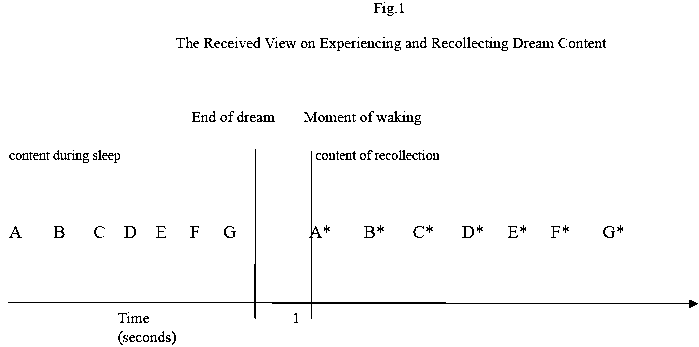

The Velocity of Narrative: When Stories Outpace Reality
Narrative velocity is the tempo at which a story unfolds, not just in terms of plot progression but in the way it manipulates the reader’s or viewer’s engagement with time. It is the difference between a slow-burning mystery and a relentless thriller, between a meandering memoir and a tightly coiled thriller. But velocity is more than speed—it is the acceleration of meaning. A story with high narrative velocity pulls the audience forward, compressing years into sentences, emotions into glances, and entire lifetimes into a single climactic moment.
Consider the films of Christopher Nolan, where time is not a river but a Möbius strip. In Inception, the dream layers collapse in on themselves, each level accelerating the stakes until the boundary between dream and reality blurs into oblivion. The narrative velocity here is not just about plot—it is about perceptual distortion. The audience is not merely watching a story; they are experiencing the disorientation of a mind racing against its own constructs.
This phenomenon extends beyond cinema. In literature, authors like David Mitchell and Haruki Murakami employ temporal elasticity, stretching and compressing time to mirror the fluidity of memory. A single event might sprawl across chapters, while decades vanish in a parenthetical aside. The result? A narrative that feels alive, breathing in sync with the reader’s subconscious.
Dream Logic: The Mind’s Unfiltered Story Engine
If narrative velocity is the throttle of storytelling, dream logic is the engine’s fuel—a combustible mix of symbolism, paradox, and unbridled creativity. Dreams operate outside the tyranny of linear time, where a single object can contain multitudes, and causality is a suggestion rather than a law. In the dream realm, a door might lead to a childhood home, which then collapses into a subway station, which is also a library, which is also the face of a long-lost friend. This is not nonsense; it is the mind’s way of condensing complexity into visceral, emotional shorthand.
Dream logic thrives on associative leaps. One image triggers another not through rational connection but through the subterranean currents of memory and desire. A red balloon might evoke nostalgia, which then morphs into a fear of abandonment, all within the span of a single breath. This is the antithesis of Aristotelian plot structure—there are no three-act climaxes here, only fractal revelations, where meaning blooms in unexpected places.

Artists and writers have long mined this terrain. Salvador Dalí’s melting clocks in The Persistence of Memory are not just visual gags—they are a direct invocation of dream logic, where time itself is malleable. Similarly, the works of Jorge Luis Borges play with dream-like structures, where libraries contain infinite books and labyrinths loop back on themselves. These creations do not just tell stories; they simulate the dream experience, inviting the audience to surrender to the illogic of their own minds.
The Alchemy of Collision: Where Velocity Meets Dream Logic
When narrative velocity and dream logic intersect, something extraordinary happens: the story becomes a living dream. The audience is no longer a passive observer but an active participant in a cognitive hallucination. This is the territory of surrealist cinema, magical realism, and hypertext fiction, where the rules of engagement are rewritten in real time.
Take, for example, the works of Andrei Tarkovsky. In Stalker, the journey through the Zone is less about destination and more about the psychological velocity of the characters’ perceptions. Time stretches and contracts, and the landscape itself seems to dream. The narrative does not just move forward—it dissolves, leaving the viewer in a state of suspended disbelief, where every frame feels like a fragment of a larger, unknowable dream.
In literature, the novels of Italo Calvino, particularly If on a winter’s night a traveler, employ a similar technique. The reader is dropped into a story that constantly shifts, fragments, and reassembles itself, mirroring the way dreams resist coherence. The narrative velocity here is not about progression but about disorientation as revelation. The reader is forced to confront the fragility of their own expectations, much like in a dream where logic is a guest, not a host.
This collision also reveals a profound truth about human storytelling: we are not just consumers of narratives; we are co-creators. When a story moves at dream-like speed, the audience’s mind fills in the gaps, stitching together meaning from the fragments. It is a participatory act, a dance between author and reader, where the boundaries of reality and illusion blur.
The Cognitive Payoff: Why This Matters
Understanding the interplay of narrative velocity and dream logic is not just an intellectual exercise—it is a tool for cognitive liberation. In a world where information bombards us at breakneck speed, where our attention spans are fractured by algorithms, these concepts offer a way to reclaim agency over our perceptions. By embracing the fluidity of dream logic and the propulsive power of narrative velocity, we can train our minds to navigate complexity with greater flexibility.
Consider the act of reading a dense philosophical text. The ideas may seem impenetrable at first, but if the narrative velocity is high enough—if the concepts are presented in a way that feels like a dream unfolding—the reader’s mind can absorb them more intuitively. The same principle applies to learning: when information is structured like a story, with its own internal logic and momentum, it becomes sticky. It lingers in the mind long after the pages are turned.
Moreover, this intersection challenges our assumptions about linearity. In a culture obsessed with productivity and measurable outcomes, dream logic reminds us that meaning is not always linear. Sometimes, the most profound insights come from the sideways leaps of the mind, the moments when we abandon the straight and narrow for the winding path of association.
The Future: Storytelling as a Dream Machine
As technology advances, the boundaries between narrative and dream are becoming increasingly porous. Virtual reality, augmented reality, and AI-generated stories are pushing the envelope of what storytelling can be. Imagine stepping into a story where your own dreams influence the plot, where the narrative velocity adapts in real time to your subconscious reactions. This is not science fiction—it is the next frontier of immersive narrative design.
Already, experimental platforms like Twine and Inkle allow users to create branching, non-linear stories where the reader’s choices shape the dream-like flow of events. These tools are democratizing the power to craft experiences that feel like living dreams, where causality is fluid and meaning is emergent.
The convergence of narrative velocity and dream logic is more than a stylistic choice—it is a revolution in how we experience stories. It invites us to question the nature of reality, to embrace the illogical, and to find meaning in the fragments. In a world that often feels rigid and predictable, these concepts offer a way to dream awake, to see the world not as it is, but as it could be.
So the next time you find yourself lost in a story that feels like a dream, or wake from a slumber where time bent to the will of your subconscious, pause and consider: you are not just witnessing a narrative. You are participating in a cognitive dance, one that reshapes the very fabric of how you see, think, and feel. And that, in itself, is a promise worth keeping.


Leave a Comment