

In the grand theater of existence, chaos is the unscripted monologue, the improvisational jazz solo, the sudden gust of wind that upends the carefully arranged picnic. It is both the hug that squeezes the breath out of you and the punch that leaves you gasping. This paradox—where disorder feels simultaneously comforting and jarring—is not merely a quirk of human perception. It is a reflection of our deepest psychological and existential entanglements. To understand why chaoticism occupies this dual role, we must venture into the labyrinth of the mind, where order and chaos engage in a perpetual tango, each step forward a stumble, each stumble a revelation.
Chaos, in its raw form, is the antithesis of control. Yet, it is within this very absence of control that we often find a strange solace. Consider the way a storm clears the air, how a spilled cup of coffee forces a pause in an otherwise relentless day. There is a catharsis in surrendering to the unpredictable, a relief in admitting that not everything can—or should—be tamed. This is the hug of chaos: the way it wraps around us, loosening the vice grip of expectation, if only for a moment. It whispers, *You don’t have to be perfect. You don’t even have to be consistent.* In a world that demands productivity, precision, and perpetual motion, chaos offers a rebellious embrace, a reminder that life need not be a spreadsheet.
But the embrace is never gentle. The same forces that cradle us also bruise. Chaos is the punch that follows the hug, the sudden jolt that reminds us of our fragility. It is the email that arrives at 4:58 PM on a Friday, the flat tire on a deserted road, the argument that erupts from nowhere. These moments are not just disruptions; they are revelations. They expose the brittle scaffolding of our plans, the illusions of predictability. The punch of chaos is not cruelty; it is clarity. It forces us to confront the illusion that we are the authors of our own stories, that our lives are linear narratives with neat beginnings, middles, and ends. Chaos shatters that narrative, and in doing so, it reveals something truer: life is a collage of fragments, some beautiful, some jagged, all necessary.
The Allure of the Unplanned: Why We’re Drawn to Chaos Like Moths to a Flame
There is a peculiar magnetism to chaos, a fascination that borders on obsession. We binge-watch shows where protagonists thrive in disorder. We romanticize the “messy genius,” the artist who thrives in a studio strewn with half-finished canvases and coffee stains. We chase thrills—roller coasters, spontaneous road trips, last-minute decisions—because they mimic the electric unpredictability of chaos. But why? What is it about disorder that captivates us so fiercely?
At its core, our attraction to chaos is a rebellion against the stifling tyranny of order. Modern life is a symphony of algorithms, routines, and optimization, where every click, every step, every breath is tracked, analyzed, and monetized. In this hyper-structured world, chaos becomes a form of resistance. It is the wild card in a deck of predictable outcomes, the glitch in the matrix that reminds us we are not mere cogs. This rebellion is not just aesthetic; it is existential. Chaos whispers that we are more than the sum of our productivity metrics, that our value is not measured in efficiency but in our capacity to adapt, to surprise, to *feel*.
Yet, this fascination is not purely defiant. It is also a search for authenticity. Order, for all its virtues, can feel sterile, a sanitized version of reality where edges are smoothed, emotions are curated, and spontaneity is sacrificed on the altar of control. Chaos, by contrast, is raw. It is the unfiltered scream of a child, the unedited draft of a novel, the unscripted moment when a stranger’s laughter fills a silent room. In chaos, we glimpse the rawness of existence—the cracks in the facade, the unscripted truths that order often conceals. This is why we are drawn to it: it feels real in a world that often feels performative.
The Psychology of Chaos: When Disorder Becomes a Mirror
To understand why chaos feels like both a hug and a punch, we must turn to psychology, where the duality of disorder is dissected with clinical precision. Chaos, in psychological terms, is not merely the absence of order; it is the presence of the unfamiliar, the unpredictable, the uncontrollable. And our brains, for all their complexity, are wired to both crave and fear the unfamiliar.
On one hand, chaos triggers our threat-detection systems. The amygdala, that ancient sentinel of danger, sounds the alarm when faced with the unknown. This is the punch—the sudden spike of cortisol, the racing heart, the instinct to retreat or fight. But on the other hand, chaos also activates the dopaminergic reward pathways. The brain, ever the opportunist, recognizes that unpredictability can lead to novel experiences, and novelty is a potent source of dopamine, that neurotransmitter of pleasure and motivation. This is the hug—the thrill of discovery, the rush of a new idea, the exhilaration of a life lived on the edge of the known.
This dual response is not a flaw in our design; it is a survival mechanism. Our ancestors who were both wary of and curious about the unknown were more likely to thrive. The ones who fled from every rustle in the bushes perished. The ones who cautiously approached the unknown discovered new hunting grounds, new relationships, new possibilities. Today, this evolutionary legacy plays out in our relationship with chaos. We are drawn to it because it holds the promise of growth, but we are also wary because it holds the risk of harm. This tension is not a bug; it is a feature of human resilience.
Moreover, chaos serves as a mirror, reflecting back to us the parts of ourselves we often ignore. In the quiet of order, we can delude ourselves into believing we are in control, that our emotions are stable, that our lives are predictable. But chaos strips away these illusions. It forces us to confront our fears, our insecurities, our capacity for both resilience and fragility. When a project spirals into disarray, when a relationship unravels unexpectedly, when a plan collapses under the weight of reality, we are confronted with the raw truth of who we are. Chaos does not just disrupt our external world; it disrupts our internal narratives, revealing the stories we tell ourselves about our strength, our worth, and our place in the world.
The Art of Embracing Chaos: Finding Balance in the Beautiful Mess
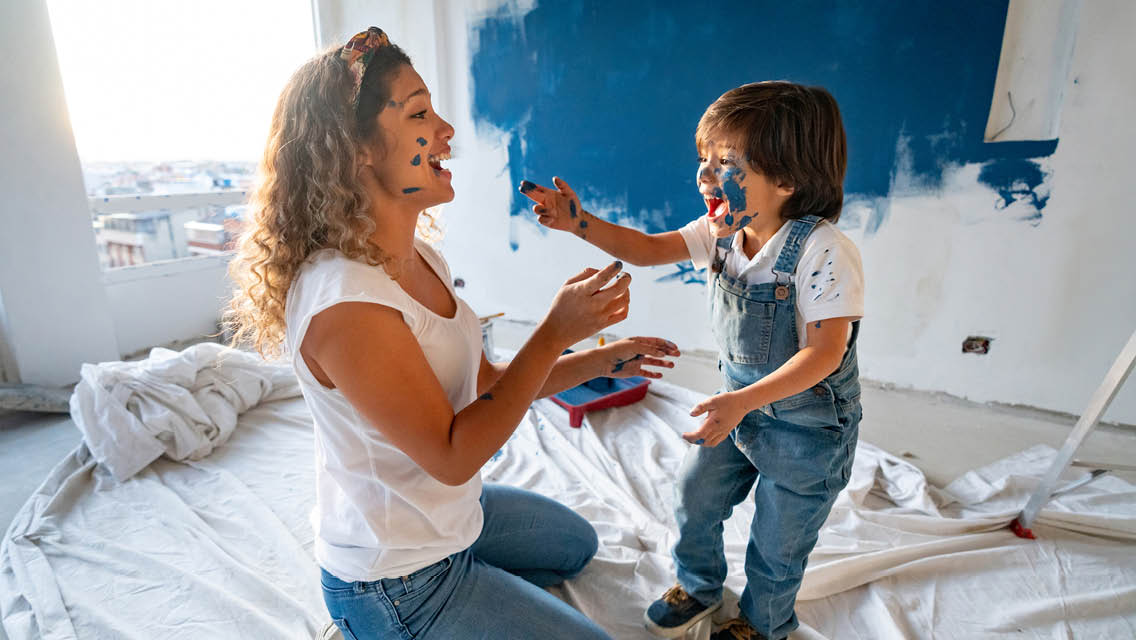
If chaos is both a hug and a punch, then the art of living lies in learning to dance with it—not to eliminate it, nor to surrender to it entirely, but to find a rhythm that allows us to move with its unpredictable cadence. This is not about embracing chaos for its own sake, nor is it about retreating into the safety of rigid order. It is about cultivating a relationship with disorder that is neither adversarial nor submissive, but collaborative.
One way to achieve this balance is through the practice of *structured spontaneity*. This is the art of leaving room for the unexpected within the framework of a plan. It might mean scheduling a “chaos hour” in your week, where you allow yourself to wander, to explore, to indulge in the unplanned. It might mean setting aside a project for “creative chaos,” where the goal is not perfection but exploration. In these moments, chaos is not the enemy; it is the co-creator, the unpredictable partner that injects vitality into the mundane.
Another approach is to reframe our relationship with chaos by viewing it as a teacher rather than a tormentor. Every disruption, every setback, every moment of disorder is an opportunity to learn. What does this chaos reveal about my priorities? What strengths am I discovering in myself? How can I adapt to this new reality? By asking these questions, we transform chaos from a punishing force into a guiding light. It becomes less about surviving the storm and more about learning to sail in it.
Finally, embracing chaos requires a shift in perspective—from one of control to one of curiosity. Instead of resisting the unpredictable, we can ask: *What can this chaos teach me?* Instead of fearing the unknown, we can wonder: *What possibilities does it hold?* This shift does not eliminate the discomfort of chaos, but it transforms it from a threat into an adventure. It allows us to see chaos not as the enemy of order, but as its dance partner, a necessary force that keeps life vibrant, unpredictable, and alive.
In the end, the duality of chaos—its ability to both comfort and wound—is not a flaw but a feature of the human experience. It is the push and pull of existence itself, the tension between our desire for stability and our need for growth. Chaos is the hug that reminds us we are not alone in our struggles, and the punch that reminds us we are not invincible. It is the whisper of the unknown, the thrill of the unexpected, the unscripted moment that makes life worth living. To dance with chaos is to dance with life itself—to accept that the most beautiful moments are often the ones we never planned.


Leave a Comment