

In the grand ballet of human expression, where words pirouette across the page and images leap from canvas to consciousness, a new choreography is emerging—one that doesn’t just describe art, but *accelerates* it. This phenomenon, which I’ve come to call narrative velocity, is not merely a trend but a tectonic shift in how we engage with visual storytelling. It’s the difference between a museum guide murmuring, “This painting depicts a tragic moment in history,” and a writer who whispers, “Watch the shadows stretch like fingers across the canvas, as if the past itself is reaching out to pull you into its sorrow.” Narrative velocity transforms static artworks into living, breathing entities, hurtling viewers through time and emotion at a pace that feels both exhilarating and inevitable.
At its core, narrative velocity is the art of infusing prose with the urgency of a storyteller who knows the audience’s attention is a fleeting comet—here one moment, gone the next unless seized by fire. It’s the alchemy of turning a still life into a crime scene, a portrait into a confession, a landscape into a journey. When executed with precision, it doesn’t just describe; it *propels*. The viewer doesn’t just see a painting—they’re *dragged* into its world, compelled by the narrative’s momentum to keep turning pages, scrolling, or stepping closer, as if the artwork itself is whispering, “Don’t stop now.”
Imagine standing before a Renaissance masterpiece, its figures frozen in a moment of divine drama. A traditional description might linger on the artist’s technique, the symbolism, the historical context. But narrative velocity? It would have you *feel* the weight of the brushstrokes as if they were the artist’s own heartbeat, the way the light fractures across a saint’s robe like sunlight through cathedral glass. It would make the figures *move*—not in reality, but in your mind’s eye, their gazes locking onto yours, their stories unfolding in real time. This isn’t just art appreciation; it’s art *experience*, a high-velocity collision of perception and narrative.
The Alchemy of Speed and Depth
Narrative velocity thrives at the intersection of brevity and profundity. It’s the literary equivalent of a sprinter who also knows how to dive deep—where every word is a stride, but every stride lands with the weight of a revelation. Consider the difference between saying, “The artist used chiaroscuro to create depth,” and declaring, “The darkness isn’t just a backdrop; it’s a character—a silent judge watching the scene unfold, its edges bleeding into the figures like guilt into a conscience.” The first is informative. The second is *immersive*. The first tells. The second *transports*.
This balance is what gives narrative velocity its magnetic pull. It refuses to dumb down art for the sake of accessibility, nor does it drown the reader in esoteric jargon. Instead, it crafts a bridge between the arcane and the accessible, using metaphors that feel both fresh and familiar. A sculpture’s curves might become “the spine of a sleeping giant,” its shadows “the giant’s breath, fogging the air with forgotten myths.” The trick isn’t to simplify, but to *translate*—to take the language of art history and remix it into the vernacular of lived experience. When done well, the reader doesn’t just understand the artwork; they *inhabit* it.
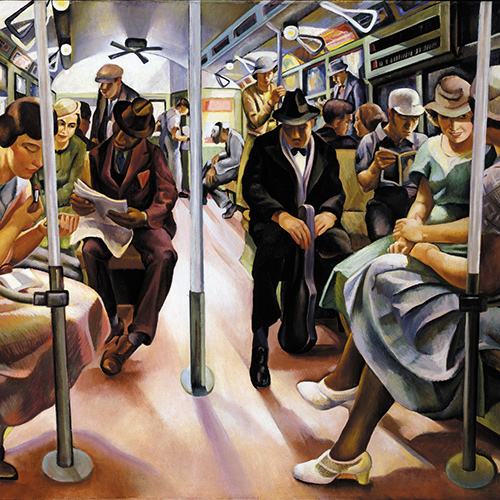
Yet narrative velocity isn’t about speed for speed’s sake. It’s about *controlled acceleration*—knowing when to linger on a detail that demands contemplation and when to race forward, carried by the momentum of a story that refuses to be ignored. Think of it like a film editor’s craft: a slow zoom on a character’s face to reveal their inner turmoil, followed by a sudden cut to a sweeping landscape that mirrors their emotional state. The same principle applies to written art criticism. The writer must become a director, guiding the reader’s gaze with the same precision as a cinematographer, ensuring that every shift in perspective feels both deliberate and exhilarating.
The Psychology of the Chase
Why does narrative velocity work? Because it taps into a fundamental human craving: the desire to *uncover*. Art, at its best, is a puzzle box, and narrative velocity is the key that turns the tumblers with a satisfying *click*. It transforms passive observation into active detective work, where the reader isn’t just a spectator but a participant in the artwork’s unraveling. This psychological hook is deeply rooted in our evolutionary past—our brains are wired to seek patterns, to chase meaning, to feel the thrill of discovery. When an art writer deploys narrative velocity, they’re essentially handing the reader a flashlight in a darkened gallery, inviting them to illuminate the shadows and see what’s hiding there.
Consider the way narrative velocity can turn a simple still life into a scene of intrigue. A bowl of fruit isn’t just a bowl of fruit; it’s a crime scene where the apples are too ripe, the grapes too plump, the shadows too long—hinting at a presence just out of frame, a thief who has come and gone, leaving only the faintest trace of their passage. The viewer’s mind races to fill in the gaps, to construct a story from the fragments. This isn’t just appreciation; it’s *collaboration*. The artwork provides the stage, the writer provides the script, and the reader becomes the director, staging their own interpretations in the theater of their imagination.
There’s also a psychological comfort in this chase. In a world where attention spans are fractured by algorithms and endless streams of content, narrative velocity offers a rare sanctuary: the promise of a complete, satisfying arc. It’s the literary equivalent of binge-watching a show where every episode ends on a cliffhanger, compelling you to keep going. The difference? Here, the cliffhanger isn’t a cheap trick—it’s an invitation to deeper engagement. The reader isn’t left dangling; they’re left *hungry*, and that hunger drives them forward, page by page, image by image.
The Metaphor as a Catalyst
At the heart of narrative velocity lies the metaphor—a tool so potent it can turn a static image into a living, breathing entity. Metaphors are the engines of this velocity, the linguistic equivalent of a turbocharger, compressing complex ideas into vivid, digestible bursts of meaning. A well-placed metaphor doesn’t just describe; it *reimagines*. It takes the cold, hard facts of an artwork and infuses them with warmth, color, and motion. It’s the difference between saying, “The artist used impasto technique,” and declaring, “The paint rises from the canvas like molten lava, each stroke a frozen scream of passion.”
But not all metaphors are created equal. The most effective ones are those that feel both unexpected and inevitable—like a key that fits a lock you didn’t even know existed. They surprise, but they also resonate. Consider how a writer might describe a minimalist sculpture: “It stands like a sentinel carved from silence, its edges so sharp they could slice the air between heartbeats.” The metaphor doesn’t just paint a picture; it *evokes a sensation*. It makes the reader *feel* the sculpture’s presence, as if it were a living thing watching them from the corner of the room.
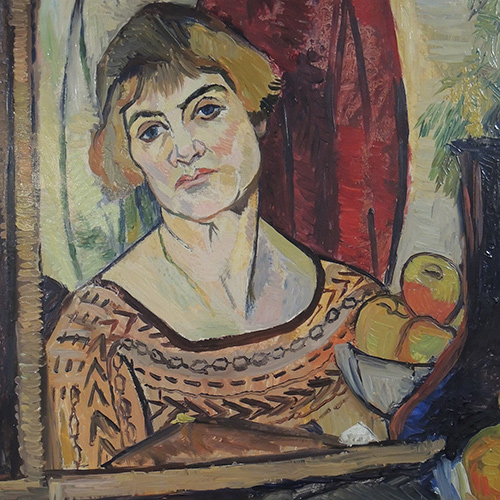
The best metaphors also avoid cliché, steering clear of overused phrases like “a picture is worth a thousand words” or “the artist’s hand is visible.” Instead, they dig for the unexpected, the visceral. A portrait might not just “capture a moment” but “freeze a soul mid-sentence, as if the sitter were about to speak but the artist’s brush had other plans.” A landscape isn’t just a “scenic view” but “a map of forgotten dreams, where the horizon is a promise and the trees are the keepers of secrets.” These metaphors don’t just describe; they *recontextualize*, inviting the reader to see the artwork through a lens they’ve never considered before.
Yet the power of metaphor in narrative velocity isn’t just about beauty—it’s about *clarity*. In a world drowning in information, metaphors distill complexity into something tangible. They take the abstract—the artist’s intent, the cultural context, the emotional resonance—and ground it in the concrete. A cubist painting isn’t just a “fragmented view of reality”; it’s “a shattered mirror reflecting a world in pieces, each shard holding a different angle of the same truth.” Suddenly, the artwork isn’t just something to look at; it’s something to *grapple with*.
The Digital Age: Fuel for the Fire
Narrative velocity didn’t emerge in a vacuum. It’s a child of the digital age, born from the same forces that have reshaped how we consume content—endless scrolling, bite-sized storytelling, the demand for instant gratification. But here’s the paradox: while the digital world often fragments attention, narrative velocity *unifies* it. It takes the scattered, the fleeting, the ephemeral, and weaves them into a cohesive, compelling narrative that demands to be followed to its conclusion.
Social media has trained us to crave immediacy, to expect every post to deliver a jolt of emotion or insight. Narrative velocity answers that call, but with a twist: it doesn’t just deliver a jolt—it delivers a *journey*. A single tweet might say, “This painting is haunting,” but a narrative velocity-driven thread would unspool like a mystery: “Why does her gaze follow you? What’s the story behind the bruise-like shadows under her eyes? And why does the artist’s signature feel like a confession?” Each tweet is a clue, each reply a theory, and by the end, the reader isn’t just informed—they’re *invested*.
Even in long-form writing, narrative velocity thrives in the digital space. Articles that once might have been dry academic treatises now read like serialized novels, with each section a cliffhanger leading to the next. The writer becomes a storyteller, the reader a participant, and the artwork a character in a larger narrative. This format isn’t just about keeping up with the pace of modern life; it’s about *harnessing* it. It’s the difference between a lecture and a campfire story—one where the audience leans in, not out of obligation, but out of sheer, unrelenting curiosity.

The Ethics of Velocity: When Speed Betrays Depth
Of course, narrative velocity isn’t without its pitfalls. The same forces that propel it forward can also send it careening off course if not wielded with care. The danger lies in mistaking speed for substance, in prioritizing the thrill of the chase over the weight of the destination. A writer who races through an artwork’s details without pausing to reflect risks leaving the reader breathless but unfulfilled—like a rollercoaster that never lets you catch your breath, let alone admire the view.
There’s also the risk of over-romanticizing, of turning every artwork into a grand drama when perhaps the artist intended something quieter, more subtle. Narrative velocity can be a sledgehammer when a scalpel is needed. The key is to match the pace of the prose to the essence of the artwork. A delicate watercolor might call for a gentle, meandering narrative, while a bold, chaotic abstract piece might demand a frenetic, almost breathless style. The writer must become a chameleon, adapting their velocity to the needs of the moment.
Another ethical consideration is the potential for misinterpretation. When a writer infuses an artwork with their own narrative, there’s always the risk of imposing meaning where none was intended. The artist’s intent and the viewer’s experience aren’t always aligned, and narrative velocity, for all its power, can sometimes blur that line. The solution? Transparency. Acknowledge when you’re speculating, when you’re interpreting, when you’re weaving your own story into the artwork’s fabric. Let the reader know they’re not just seeing the art—they’re seeing *your* art, a collaboration between creator and critic.
Ultimately, the ethics of narrative velocity come down to respect—for the artwork, for the artist, and for the reader. It’s not about bending the art to fit a narrative; it’s about finding the narrative *within* the art, and then guiding the reader to it with care, precision, and a deep reverence for the original vision.
As the sun sets on a gallery filled with hushed whispers and lingering gazes, it’s clear that narrative velocity has irrevocably altered the landscape of art writing. It’s no longer enough to describe what we see; we must now *feel* what we see, *chase* what we see, *become* what we see. The static has become kinetic. The silent has become vocal. The observer has become the participant. In this new era, art isn’t just something to admire from a distance—it’s something to dive into, to wrestle with, to lose yourself in. And perhaps, in the end, that’s the greatest power of narrative velocity: it doesn’t just change how we write about art. It changes how we *experience* it.


Leave a Comment