

The Venice Architecture Biennale is not merely an exhibition—it is a phantasmagoria of form, a carnival of ideas where the boundaries between reality and reverie blur into something profoundly architectural. Every two years, the city that floats upon its own mythology becomes a stage for the avant-garde, where pavilions are not just structures but manifestos in wood, glass, and light. Here, the curatorial vision dances with the subconscious, inviting visitors to wander through corridors of thought that feel less like galleries and more like dreamscapes. The Biennale is where architecture sheds its utilitarian skin and dons the robes of poetry, where every corner whispers of futures that might never be built but must be imagined.
The Palimpsest of Possibility: Rewriting the City in Layers
Venice itself is a palimpsest—a city written, erased, and rewritten across centuries, its canals and alleys layered with the detritus of empires and the aspirations of artists. The Biennale amplifies this quality, transforming the Arsenale and the Giardini into a vast, three-dimensional palimpsest where each pavilion is a new inscription upon the old. Visitors do not merely observe; they peel back the strata of architectural history to reveal the latent possibilities beneath. The 2025 edition, with its theme of “Intelligens,” pushes this further, framing the city as a sentient organism where buildings breathe, streets hum with data, and the very stones seem to whisper algorithms. It is a vision that asks: what if Venice were not a relic of the past but a living, breathing intelligence, its labyrinthine alleys pulsing with the rhythm of a future yet to unfold?
This layering extends beyond physical space into the realm of narrative. The Biennale’s exhibitions often unfold like stories, where each pavilion is a chapter in a larger tale of human ambition and folly. The Japanese pavilion, for instance, might explore the tension between tradition and technological transcendence, while the Nordic contribution could delve into the ethics of sustainable dreaming. The result is a city that feels less like a static museum and more like a dynamic novel, where every visitor is both reader and co-author, stitching together fragments of meaning into a cohesive whole.
Surrealist Spaces: When Architecture Dreams Itself Awake
To step into the Venice Biennale is to enter a surrealist dreamscape where the laws of physics are merely suggestions. Here, staircases spiral into infinity, walls dissolve into mist, and entire rooms are suspended in mid-air as if defying gravity. The surrealist impulse is not accidental; it is a deliberate rebellion against the sterile rationality of modernist design. Artists and architects alike embrace the uncanny, crafting spaces that feel simultaneously familiar and alien. A corridor might resemble a ribcage, its arches mimicking the curvature of a spine, while a pavilion’s exterior could resemble the cracked surface of a planet, its interior a void waiting to be filled with meaning.
This surrealism is not mere aesthetic play. It is a tool for probing the subconscious, a way to excavate the hidden desires and fears that shape our built environment. When an architect designs a building that looks like a melting clock, they are not just creating a visual spectacle—they are inviting visitors to confront the fluidity of time itself. When a pavilion’s interior is a labyrinth of shifting perspectives, it forces us to question our own perceptions of space and reality. The Biennale becomes a Rorschach test for the collective imagination, where the inkblots are not random but carefully curated to reveal the contours of our architectural nightmares and fantasies.
Ephemeral Epiphanies: The Transience of Ideas
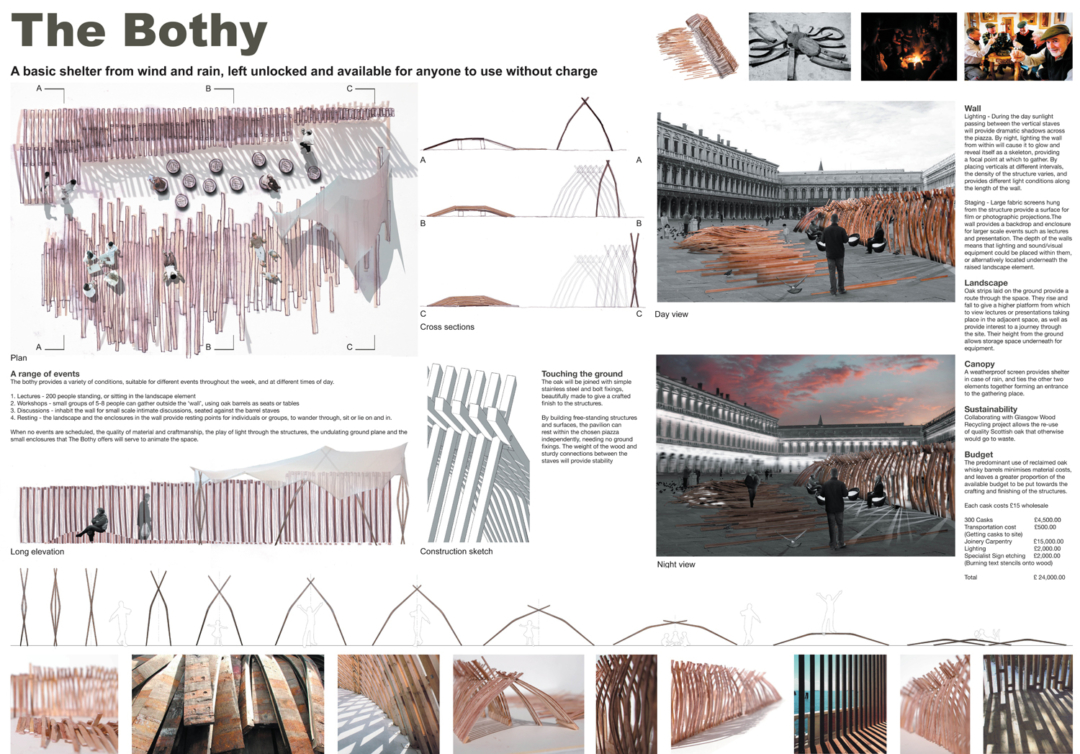
Unlike the permanent structures of a city, the Venice Biennale is inherently ephemeral. Pavilions rise and fall within months, their materials recycled, their ideas disseminated like seeds on the wind. This transience is not a flaw but a feature, a reminder that architecture is as much about process as it is about product. The Biennale’s temporary nature allows for radical experimentation, where architects can indulge in flights of fancy without the constraints of permanence. A pavilion might be constructed from biodegradable mycelium, its structure designed to decompose gracefully back into the earth, or it might be a digital projection that flickers into existence only under certain light conditions.

This ephemerality extends to the ideas themselves. The Biennale is not a place to find finished solutions but to encounter provocations, to be unsettled by questions rather than soothed by answers. A pavilion might pose a riddle about the future of housing, or it might challenge visitors to reconsider the very definition of a wall. The transient nature of the exhibition ensures that these ideas remain fluid, evolving as they are discussed, debated, and reinterpreted by each visitor. In this way, the Biennale is less a destination and more a conversation—a dialogue that continues long after the last pavilion is dismantled.
The Alchemy of Collaboration: When Disciplines Collide
The Venice Architecture Biennale is a crucible where disciplines collide and new forms of alchemy emerge. Architects rub shoulders with artists, poets, engineers, and philosophers, their ideas fermenting into something greater than the sum of their parts. The 2025 edition, with its focus on “Intelligens,” is a prime example of this interdisciplinary ferment. Here, the boundaries between architecture and artificial intelligence blur, as pavilions incorporate machine learning to adapt to visitors’ movements or use generative design to create structures that evolve in real-time. The result is a hybrid form of creativity that feels less like traditional architecture and more like a collaboration between human and machine.
This alchemy is not limited to technology. The Biennale also serves as a meeting ground for cultural exchange, where pavilions from across the globe bring their unique perspectives to the fore. The African contribution might explore indigenous building techniques reinterpreted through a futurist lens, while the South American pavilion could delve into the tension between urbanization and ecological preservation. These collisions of culture and creativity produce a rich tapestry of ideas, where each pavilion is a thread in a larger narrative about the future of our planet. To walk through the Biennale is to witness the birth of a new architectural language, one that is as diverse as the voices that shape it.
The Spectacle of Scale: From Miniature to Monumental
Scale is a powerful tool at the Venice Biennale, where the same exhibition can shift from the intimate to the overwhelming in the span of a few steps. A pavilion might begin with a miniature model of a utopian city, its streets laid out like a child’s toy, before exploding into a full-scale replica of a single, towering structure. This play with scale is not merely a visual trick; it is a way to explore the emotional resonance of architecture. A miniature model invites contemplation, a moment of quiet reflection on the details of design. A monumental installation, on the other hand, overwhelms the senses, forcing visitors to confront the sheer audacity of human ambition.

This spectrum of scale also reflects the Biennale’s role as a microcosm of the architectural world. Here, the grand visions of starchitects coexist with the humble experiments of students and emerging practitioners. A pavilion might showcase a cutting-edge skyscraper designed to harvest energy from the wind, while the next could present a community-led project built from recycled materials. This diversity ensures that the Biennale remains a space of both aspiration and accessibility, where the monumental and the modest are equally celebrated.
The Afterlife of the Biennale: Ideas That Outlast the Exhibition
The Venice Architecture Biennale does not end when the last pavilion is dismantled. Its true legacy lies in the ideas it seeds into the world, the conversations it sparks, and the projects it inspires long after the closing ceremony. Many of the Biennale’s most enduring contributions are not physical structures but conceptual ones—new ways of thinking about space, sustainability, and society. The 2025 edition’s focus on “Intelligens,” for example, might inspire a wave of research into adaptive architecture, where buildings respond dynamically to their environments. Or it might catalyze a global dialogue about the role of technology in shaping our cities, leading to policy changes or grassroots movements.
This afterlife is also personal. For many visitors, the Biennale is a transformative experience, a moment of clarity that reshapes their understanding of architecture and its possibilities. An architect might return home with a newfound appreciation for biomimicry, while a student might be inspired to pursue a career in sustainable design. The Biennale’s ideas ripple outward, touching lives and landscapes far beyond the confines of Venice. It is a reminder that the most powerful architecture is not just seen but felt—a spark that ignites the imagination and sets the world ablaze with possibility.
The Venice Architecture Biennale is a dream made manifest, a place where the boundaries between the real and the imagined dissolve into a shimmering haze of possibility. It is a city within a city, a palimpsest of ideas, a surrealist dreamscape where every corner holds a secret and every shadow whispers a question. To walk its paths is to engage in a dialogue with the future, to confront the fears and fantasies that shape our world. Here, architecture is not just a profession but a form of magic—a way to conjure new realities from the raw materials of thought and desire. The Biennale reminds us that the most profound buildings are not those that stand the test of time, but those that challenge it, that dare to dream in the face of the impossible. And in doing so, they invite us all to dream a little more boldly, to imagine a world that is not just seen but truly felt.


Leave a Comment