

The Gulf’s investment in art education isn’t merely a cultural flourish—it’s a seismic shift in how the region envisions its future. Once perceived as a land of oil and commerce, the Arabian Peninsula now stands at the precipice of a renaissance, where brushstrokes, sculptures, and digital canvases are reshaping identities, economies, and intellectual horizons. This transformation isn’t confined to grand museums or fleeting exhibitions; it’s woven into the fabric of education itself, where art is no longer an afterthought but a cornerstone of learning. From Doha’s Education City to Dubai’s avant-garde galleries, the Gulf is cultivating a generation of creators, thinkers, and innovators who see art not as a luxury, but as a vital language of expression and progress.
Imagine walking through a university campus where architecture itself is a masterpiece—where lecture halls double as immersive installations and libraries hum with the energy of collaborative studios. This isn’t a distant utopia; it’s the reality unfolding across the Gulf, where institutions are redefining pedagogy by integrating art into every discipline. Whether it’s using abstract painting to teach mathematical concepts or employing digital art to explore historical narratives, the region is proving that creativity isn’t confined to the arts. It’s the catalyst for interdisciplinary breakthroughs, the bridge between tradition and innovation, and the key to unlocking untapped potential in a rapidly evolving world.
The Renaissance Reimagined: Art as the New Oil
For decades, the Gulf’s wealth was synonymous with black gold. Today, the region’s most valuable export might just be something far more intangible yet infinitely more powerful: creativity. The shift from fossil fuels to figurative expression isn’t a rejection of economic pragmatism but a strategic evolution. Art education, once sidelined as a niche pursuit, is now a linchpin of national development strategies. Countries like Qatar, the UAE, and Saudi Arabia are pouring billions into cultural infrastructure, not out of whimsy, but out of foresight. They recognize that in a post-oil economy, the currency of influence lies in intellectual capital—and art is the most potent form of that capital.
Consider the metamorphosis of Doha’s Museum of Islamic Art, not just as a repository of heritage, but as a living laboratory where students dissect the geometric precision of ancient mosaics to understand modern engineering principles. Or Dubai’s Alserkal Avenue, a labyrinth of warehouses turned into incubators for experimental art, where budding entrepreneurs learn to monetize creativity while artists collaborate with tech startups to push boundaries. These aren’t isolated projects; they’re the vanguard of a systemic overhaul, where art education is the scaffolding for a new kind of prosperity—one built on imagination as much as infrastructure.

Classrooms Without Walls: The Rise of Immersive Learning
The traditional classroom, with its rigid desks and chalkboard monotony, is undergoing a radical redefinition in the Gulf. Here, education is no longer a passive act of absorption but an active, sensory experience. Art is dissolving the boundaries between disciplines, turning history lessons into theatrical performances, science experiments into kinetic sculptures, and literature classes into interactive digital narratives. This isn’t about making learning “fun”—it’s about making it meaningful, memorable, and, above all, transformative.
Take, for instance, the integration of calligraphy into STEM curricula. In a region where Arabic script is both a cultural touchstone and a modern design element, students are using brushes and digital styluses to explore the mathematical beauty of letterforms. They’re calculating the golden ratio in Quranic manuscripts or programming generative art that reimagines traditional motifs. Meanwhile, in Bahrain’s budding art schools, students are dissecting the acoustics of ancient poetry to compose experimental soundscapes, proving that art education isn’t just about aesthetics—it’s about cultivating a holistic intelligence.
The Gulf’s approach to immersive learning extends beyond the classroom. Outdoor education is flourishing, with students sketching desert landscapes to understand ecological systems or using augmented reality to overlay historical events onto modern cityscapes. This hands-on, experiential model isn’t just pedagogical innovation; it’s a cultural awakening. It’s teaching young minds to see the world not as a series of static facts, but as a dynamic canvas waiting to be interpreted—and reinvented.
From Patronage to Partnership: The New Economy of Art
The Gulf’s relationship with art has long been one of patronage—a top-down model where wealth dictated taste. Today, that dynamic is evolving into something far more democratic: partnership. The region’s art education initiatives are forging alliances between governments, private enterprises, and grassroots creators, creating ecosystems where talent is nurtured, not just celebrated. This isn’t charity; it’s capitalism reimagined, where art is both the product and the platform for economic diversification.
Saudi Arabia’s Vision 2030, for example, isn’t just about building skyscrapers—it’s about building ecosystems. The establishment of the Diriyah Gate Development Authority, with its focus on heritage and contemporary art, is a testament to this shift. Here, students aren’t just learning to paint; they’re learning to pitch, to market, to negotiate. They’re collaborating with architects to design sustainable art spaces or working with tech firms to develop NFT platforms for regional artists. The message is clear: art education isn’t an island; it’s a bridge to industries yet to be born.
Even the region’s corporate titans are getting in on the act. Banks are sponsoring art residencies, real estate developers are embedding galleries into residential complexes, and tech conglomerates are funding digital art labs. This isn’t altruism—it’s strategic foresight. The Gulf understands that in a globalized world, cultural capital is as valuable as financial capital. By investing in art education, they’re not just cultivating artists; they’re cultivating ambassadors, innovators, and disruptors who will carry the region’s influence far beyond its borders.
The Identity Paradox: Tradition Meets Tomorrow
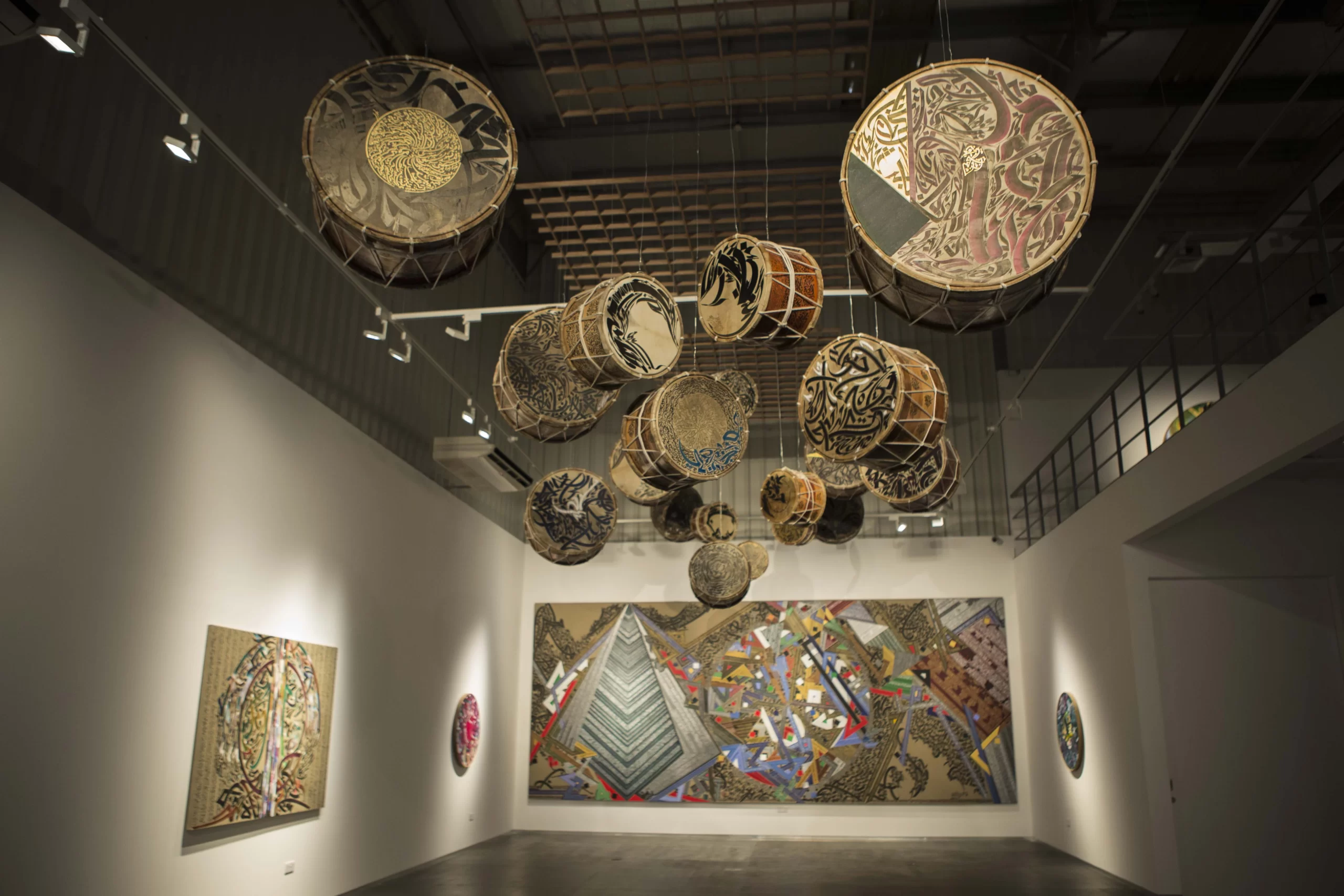
Nowhere is the Gulf’s art education revolution more poignant than in its negotiation of identity. The region stands at a crossroads, where the weight of history collides with the urgency of progress. Art education is the crucible in which this tension is not just acknowledged but celebrated. It’s where students grapple with the legacy of calligraphy while experimenting with digital typography, where they reinterpret Bedouin storytelling through virtual reality, and where they confront the contradictions of a society in flux.
This isn’t about erasing the past; it’s about interrogating it. In Kuwait, for instance, art schools are reimagining the diwaniya—a traditional gathering space—as a hub for contemporary dialogue, blending poetry slams with philosophical debates. In Oman, students are using traditional silverwork techniques to create wearable tech, bridging the gap between ancestral craftsmanship and futuristic design. The Gulf’s art education isn’t just preserving heritage; it’s weaponizing it, turning tradition into a tool for innovation rather than a relic to be admired from afar.
Yet, this evolution isn’t without its challenges. The tension between preservation and progress can be fraught, particularly in societies where conservatism still holds sway. But the Gulf’s approach is refreshingly pragmatic. It doesn’t demand conformity; it invites conversation. Art education becomes a safe space to ask difficult questions: What does it mean to be modern in a region steeped in tradition? How can we honor the past while embracing the future? The answers aren’t prescriptive—they’re exploratory, and that’s precisely the point.
The Global Stage: Exporting Creativity, Importing Influence
The Gulf’s investment in art education isn’t an inward-facing endeavor—it’s a global statement. By positioning itself as a hub for creative talent, the region is not only attracting international students and artists but also reshaping its geopolitical narrative. No longer just a destination for commerce or leisure, the Gulf is becoming a thought leader in cultural diplomacy, where art is the universal language that transcends borders.
Institutions like NYU Abu Dhabi and the Sharjah Biennial are already magnets for global talent, drawing artists, curators, and scholars from across the world. These exchanges aren’t one-sided; they’re symbiotic. Gulf students gain exposure to diverse perspectives, while international artists are immersed in a cultural milieu that challenges their preconceptions. The result? A cross-pollination of ideas that’s as enriching for the artists as it is for the region’s burgeoning creative class.
This global engagement extends beyond the classroom. The Gulf is positioning itself as a patron of the arts on the world stage, funding international residencies, co-producing exhibitions, and even acquiring artworks that tell its story to a global audience. It’s a savvy strategy—one that leverages soft power to rewrite the region’s narrative from one of oil dependency to one of cultural leadership. And at the heart of this strategy is art education, the engine that will sustain this influence for generations to come.

The Gulf’s investment in art education is more than a trend—it’s a tectonic shift in how the world perceives the region and, more importantly, how the region perceives itself. It’s a declaration that creativity is not a luxury but a necessity, that art is not a frivolity but a foundation, and that the future belongs to those who dare to imagine it differently. As the brushstrokes of this renaissance continue to spread, the Gulf isn’t just building schools and museums; it’s building a legacy—one that will echo through the halls of history, long after the last drop of oil has been spent.
For those who still see the Gulf through the lens of the past, this transformation might seem like a paradox. But to those who walk its streets, study in its classrooms, and create within its studios, it’s simply the beginning of something extraordinary. The canvas is vast. The colors are vibrant. And the story? It’s being written in real time, one masterpiece at a time.


Leave a Comment