

The wind whispers through the craggy peaks, carrying with it the scent of pine and the faintest tang of ozone. Up here, where the air thins and the sky stretches endlessly, something extraordinary happens—not just in the landscape, but in the way we see it. The mountains don’t just exist; they *speak*, and artists have long been their most eloquent translators. This is the eco-art of the mountain: a fusion of creativity and altitude, where every brushstroke, pixel, or sculpted line becomes a testament to the raw, untamed beauty of high-altitude environments. It’s an art form that doesn’t just depict the sublime—it *evokes* it, pulling us out of our everyday perceptions and into a realm where nature and human expression intertwine in breathtaking harmony.
Imagine standing on a ridge, the world below reduced to a patchwork of valleys and rivers, the horizon a jagged silhouette against the setting sun. Now, picture an artist capturing that moment—not just in a photograph, but through the prism of their own emotional and ecological awakening. This is the promise of mountain eco-art: to shift how we perceive the natural world, to make us *feel* its fragility and grandeur in ways that statistics and documentaries never could. It’s an invitation to slow down, to look closer, and to recognize that the mountains are not just backdrops for adventure—they are living, breathing entities worthy of our deepest contemplation.


The Alchemy of Altitude: Where Art and Ecology Collide
High-altitude environments are not just physical spaces; they are psychological and emotional thresholds. The thinner air, the biting cold, the relentless wind—these are not mere conditions but catalysts for a different kind of creativity. Artists who venture into these realms often describe a sense of *disorientation*, a shedding of the mundane that allows for raw, unfiltered expression. The mountains strip away the noise, leaving only the essential: the play of light on rock, the dance of shadows, the silence that hums with unseen life.
This alchemy is evident in the way mountain eco-artists blend traditional techniques with modern mediums. A painter might use watercolors to capture the ephemeral glow of dawn on a glacier, while a digital artist could render the pixelated majesty of an alpine ridge in a style reminiscent of vintage video games. The result? A body of work that feels both timeless and urgently contemporary. These artists aren’t just documenting the landscape; they’re *translating* its essence—turning the inexpressible into something we can see, touch, and, most importantly, *feel*.
Consider the way altitude distorts perspective. From the valley, a mountain might appear as a distant, impenetrable monolith. But from its slopes, it becomes a living, breathing entity—one that shifts with the seasons, the weather, the very breath of the earth. Eco-artists harness this distortion, using it to challenge our perceptions. A photograph taken at 14,000 feet might flatten the foreground and exaggerate the distance, making the viewer feel the vertigo of standing on the edge of the world. It’s a visual metaphor for the fragility of these ecosystems: vast, powerful, yet precariously balanced.
The Language of the Wild: Symbolism in Mountain Eco-Art
Mountains have always been symbols—of endurance, of mystery, of the sublime. In eco-art, these symbols take on new layers of meaning. A jagged peak might represent the unyielding spirit of nature, while a melting glacier could serve as a poignant reminder of climate change. Artists infuse their work with these narratives, creating pieces that are as much about the environment as they are about the human experience of it.
Take, for example, the recurring motif of the “speaking mountain.” In many indigenous traditions, mountains are considered sacred entities with voices of their own. Modern eco-artists echo this belief, using their work to amplify the mountain’s silent cries. A sculpture of a melting ice formation might be titled *The Last Word*, or a painting of a storm-lashed summit could be called *The Mountain Speaks*. These titles aren’t just poetic flourishes; they’re invitations to listen—to hear the mountain’s story as if it were our own.
Color plays a crucial role in this symbolic language. The golden hues of autumn in the high country evoke nostalgia, while the stark whites of winter snow suggest purity and impermanence. Artists often use palettes that reflect the mountain’s moods: the bruised purples of a sunset, the bruised blues of a glacial lake, the bruised greens of lichen clinging to rock. These colors aren’t just descriptive; they’re emotional shorthand, guiding the viewer toward a deeper understanding of the landscape’s soul.

Pixels and Peaks: The Digital Renaissance of Mountain Art
The digital age has revolutionized how we experience and create art, and mountain eco-art is no exception. Artists are now using everything from virtual reality to generative AI to capture the essence of high-altitude environments in ways that were once impossible. A VR experience might plunge the viewer into a 360-degree view of a Himalayan peak, the wind howling in their ears as they “stand” on the edge of a cliff. A generative algorithm could produce endless variations of a mountain landscape, each one a unique meditation on form and light.
This digital renaissance isn’t just about novelty; it’s about accessibility. Mountain eco-art no longer exists solely in galleries or on gallery walls. It lives on screens, in apps, and across social media platforms, reaching audiences who might never set foot on a trail. An Instagram post of a sunrise over the Alps can inspire someone in a bustling city to reconsider their relationship with nature. A TikTok video of an artist painting en plein air at 12,000 feet can spark a conversation about conservation in ways that a lecture never could.
Yet, this digital shift also presents challenges. The immediacy of screens can trivialize the depth of the art. A stunning photograph of a mountain peak might go viral for its beauty, but without context, it risks becoming just another disposable image in an endless scroll. The most compelling digital eco-artists are those who use technology to deepen engagement, pairing their visuals with essays, interactive maps, or even augmented reality features that reveal the hidden stories behind the landscape.
The Artist as Steward: Eco-Art as a Call to Action
Eco-art isn’t just about aesthetics; it’s about advocacy. The most powerful mountain eco-artists are those who use their craft to challenge complacency and inspire action. A series of paintings depicting the retreat of a glacier over decades might be paired with data on rising temperatures. A sculpture made from reclaimed materials found on a mountain trail could serve as a commentary on waste and human impact. These works don’t just ask us to look—they ask us to *act*.
Consider the role of art in environmental movements. The iconic image of Earthrise, taken during the Apollo 8 mission, didn’t just show us our planet—it changed how we saw it, sparking the modern environmental movement. Mountain eco-art has the potential to do the same. By making the abstract tangible, by turning data into emotion, it bridges the gap between science and sentiment. A viewer might not understand the intricacies of glacial melt, but they can *feel* the loss when they see a painting of a once-mighty ice sheet reduced to a skeletal remnant.
Artists are also increasingly collaborating with scientists, creating works that are as much about research as they are about beauty. A biologist studying alpine flora might work with an artist to create a series of illustrations that highlight the delicate balance of high-altitude ecosystems. A climatologist tracking glacial retreat could partner with a filmmaker to produce a documentary that weaves scientific data with poetic visuals. These collaborations ensure that eco-art isn’t just emotionally resonant—it’s intellectually rigorous.
Beyond the Summit: The Future of Mountain Eco-Art
The future of mountain eco-art lies in its ability to evolve. As climate change reshapes our world, artists will need to adapt, finding new ways to capture the shifting landscapes of the high country. A painting of a snow-capped peak might one day depict a bare, rocky slope. A photograph of a pristine alpine lake could show it choked with algae. These aren’t just artistic choices; they’re acts of witness, documenting a world in flux.
Technology will continue to play a pivotal role. Drones equipped with thermal cameras might capture the heat signatures of melting permafrost, translating scientific data into hauntingly beautiful imagery. Augmented reality could overlay historical photographs onto modern landscapes, showing viewers the stark contrasts between past and present. The possibilities are as vast as the mountains themselves.
But perhaps the most exciting frontier is the intersection of art and activism. Imagine an interactive installation where viewers can “walk” through a virtual mountain range, their footsteps triggering audio clips of scientists discussing conservation efforts. Or a community project where locals collaborate with artists to create murals that celebrate the unique biodiversity of their high-altitude home. These aren’t just artworks; they’re movements—calls to protect the places that inspire us.
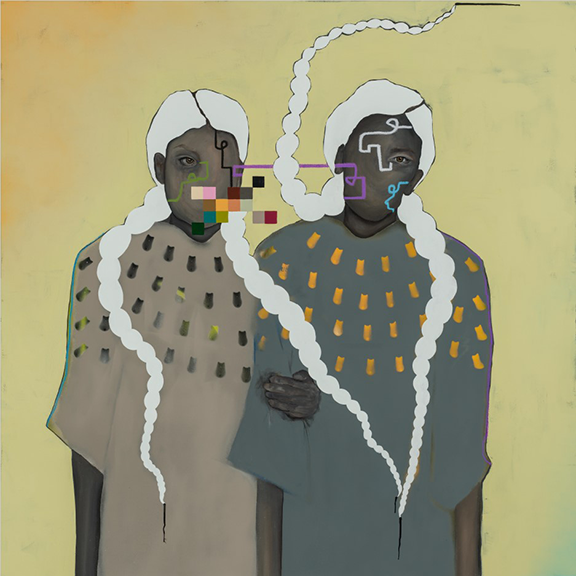
The mountains have always been a place of transformation. They challenge us physically, mentally, and spiritually. Now, they’re challenging us creatively as well. Mountain eco-art isn’t just a genre; it’s a revolution—a way of seeing, of feeling, of *being* that transcends the ordinary. It promises to shift our perspective, to make us look at the world with fresh eyes and open hearts. And in doing so, it reminds us of something profound: that the wild places of the earth are not just destinations to conquer, but sacred spaces to cherish, protect, and, above all, *listen* to.
So the next time you find yourself gazing up at a mountain peak, ask yourself: What would it say if it could speak? And more importantly—are we ready to hear the answer?


Leave a Comment