

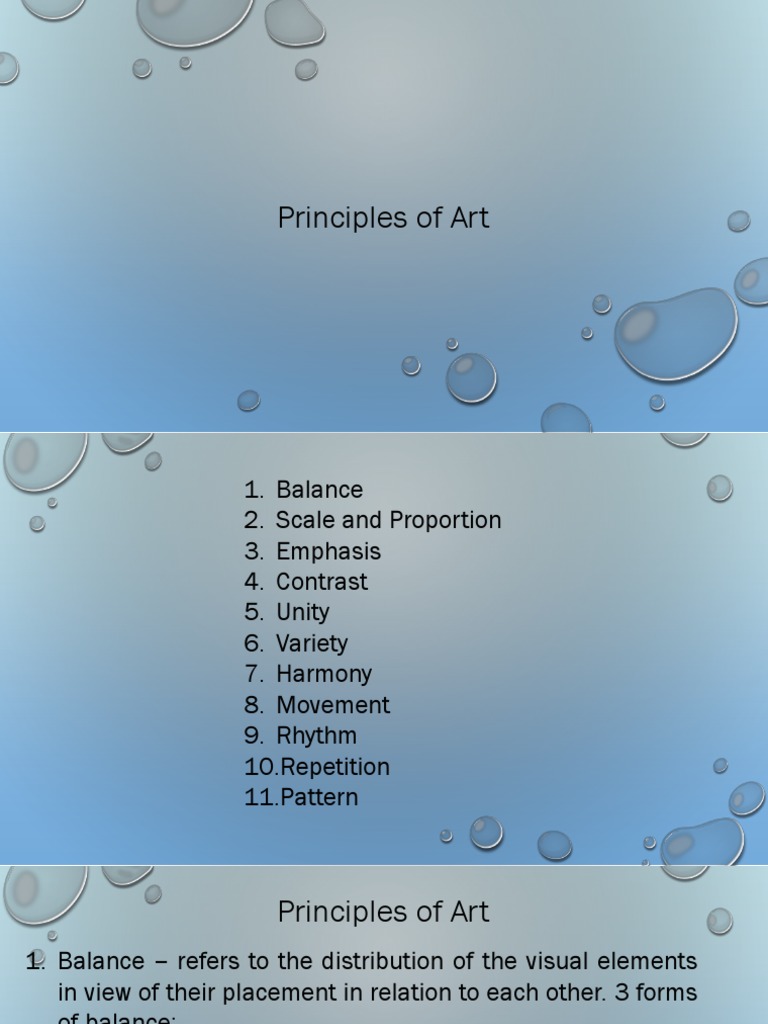
In the realm of visual creativity, art and design serve as the twin pillars supporting the marvel of human ingenuity. Both disciplines embrace a myriad of components known collectively as the principles of design. These principles are not mere suggestions; they are the intricately woven threads in the fabric of artistic expression, guiding creators as they navigate the vast ocean of imagination. Let us delve into the seven foundational principles of art and design, each serving a distinct function yet interlinked like a harmonious symphony.
1. Balance: The Equilibrium of Elements
Balance in design resembles the art of tightrope walking—one misplaced step, and the entire composition could tumble into chaos. Balancing visual weights within an artwork ensures that no single element overwhelms the other. Whether through symmetrical balance, where elements are evenly distributed, or asymmetrical balance, where contrasting components are harmonized through complexity, this principle creates a sense of stability. The interplay of light and dark, color and shadow, evokes a tranquil harmony, steering viewers’ emotions like a calming breeze across a serene lake.
2. Contrast: The Dance of Differences
Contrast acts as the bold brushstroke on a canvas; it captivates attention and stirs intrigue. This principle involves juxtaposing disparate elements to highlight their differences, creating a visual dialogue that can provoke thought and emotion. Warm colors dance against cool hues, intricate patterns clash with smooth surfaces, and light battles dark to unfold narratives that resonate deeply. Like a striking refrain in a symphony, contrast defines the crescendo of a message, elevating the mundane to the extraordinary. In its essence, contrast celebrates variety—the spice that enriches the artistic vocabulary.
3. Emphasis: The Spotlight of Attention
In any masterpiece, certain elements demand the viewer’s gaze, commanding attention while others hum quietly in the background. Emphasis serves as the spotlight in a theatrical performance, directing eyes toward the intended focal point. This principle uses techniques such as scale, color, and placement to create hierarchy. Like a grand conductor orchestrating a visual performance, emphasis allows an artist to sculpt the audience’s experience, making it possible to navigate the narrative landscape with grace and clarity.
4. Movement: The Pulse of Dynamics
Art is not static; it breathes life through movement. This principle conveys action, guiding viewers’ eyes from one element to another within a composition, much like a well-choreographed dance. Artists employ lines, shapes, and colors to create a sense of rhythm that mimics the ebb and flow of life. Whether through curving forms that suggest fluidity or dynamic patterns that evoke chaos and energy, movement captures the transient nature of existence, echoing the pulse of life itself. It immerses audiences, inviting them to partake in the unspoken narrative woven throughout the artwork.
5. Pattern: The Repeating Motif
Pattern transforms the ordinary into the extraordinary, infusing artworks with a sense of coherence and rhythm. This principle involves the repetition of shapes, colors, or textures, creating a visual tempo that soothes or excites the soul. Patterns may emerge as the delicate lace of a fabric or the intricate design of tiles, serving both function and aesthetic pleasure. Just as a poetic refrain connects verses within a song, patterns establish a familiarity that resonates with the viewer, inviting them to explore the meticulous craftsmanship behind each iteration.
6. Rhythm: The Beat of Creation
Rhythm in design is akin to a heartbeat, setting the pace of visual engagement. It is generated by repetition and alternation, creating predictable intervals that guide the viewer’s eye across the composition. This principle encourages movement and can evoke a powerful emotional response through the cadence established among elements. Visual rhythms, much like auditory beats, can instill a sense of harmony or discord, demonstrating the artist’s intention to evoke specific feelings or actions within those who experience the work.
7. Unity: The Cohesive Whole
Unity integrates all elements of an artwork into a cohesive whole, mirroring the interconnectedness of life itself. It establishes harmony among diverse components, fostering an environment where the individual parts collectively contribute to a singular message or emotion. Techniques such as proximity, repetition, and alignment create visual relations that stir a sense of completeness. Unity celebrates the beauty of collaboration, echoing life’s intricate tapestry where every thread, though different, contributes to a cohesive design. This principle resonates with the notion that true artistry transcends mere assembly, emerging instead as an elegantly orchestrated expression of vision over chaotic disarray.
As we unravel the intricacies of these seven principles, it becomes evident that they do not function in isolation. Rather, they operate like the instruments of an orchestra, each contributing to the greater composition of art and design. Balance, contrast, emphasis, movement, pattern, rhythm, and unity combine to create profound visual experiences that resonate, inspire, and provoke thought. In mastering these principles, artists can wield greater control over their narratives, forging connections with viewers as they traverse the colorful landscape of human emotion.
Ultimately, the principles of design enshroud the creative process in clarity. They serve as beacons guiding creators through the diverse path of artistic expression, illuminating a journey that is both deeply personal and universally relatable. Like the varied strokes of a brush revealing the complexity of a portrait, the principles of design are the essential compass, orienting the vessel of creativity toward uncharted waters of imagination.






Leave a Comment