

In the vast realm of art, the interplay of the elements and principles of design creates a tapestry of visual language that articulates emotions, narratives, and ideologies. Like a skilled composer orchestrating an intricate symphony, an artist harnesses these fundamentals to evoke responses in viewers. Let’s delve into the fascinating universe of art fundamentals, particularly the principles of design, and explore how to effectively integrate them with the elements of design to enhance artistic expression.
The Elements of Design: Building Blocks of Visual Composition
Elements of design serve as the elemental particles of visual communication. Just as atoms combine to form molecules, these elements conjoin to create compositions that resonate. The primary elements include line, shape, color, texture, space, form, and value. Each element possesses unique characteristics that can stir diverse feelings within viewers.
Line, for example, can demarcate boundaries, create movement, or suggest emotion. A gentle, sweeping line can imbue a sense of tranquility, while jagged, sharp lines can evoke discord or tension. When employed masterfully, lines can guide the viewer’s gaze throughout a piece, serving as a visual pathway.
Shape transforms the flat canvas into a dynamic terrain of forms, offering both organic and geometric silhouettes. Shapes serve as the bones of a composition, laying the groundwork upon which the artist can build their vision. An abstract shape may unleash untamed imagination, while symmetrical shapes evoke harmony and balance.
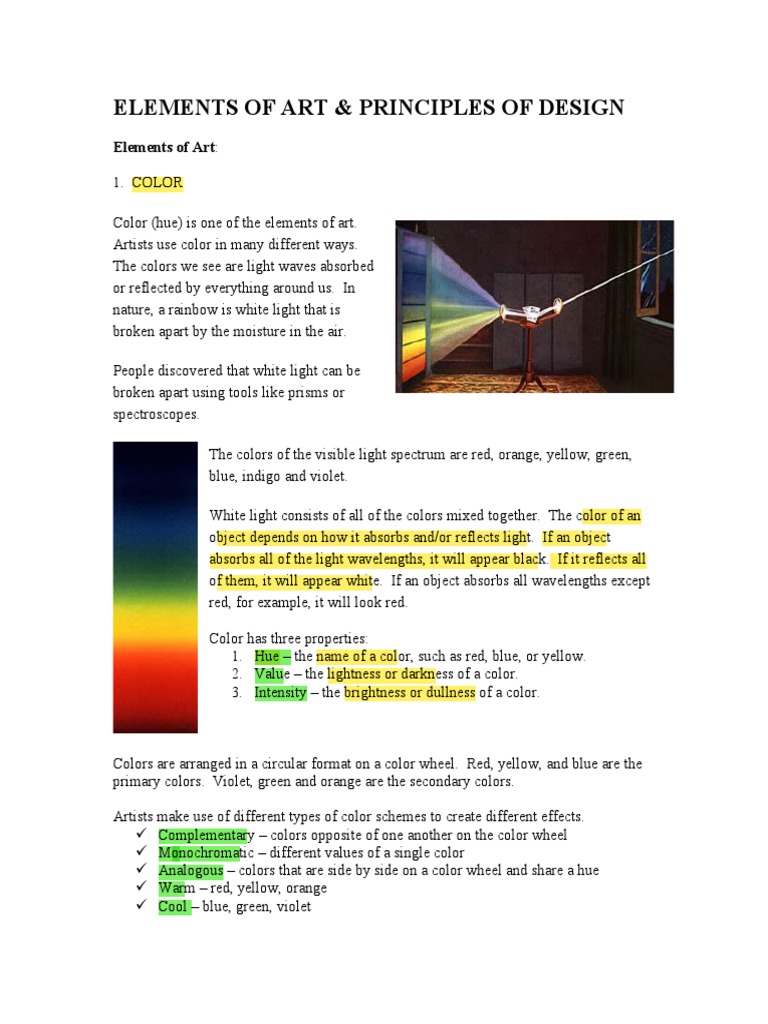
Color blossoms vibrantly, infusing artworks with emotion. It is a language of its own, communicating feelings where words may falter. Warm colors, like reds and oranges, can generate excitement and passion, while cool colors, such as blues and greens, create serenity and calm. The right palette, when skillfully blended, obfuscates the line between reality and imagination.
Texture adds depth and character to the two-dimensional plane. Through texture, a piece can feel tangible, inviting viewers to engage not only visually but also physically. The allure of contrasting textures can heighten interest, as rough surfaces command attention while smooth textures evoke gentleness.
Space delineates between elements, allowing each detail to breathe within the composition. The manipulation of positive and negative space influences the viewer’s interpretation. Using space effectively can guide the narrative flow and emphasize focal points, transforming silence into a pathway of discovery.
Form, unlike shape, invites three-dimensionality. It allows the exploration of volume and mass, articulating both the physicality and the emotional weight of subjects. Form invites viewers to understand depth, evoking curiosity and exploration.
Value introduces the concept of light and dark, guiding the eye and establishing contrast. Variations in value can create drama, emphasizing certain elements while relegating others to the background. It is through value that an artist can sculpt visual interest and manipulate mood.
The Principles of Design: Guiding the Seamless Fusion
While elements act as the constituent parts, the principles of design serve as the governing laws that dictate how those parts interact. These principles include balance, contrast, emphasis, movement, pattern, repetition, proportion, and unity. Understanding these principles enhances an artist’s ability to create compelling narratives through their work.
Balance epitomizes stability. It can manifest in symmetrical forms, offering a sense of calm, or asymmetrical arrangements that demand attention. Striking balance allows for a composition to feel complete, ensuring that elements coexist harmoniously.
Contrast invigorates a piece, highlighting differences to create intrigue. Utilizing contrasting colors, shapes, or textures breathes life into artwork, establishing visual tension that captivates the audience and evokes a visceral emotional response.
Emphasis directs the viewer’s focus, anchoring their gaze to specific elements within the composition. By manipulating scale, color saturation, or placement, an artist can create a focal point that conveys the narrative’s essence, ensuring that key elements do not fade into obscurity.
Movement dictates the flow of energy within an artwork. Lines, shapes, and colors can guide the eyes in a rhythmic journey across the canvas, inviting the viewer to explore every inch, like a traveler meandering through an enchanted forest.
Pattern introduces repetition, creating visual consistency that can be soothing or stimulating. Patterns establish familiarity and can unify disparate elements, imbuing a sense of cohesion across the composition.
Repetition pushes the boundaries of recognition. It can reinforce themes, enhance patterns, and create unity within a piece, establishing a conversational rhythm while inviting viewers to engage deeper.
Proportion plays a vital role in articulating relationships between elements. It informs scale, delivering authenticity or intentional distortion to evoke a desired effect. By manipulating proportion, artists can convey importance or create unnatural juxtapositions that provoke thought.
Unity ties everything together, ensuring that all elements and principles coalesce into a coherent narrative. It is the harmonious blending that results in a captivating piece, positioning the artist as a deft storyteller who weaves their thoughts into visual magic.
Applying the Principles and Elements: A Creative Synthesis
To truly harness the potential of the elements and principles of design, artists must engage in an alchemical process, blending these factors seamlessly. Consider embarking on an art project with a clear intention: are you aiming to evoke tranquility, chaos, or celebration? This purpose will guide your choices. Start by sketching your central concept, allowing the elements to take form organically.
Aspects such as color schemes can be predefined or discovered during the creative process. Create contrast by pairing complimentary colors or introducing varying textures. Use balance to negotiate asymmetry or symmetry in your composition actively. As layers build, navigate through movement, using leading lines that direct attention to where you want the viewer to focus.
The ultimate goal is to construct a piece that resonates on multiple levels—not only visually but emotionally and intellectually. Aim for a synthesis where the elements and principles work in concert, creating a composition that speaks to the soul. Just as a skilled chef combines flavors to create a culinary masterpiece, an artist must carefully select and manipulate the building blocks of design to craft something profound.
Art serves not just as a reflection of the world but as a lens through which we can interpret and connect with it. Embracing the elements and principles of design equips artists with the tools to transcend the ordinary, transforming their visions into resonant experiences that linger in the minds and hearts of viewers long after they leave.





Leave a Comment