

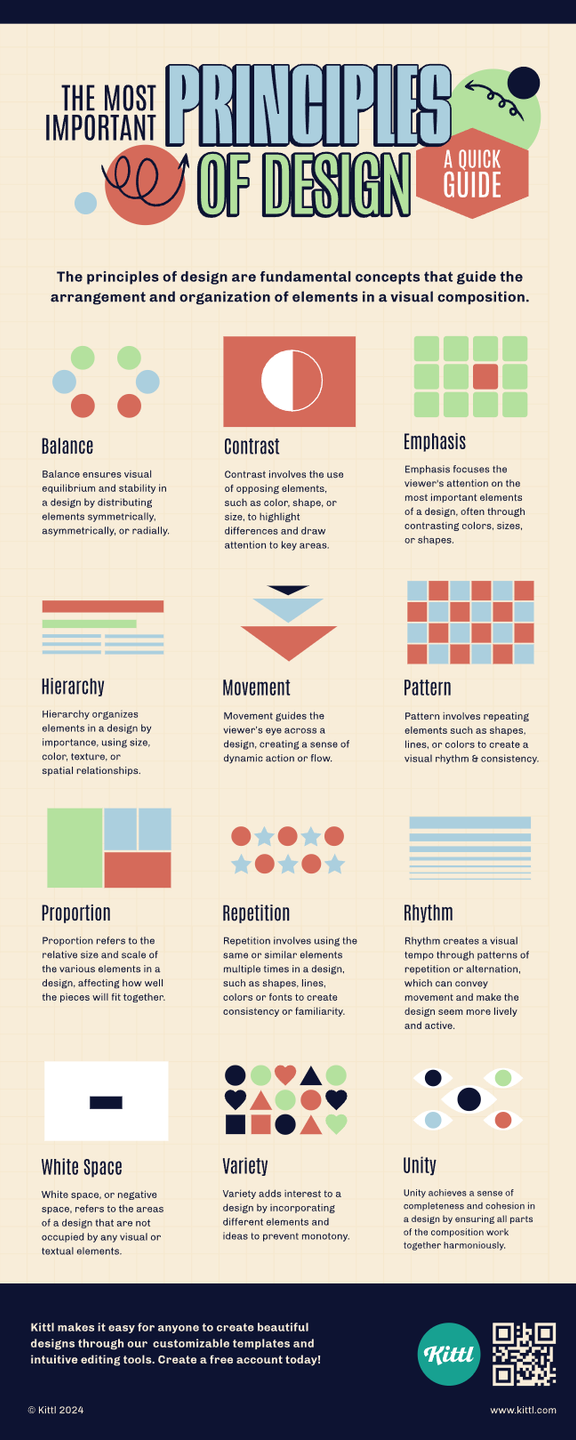
In the kaleidoscopic realm of creativity, where every line drawn and color splashed tells a story, the principles of design serve as foundational stones. Just as a symphony exists harmoniously with its compositions and rhythms, these principles orchestrate the myriad of choices designers make. To navigate this intricate tapestry, every creative should delve into the established examples of design principles that have shaped the visual landscape. Let us embark on an exploration of ten essential principles that warrant your attention and admiration.
1. Balance: The Equilibrium of Visual Weight
Envision a seesaw delicately poised between two children. One outweighs the other until they achieve that delightful balance of horizontal stillness. Similarly, balance in design fosters visual stability. It can be symmetrical, where elements mirror each other, or asymmetrical, which adds an organic dynamism. Consider the classic branding of Apple: the symmetry of the logo juxtaposed with its innovative product designs encapsulates a perfect equilibrium that has drawn in countless admirers.
2. Contrast: The Dance of Differences
Contrast, much like day and night, breathes life into designs by creating dynamic interplay between opposing elements. It accentuates boundaries and shapes, guiding the eye effortlessly through the composition. The vivid juxtaposition of colors—a bright orange against a deep blue, for instance—creates a striking impact. Iconic album covers often utilize this principle to captivate audiences, as seen in the polarizing art of Nirvana’s “Nevermind,” where a singular diverging figure dominates a tranquil blue background.
3. Emphasis: The Focal Point Unveiled
Every narrative has its hero, and in the world of design, emphasis serves to highlight the protagonist—the element that compels attention. This can be achieved through scale, color, or placement. Picture a riveting book cover where the title captures your gaze immediately while the supportive elements harmoniously recede into the background. This is the magic of emphasis, drawing viewers to what truly matters. Much like a spotlight illuminating a star performer on stage, the effective use of emphasis makes all the difference.
4. Movement: Guiding the Eye
Movement in design mirrors the flow of a river; it directs viewers from one element to another, fostering an engaging experience. Designers can utilize lines, shapes, or even implied actions, coaxing the eye to traverse the composition like a well-choreographed ballet. The renowned work of Paul Rand, particularly in his brand identity for IBM, demonstrates how a series of lines leads the viewer’s gaze around the design, culminating in a delightful visual journey.
5. Pattern: Repetition as Rhythm
Patterns are the heartbeat of design, infusing life through repetition and predictability. They establish a comforting familiarity, much akin to the way musical notes can create a soothing melody. Fashion designers, in particular, have mastered this principle; think of the iconic Burberry tartan, a visual representation that evokes tradition and luxury through its repetitive motifs. When utilized effectively, patterns can create a sense of depth and texture, captivating viewers unexpectedly.
6. Rhythm: Design’s Tempo and Flow
Just as music has rhythm, so does design possess its own cadence. This principle curates the pace at which the observer engages with the visual elements, bridging gaps between them like beats connecting notes in a song. Whether it’s through the consistent spacing between objects or the variation of size in a series, rhythm holds the power to evoke emotions. A notable example can be found in the vibrant works of Andy Warhol, where repetition meets variation, captivating the audience in a dance of colors and forms.
7. Unity: Cohesion in Diversity
Unity is the harmonious amalgamation of diverse elements, much like a seasoned chef brings together flavors to create a delectable dish. It is essential for creating a coherent visual statement, ensuring that each component, while unique, feels part of a greater whole. The minimalist aesthetic, often characterized by its sparse yet impactful design, effectively illustrates this principle, as seen in the works of designers like Dieter Rams, where simplicity and function converge seamlessly.
8. Space: The Art of Breathing Room
Space in design is akin to white space in literature—both serve as a necessary pause amidst the chaos. It is that essential breathing room that allows other elements to resonate, enhancing visibility and comprehension. In the world of branding, companies like Nike adopt this principle skillfully; the iconic Swoosh logo thrives in its simplicity against ample negative space, rendering it both memorable and impactful.
9. Scale and Proportion: The Measure of Importance
Scale and proportion dance together to determine the measure and size of design elements relative to one another. This principle is not merely about size; it encapsulates perception and relative weight. The imaginative use of disproportionate elements, as seen in surrealist art, can evoke intrigue. It creates a unique visual rhythm, enticing audiences to challenge reality—just as Salvador Dalí did with his exaggerated clocks that fluidly bend time.
10. Typography: The Voice of Design
Lastly, typography stands as a vital pillar of design—emphasizing the narrative through the artful arrangement of text and letterforms. It has the power to convey emotion, tradition, or modernism, molding the overall design aesthetic. Think of the robust serif fonts of vintage posters, evoking nostalgia, or the sleek sans-serifs of contemporary branding that scream innovation. Effective typography breathes life into designs, forming a dialogue with the viewer.
In conclusion, the exploration of these principles unveils a realm where every creative can glean wisdom. Each principle is a unique brushstroke on the canvas of creativity, offering guidance on creating compelling and meaningful designs. When these elements harmonize, the potential for extraordinary visual storytelling unfolds, encouraging designers to push the boundaries of innovation and artistry. Understanding and applying these principles is not merely a lesson in aesthetics but an invitation to join the intricate dance of design.






Leave a Comment