

Embarking on a journey through the captivating world of graphic design necessitates a firm grasp of its fundamental principles. The intricate interplay of visual elements can establish an evocative narrative, shape perceptions, and manifest emotions. For novices eager to explore this fascinating arena, understanding the core attributes of design is essential. Below, discover the foundational principles that underpin the realm of graphic design, revealing the artistry that transforms mere visuals into compelling stories.
1. Line: The Path of Communication
Lines serve as the architectural framework of design, guiding the viewer’s gaze with their inherent ability to articulate messages. From the delicate contour of a hand-drawn sketch to bold, assertive strokes found in typography, lines possess distinct characteristics that dictate mood and movement. Horizontal lines evoke tranquility, while vertical lines foster a sense of stability. Diagonal lines, on the other hand, inject dynamism and excitement. Manipulating line weight and texture can further enhance these emotional subtleties, making them indispensable tools for any designer.
2. Shape: The Essence of Form
Shapes are the building blocks of graphic design, offering an unparalleled means of visual communication. They can be geometric, with defined boundaries and symmetry, or organic, characterized by free-flowing and irregular forms. Each shape carries its own connotations; circles communicate unity and harmony, squares denote stability, and triangles introduce tension and energy. Designers adeptly exploit these associations, crafting compositions that resonate with viewers on a psychological level.
3. Color: The Language of Emotion
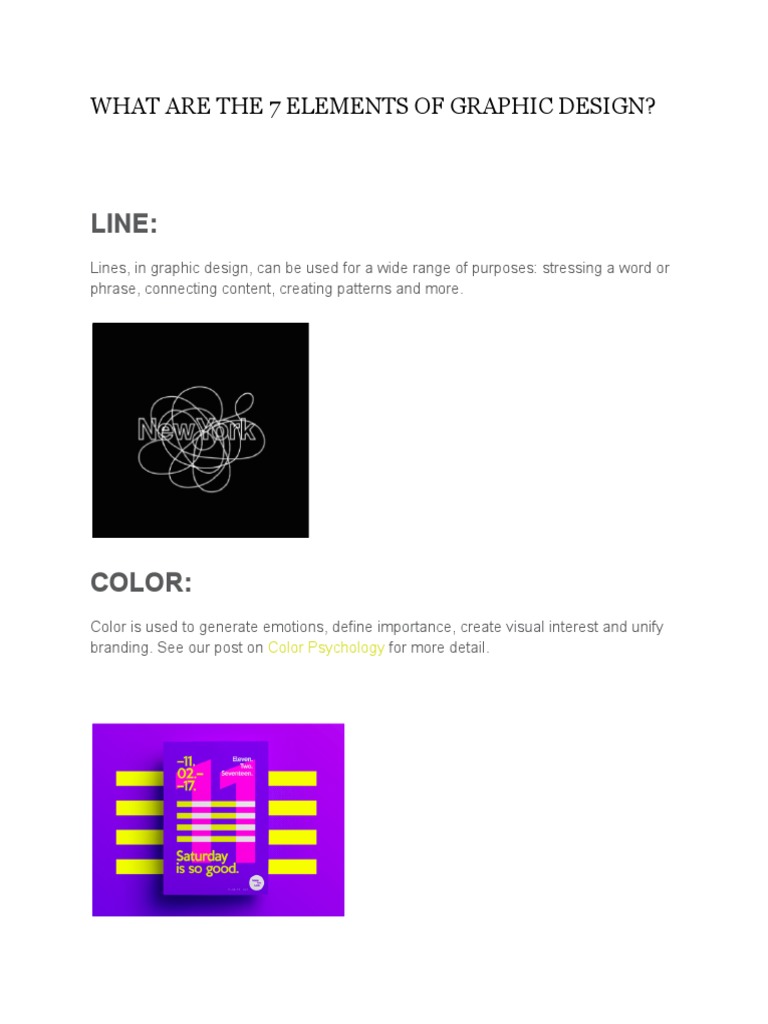
Color is perhaps the most powerful element in graphic design, wielding the capacity to invoke emotion and set the tone for a piece. Understanding the color wheel—the relationships between primary, secondary, and tertiary colors—enables designers to curate harmonious palettes that resonate with their intended audience. Warm hues, such as reds and oranges, evoke feelings of passion and excitement, while cooler shades, like blues and greens, cultivate calmness and serenity. Skillful use of saturation and brightness further amplifies these effects, making color an essential aspect of visual storytelling.
4. Texture: The Sensory Experience
Texture adds depth and dimension to graphic design, transforming flat images into tactile experiences. Designers can employ a variety of textures—ranging from subtle gradients to striking patterns—creating visual interest that enriches the viewer’s journey. Emulating textures such as paper, fabric, or natural elements can evoke nostalgia, while sleek, polished surfaces may convey modernity. The strategic integration of texture can enhance the visual hierarchy, guiding attention and emphasizing key aspects of the design.
5. Space: The Art of Balance
In graphic design, space plays a pivotal role in achieving balance and harmony. Often referred to as ‘white space’ or ‘negative space,’ it represents the areas devoid of visual elements. This empty space can be equally as impactful as the elements it surrounds, serving to highlight focal points and creating an airy, uncluttered appearance. Embracing the power of space allows designers to craft compositions that breathe and resonate, fostering a sense of clarity amidst chaos.
6. Typography: The Voice of Design
Typography transcends mere text; it embodies the voice of your design. The selection of typefaces, sizes, and styles intricately shapes a viewer’s perception. Serif fonts exude tradition and reliability, while sans-serif fonts evoke modernity and minimalism. The interplay between typography and other design elements reinforces the overall narrative, ensuring that each word contributes meaningfully to the visual story. Moreover, understanding hierarchy and alignment in typography can lead to masterful compositions that communicate effectively.
7. Contrast: The Dramatic Emphasis
Contrast serves as the backbone of visual interest. By juxtaposing differing elements—such as light against dark, large against small, or vibrant against muted—designers can evoke emotional responses and draw attention to crucial information. This principle enhances readability, ensuring that essential messages stand out. Harnessing contrast judiciously enables designers to manipulate visual dynamics, injecting drama and depth into their creations.
8. Alignment: The Visual Cohesion
Alignment is the silent force that orchestrates order within graphic design. By establishing relationships among elements through careful positioning, designers create flow and unity. Whether it employs a grid system or a more organic arrangement, alignment ensures that the viewer’s eye navigates effortlessly through the composition. A well-aligned design not only conveys professionalism but also enhances usability, allowing audiences to engage without distraction.
9. Repetition: The Signature Style
Repetition cultivates familiarity and coherence throughout a design. By consistently applying certain visual elements—whether a specific color palette, font choice, or graphic motif—designers forge a distinct identity that resonates across various mediums. This technique reinforces branding and ensures that a viewer can intuitively grasp the essence of the design, nurturing an intrinsic connection between the work and its audience.
10. The Synergy of Elements
The true magic of graphic design lies not just in understanding each principle in isolation, but in their seamless integration. Each element interacts in a delicate equilibrium, creating a visual symphony that captivates and engages the viewer. As beginners embark on their graphic design expedition, experimenting with these principles will cultivate intuition and mastery, unveiling the transformative power of design.
In conclusion, the journey into the realm of graphic design is as boundless as one’s imagination. By mastering the principles of line, shape, color, texture, space, typography, contrast, alignment, repetition, and their synergistic potential, emerging designers can harness the nuances of visual communication. With curiosity as their guide, they can explore the depths of creativity, resulting in designs that resonate, inspire, and evoke wonder.






Leave a Comment