

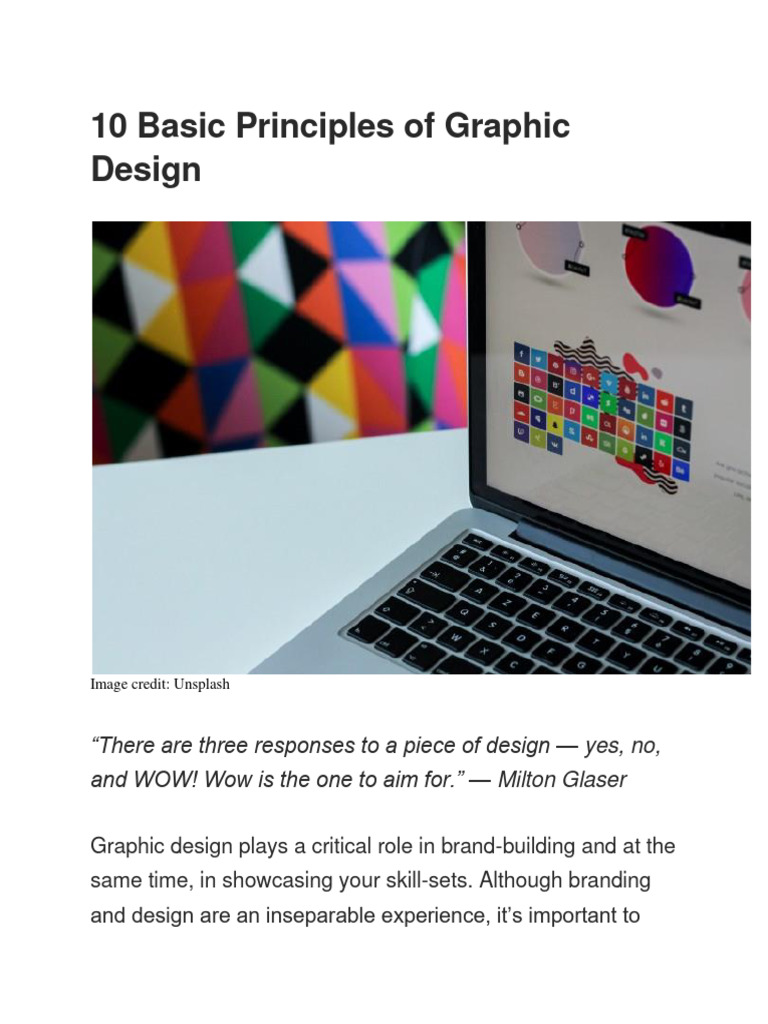
Design is more than just arranging visuals; it’s an intricate dance of form and function, where each element is meticulously orchestrated to engage the viewer. Graphic design, a discipline that seamlessly merges art and communication, rests upon a series of foundational principles that govern its efficacy. Understanding these principles not only elevates an artist’s skill set but also unravels the deeper psychological truths about our visual experiences. Let’s delve into the essential principles of graphic design, illuminating the nuances of each and revealing their profound impact on artistry.
1. Balance
At its core, balance in design refers to the equitable distribution of visual weight in a composition. It can be categorized into two main types: symmetrical and asymmetrical. Symmetrical balance creates harmony through mirroring, often eliciting a sense of order and stability. Asymmetrical balance, on the other hand, involves distributing elements unevenly, fostering dynamism and tension. This contrasting approach engages viewers, drawing them into the work. The careful deliberation of balance is crucial; poor application can lead to visual chaos, overwhelming the observer’s senses.
2. Contrast
Contrast is a fundamental principle that magnifies differences between elements, accentuating the visual narrative. It is achieved through juxtaposition of color, size, shape, and texture. By employing stark differences, designers can guide the viewer’s gaze, highlight focal points, and establish hierarchies within the artwork. For instance, a vibrant hue against a muted backdrop speaks volumes, not just aesthetically but psychologically. It represents the duality of existence, the light against the dark, and offers a visceral experience that resonates deeply within the audience.
3. Emphasis
Creating emphasis is akin to crafting a focal point—it’s about directing the viewer’s attention to a specific element within the design. This principle can be realized through size, color, or placement. Emphasis not only captivates but also clarifies the intended message of the design. By understanding what needs to stand out, designers can manipulate attributes to forge a compelling narrative. A grandiose headline atop an intricate illustration beckons the viewer to explore further, creating an engaging dialogue between the observer and the artwork.
4. Movement
Movement in design refers to the path the viewer’s eye follows when engaging with an artwork. It is strategized through lines, shapes, colors, and even the layout itself. Designers orchestrate movement to create dynamism, leading audiences through visual stories and enhancing their experience. The rhythm created by repeating patterns or gradients elicits a sense of fluidity, while jagged edges may introduce tension. Mastery of this principle empowers designers to create narratives that transcend static visuals, becoming immersive experiences.
5. Pattern
Pattern, as a principle, revolves around the repetition of elements to forge cohesion and familiarity. It is the organization’s heartbeat, weaving consistency throughout the design. Patterns can be simple or complex, and they often invoke emotional responses—think of the nostalgic resonance of a floral wallpaper or the sleek harmony of a modern geometric design. Patterns not only decorate but also delineate sections, facilitate movement, and evoke a collective memory, allowing viewers to feel at home in the midst of creativity.
6. Repetition
Repetition emphasizes certain elements, reinforcing a cohesive visual language. It operates on the psychological premise of familiarity; repeated motifs or colors unify the design, creating a sense of continuity. In branding, for instance, repetition solidifies identity, ensuring that logos and colors remain easily recognizable. Whether it’s a recurring shape in a layout or a consistent color palette across publications, repetition anchors the viewer, constructing a reassuring framework within the creative space.
7. Proximity
Proximity dictates how elements relate to one another through spatial arrangement. By clustering related items, a designer can create a visual bond that enhances understanding and reduces cognitive load. This principle is essential in developing layouts that are not only aesthetically pleasing but also functionally intuitive. Well-considered proximity guides the viewer’s comprehension, allowing them to navigate the design seamlessly. It’s akin to a well-organized library; everything feels accessible when logically categorized.
8. White Space
Often overlooked, white space—or negative space—is the breathing room within a design that enhances clarity and focus. This principle emphasizes that what is not included is just as essential as what is. Proper utilization of white space prevents clutter and cultivates an elegant composition. It allows elements to stand out in stark relief, enhancing readability and comprehension. White space is a silent but confident presence, enforcing hierarchy and inviting engagement through its subtle authority.
9. Unity
Unity embodies the convergence of all design elements into a harmonious whole. It ensures that each component, while unique, contributes to an overarching narrative or theme. Achieving unity involves a deliberate selection of colors, shapes, and styles that resonate together. When a design feels cohesive, it creates a compelling emotional connection, evoking feelings of satisfaction and completion in the viewer. Unity, therefore, is not about uniformity but rather about creating a symphony of diverse elements working in tandem.
10. Typography
Typography is the voice of the design, a critical element that communicates tone, mood, and even personality. The selection of fonts, spacing, line height, and alignment can dramatically alter the effectiveness of a message. Good typography does not merely present text; it enhances meaning. From the elegance of script fonts to the clarity of sans-serif typefaces, each choice carries weight, influencing how information is perceived and absorbed. Typography transforms text into an art form, marrying aesthetics with functionality.
Understanding these principles of graphic design enriches not only the designer’s toolkit but also the viewer’s experience. Each principle interacts with the others, weaving a complex tapestry of visual communication. Acknowledging their power allows artists to delve deeper into the psyche of observation, fostering an appreciation of the art that transcends the superficial. In every stroke, every color, and every space lies a story waiting to be told, a reminder that design is not merely about sight—it’s about insight.






Leave a Comment