

In the grand ballet of the heavens, storm clouds pirouette across the firmament, their inky tendrils unfurling like the brushstrokes of a tempestuous maestro. To capture their ephemeral majesty in oil is to dance with chaos and serenity in equal measure, to distill the raw emotion of a brewing squall into something tangible, something eternal. Painting storm clouds is not merely an exercise in technique—it is an act of communion with the sublime, a dialogue between artist and nature’s most dramatic choreography. Whether you seek to evoke the brooding melancholy of a gathering storm or the electrifying drama of a lightning-laced sky, the oil medium offers a richness of texture and depth that can transform mere pigment into a symphony of light and shadow.
For the intrepid painter willing to brave the tempest—both in the sky and on the canvas—the rewards are boundless. This guide will navigate the labyrinthine intricacies of storm cloud representation, from the delicate wisps of cirrus to the ominous, churning maelstroms of cumulonimbus. We’ll dissect the anatomy of these celestial giants, explore the alchemy of color mixing that breathes life into their forms, and master the interplay of light and atmosphere that makes them pulse with vitality. Prepare to wield your brush with the fervor of a Romantic master, where every stroke is a whisper of wind, every layer a testament to the sublime.
The Anatomy of a Storm: Decoding the Cloud’s Secret Language
Before the brush ever touches the canvas, the artist must become a student of the sky. Storm clouds are not monolithic blobs of gloom; they are living, breathing entities composed of distinct layers, each with its own personality and purpose. The low-hanging stratus clouds, like a shroud of leaden gray, drape the horizon in quiet foreboding, while the towering cumulonimbus—the thunderhead’s crown—soars skyward in a frenzied dance of updrafts and downdrafts, its anvil-shaped top clawing at the stratosphere. Between them, the altocumulus and cirrus clouds add texture and movement, their feathery wisps and mottled patches painting the canvas of the sky with strokes of ethereal grace.
To paint these clouds convincingly, one must first understand their structure. The cumulonimbus, for instance, is a study in contrasts: its base is a churning cauldron of darkness, while its upper reaches glow with the ethereal luminescence of hail and ice crystals. The stratus clouds, by contrast, are more uniform, their layers like the pages of a well-worn book, each one slightly darker than the last. The cirrus clouds, those high-altitude wanderers, are composed of ice crystals that refract sunlight into halos and rainbows, their forms delicate and fleeting. By breaking down these elements, the painter can approach the canvas with a sense of purpose, layering each cloud type with the precision of a cartographer charting unknown territories.

The Palette of the Tempest: Mixing Colors That Roar and Whisper
The color of a storm is never static—it is a living spectrum, shifting from the palest lavender of a pre-dawn sky to the bruised purples of a twilight squall. To replicate this dynamism, the oil painter must cultivate a palette that is as versatile as it is evocative. Begin with a foundation of ultramarine blue and burnt umber, the bedrock upon which all stormy hues will be built. These two colors, when blended, create a deep, brooding base that mimics the shadowed underbelly of a cumulonimbus. To this, introduce alizarin crimson and cadmium red sparingly, as these will warm the shadows and add a sense of impending violence to the scene.
For the mid-tones, where the clouds begin to catch the light, turn to cerulean blue and titanium white, diluted with a touch of yellow ochre to soften the intensity. The upper reaches of the storm, where the light is most ethereal, demand a cooler palette: cobalt blue and manganese violet will lend an otherworldly glow, while a whisper of viridian green can suggest the presence of hail or distant rain. The key is to work in layers, allowing each hue to peek through the next like sunlight through a veil of storm-tossed clouds. Remember, the most compelling storm paintings are not those that depict a single moment, but those that capture the anticipation of the storm—the way the light bends and fractures as the tempest gathers.
The Dance of Light and Shadow: Sculpting Form with Atmosphere
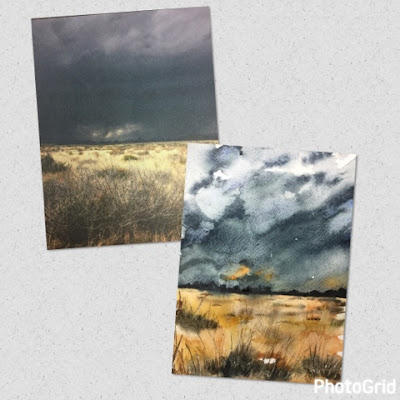
A storm cloud is not merely a mass of color; it is a sculptural entity, defined by the play of light upon its surface. The Romantic masters understood this implicitly, using chiaroscuro to lend their skies a sense of three-dimensionality that made the viewer feel as though they could reach out and touch the clouds. To achieve this effect, start by blocking in the general shapes of the clouds with a thin wash of diluted paint, allowing the underlying layers to peek through. Then, gradually build up the form with thicker, more opaque strokes, paying close attention to the way light interacts with the cloud’s contours.
The most dramatic effects occur where the light is most intense—along the edges of the cloud where it meets the open sky. Here, the artist can employ a technique known as scumbling, where a dry brush loaded with a lighter color is dragged across the surface, leaving behind a trail of broken, feathery strokes that mimic the frayed edges of a storm’s leading edge. Conversely, the deepest shadows—those found in the heart of the cumulonimbus—should be treated with a heavy hand, using a palette knife or a stiff bristle brush to create a rough, textured surface that conveys the cloud’s density. The interplay between these two extremes will give your storm clouds a sense of weight and movement, as if they are truly alive and breathing.
Texture and Technique: The Alchemy of Oil Paint
Oil paint is the ideal medium for capturing the chaotic beauty of storm clouds, its slow drying time allowing the artist to manipulate the paint with a level of precision that is simply impossible with faster-drying alternatives. To create the illusion of texture, experiment with a variety of tools: a palette knife can be used to scrape and gouge the paint, mimicking the jagged edges of a thunderhead, while a fan brush can be dragged across the surface to create the feathery wisps of cirrus clouds. For a more granular effect, try stippling with a stiff brush or even a piece of sponge, building up layers of paint that suggest the rough, uneven surface of a storm cloud.
Another technique to master is glazing, where thin, translucent layers of paint are applied over a dry underlayer to create depth and luminosity. This is particularly effective for the upper reaches of the storm, where the light filters through the ice crystals and hail, casting a soft, ethereal glow. To glaze, mix a small amount of paint with a generous quantity of linseed oil or stand oil, then apply it with a soft brush in smooth, even strokes. The result will be a subtle, almost translucent layer that adds a sense of mystery and depth to your clouds. Don’t be afraid to layer multiple glazes, each one building upon the last to create a rich, complex sky that seems to shimmer with inner light.
Capturing Movement: The Illusion of a Sky in Motion
A static storm cloud is a contradiction in terms—these are forces of nature, after all, and their very essence is movement. To convey this dynamism on canvas, the artist must think beyond mere representation and instead focus on the impression of motion. One way to achieve this is through the use of gestural brushwork, where the strokes of the brush mimic the swirling, turbulent patterns of the wind. Imagine the way a gust of wind might ripple through a field of grass, and translate that energy into your brushstrokes. Use long, sweeping curves for the leading edge of the storm, and shorter, more jagged strokes for the turbulent interior.
Another technique is to play with the direction of your light source. In a real storm, the light is rarely uniform—it shifts and flickers as the clouds move, casting shadows that dance and flicker across the landscape. To replicate this, vary the angle of your light source within the painting, using warmer tones on one side of the cloud and cooler tones on the other. This will create a sense of depth and movement, as if the storm is advancing across the canvas. You can also use the edges of your clouds to suggest motion, leaving them slightly blurred or frayed where the wind is strongest, and more defined where the air is calmer.

The Emotional Resonance: Infusing Your Storm with Soul
Technique alone will not elevate a storm painting from mere representation to true artistry. What separates the masterful from the mundane is the ability to infuse the scene with emotion—to make the viewer feel the weight of the impending tempest, the electric charge in the air, the awe-inspiring power of nature’s fury. This is where the Romantic tradition shines, where the artist’s own emotional response to the scene becomes as much a part of the painting as the physical depiction of the clouds.
Consider the mood you wish to evoke. Is your storm a harbinger of doom, a force of destruction that looms over the landscape like a judgment? Then lean into the darker end of your palette, using deep blues, purples, and blacks to create a sense of foreboding. Alternatively, is your storm a spectacle of raw beauty, a display of nature’s grandeur that leaves the viewer breathless? In this case, emphasize the lighter, more ethereal aspects of the clouds, using soft whites and silvers to convey a sense of wonder. The key is to connect with the scene on a personal level, to let your own emotions guide your brushstrokes and color choices.
Don’t shy away from imperfection. The most compelling storm paintings are not those that strive for photographic realism, but those that embrace the chaos and unpredictability of the natural world. Let your brushstrokes be bold and unrefined in places, your colors muddy and unresolved in others. It is in these moments of spontaneity that the true spirit of the storm will emerge, a living, breathing entity that transcends the boundaries of the canvas.
The journey to mastering the art of storm cloud painting is one of both discipline and surrender. It demands a deep understanding of technique, a keen eye for detail, and an unshakable willingness to embrace the unpredictable. But for those who dare to venture into the heart of the tempest, the rewards are immeasurable—a canvas alive with the raw power of nature, a testament to the sublime, and a brushstroke that echoes the very soul of the storm.


Leave a Comment