

Etching at home with safe grounds and copper sulfate is like conducting an alchemical dance—where chemistry meets creativity, and precision becomes poetry. There’s something almost magical about watching an image emerge from a metal plate, as if the very atoms are rearranging themselves under your guidance. It’s not just craft; it’s a conversation with the unseen forces of dissolution and deposition, a silent dialogue between artist and material. The allure lies not only in the final print but in the meditative rhythm of the process itself: the careful application of grounds, the measured immersion in the verdant depths of copper sulfate, the patient anticipation of transformation. This is etching stripped of intimidation, distilled into an accessible yet profound practice that invites both novices and seasoned makers to explore the boundaries of their own creativity.
The Alchemy of Copper: Why This Metal Beckons Makers
Copper is more than a conductor of electricity or a building block of ancient coins—it is a living metal, responsive to touch and time. Its warm patina tells stories of oxidation and weathering, while its malleability allows it to yield to the artist’s hand. When submerged in a copper sulfate solution, the metal doesn’t merely dissolve; it performs a slow, deliberate surrender, its surface yielding intricate patterns that mirror the artist’s intent. This dance of dissolution is not chaotic but choreographed, a ballet of ions swirling in solution, depositing themselves where the ground has been removed. The result? A print that feels less like a reproduction and more like a revelation—each line a whisper of the chemical’s will, each shadow a testament to the artist’s foresight.
The appeal of copper sulfate etching lies in its immediacy and its depth. Unlike other intaglio methods that demand expensive equipment or hazardous acids, this technique uses accessible chemicals and straightforward tools. Yet within this simplicity lies complexity: the sulfate’s vibrant blue-green hue is both a visual delight and a functional guide, its color deepening as the reaction progresses, offering a real-time barometer of the etching’s depth. The process becomes a sensory experience—sight, touch, even smell playing their part in the creative ritual. There’s a primal satisfaction in coaxing art from a liquid void, in transforming the mundane into the magnificent with nothing more than patience and a steady hand.
Safe Grounds: The Invisible Armor of Your Design
Before the copper ever meets the sulfate, it must be armored—protected by a ground that resists the corrosive embrace of the solution. This ground is not merely a barrier; it is a second skin, a delicate veil that preserves the artist’s vision while the world outside dissolves away. Traditional grounds like hard ground or soft ground offer different textures and resistances, but for the home etcher, a safer alternative lies in water-based grounds or acrylic resists. These modern formulations eliminate the need for harsh solvents like asphaltum or tar, replacing them with substances that are easier to apply and remove, and far gentler on both the artist and the environment.

The choice of ground is where the artist’s personality begins to emerge. A hard ground, when dry, becomes a crisp, almost glass-like shield, ideal for precise lines and fine detail. Soft ground, by contrast, retains a slight tackiness, allowing for textures that mimic pencil strokes or even fingerprints. Water-based grounds, however, offer a unique advantage: they can be diluted to varying consistencies, applied with brushes, rollers, or even fingers, and removed with warm water—a far cry from the toxic solvents required for traditional grounds. This shift from hazard to harmony doesn’t just make the process safer; it makes it more intuitive, inviting experimentation without fear. The ground becomes not a chore but a collaborator, its behavior guiding the artist’s hand toward unexpected creative possibilities.
The Copper Sulfate Solution: A Verdant Crucible of Creation
Copper sulfate, with its crystalline beauty and electric blue hue, is the heart of this etching process. When dissolved in water, it forms a solution that is both gentle and potent—a paradox that makes it ideal for home studios. Unlike ferric chloride or nitric acid, which demand specialized ventilation and protective gear, copper sulfate can be handled with basic precautions: gloves, goggles, and a well-ventilated space. The solution itself is a living entity, its color shifting from pale aquamarine to deep teal as it reacts with the copper, a visual cue that the etching is progressing. The reaction is slow but steady, allowing the artist to monitor the depth of the lines with the patience of a gardener tending to a delicate bloom.
The concentration of the solution plays a pivotal role in the outcome. A weaker solution etches more slowly, offering greater control and subtler tonal variations, while a stronger one accelerates the process, ideal for bold, graphic prints. Temperature also influences the reaction—warmer solutions etch faster, but risk uneven results, while cooler baths demand more time but reward the artist with consistency. The sulfate’s behavior is not unlike that of a skilled musician: it responds to the artist’s touch, whether gentle or forceful, and produces a result that is uniquely attuned to the moment of creation. This responsiveness transforms the etching process from a mechanical task into an act of co-creation, where the artist and the chemical engage in a silent dialogue that culminates in a print that feels alive.
Drawing with Light and Shadow: Techniques for the Modern Etcher
Etching is not merely about transferring a design onto a plate; it’s about translating light and shadow into a language of marks and voids. The modern etcher has a wealth of techniques at their disposal, each offering a different voice in the visual conversation. For those who prefer precision, the use of an etching needle or scribe to incise the ground allows for crisp, controlled lines that resemble fine engraving. For the more tactile artist, soft ground can be pressed into service with textures from lace, leaves, or even the artist’s own fingertips, creating organic patterns that defy mechanical reproduction. Aquatint, though traditionally achieved with resin dust, can be approximated with spray grounds or controlled exposure to the sulfate solution, yielding velvety tonal areas that mimic the subtleties of mezzotint.

The beauty of etching with copper sulfate lies in its forgiveness. Mistakes can be corrected—grounds can be reapplied, lines can be burnished away, and the plate can be re-etched to deepen or refine the image. This flexibility encourages experimentation, allowing the artist to push boundaries without the fear of irreparable error. It’s a process that rewards curiosity, where each attempt teaches something new about the interplay of light, metal, and chemistry. The result is a print that feels personal, almost handwritten—a testament to the artist’s journey rather than a flawless reproduction. In a world of digital perfection, the imperfections of etched prints become their greatest strength, each mark a fingerprint of the creative process.
The Ritual of Revealing: From Plate to Print
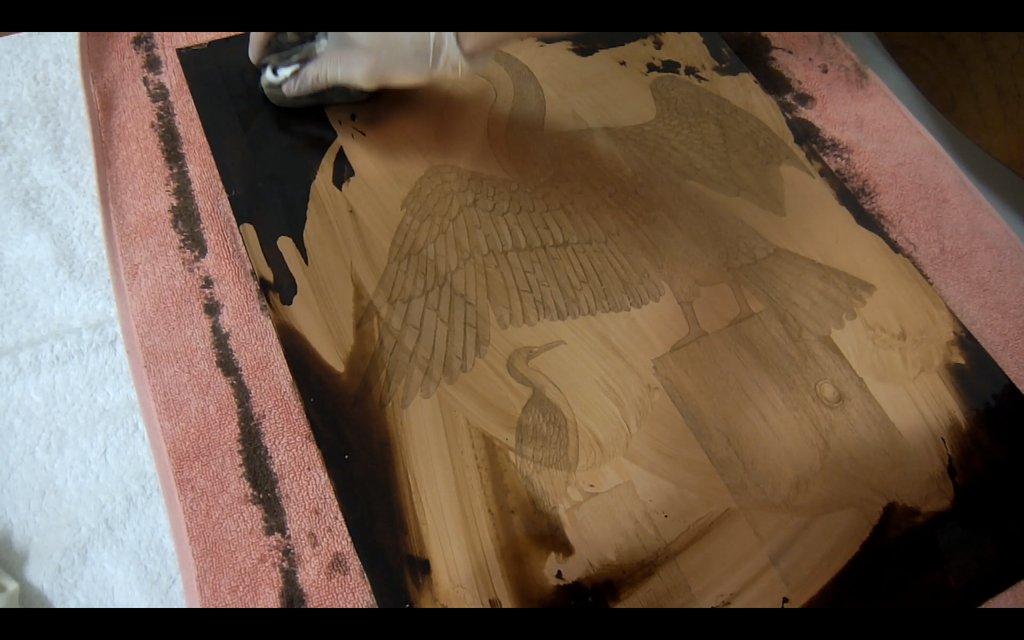
There is a moment in every etching project that feels like the lifting of a veil—a breathless pause before the plate is removed from the solution, the ground is cleaned away, and the image is revealed. This is the climax of the process, where the artist’s vision meets the chemical’s transformation. The plate, once a blank canvas, now bears the ghostly imprint of the design, the lines etched into its surface like scars that tell a story. The inking process that follows is equally ritualistic: the plate is warmed, ink is applied and worked into the recesses, and the excess is wiped away with tarlatan and newsprint, leaving only the ink trapped in the etched lines. The pressure of the press, the dampness of the paper, the squeak of the rollers—all these elements combine to transfer the image from metal to paper, a fleeting moment where art becomes tangible.
The print that emerges is not just an image; it is a fragment of the artist’s soul, captured in the delicate dance of chemistry and craft. The copper’s warm tones, the depth of the shadows, the crispness of the lines—all these elements come together to create something that feels both timeless and immediate. It’s a process that demands patience, but the reward is a print that feels earned, a piece of art that carries the weight of the journey as much as the beauty of the destination. In an age of instant gratification, etching slows time, forcing the artist to engage deeply with each step, each decision, each mark. The result is not just a print, but a meditation on the act of creation itself.
The allure of etching at home with safe grounds and copper sulfate lies in its ability to transform the ordinary into the extraordinary. It’s a practice that turns a backyard shed or a kitchen table into an alchemical laboratory, where the humblest materials become the tools of magic. There’s a quiet rebellion in this simplicity—a refusal to be intimidated by the complexity of traditional printmaking, a celebration of the accessible and the attainable. Yet within this accessibility lies depth, a richness of experience that grows with each print, each experiment, each moment spent in dialogue with the unseen forces of chemistry and creativity. Etching, in the end, is not just about making art; it’s about rediscovering the wonder of creation itself, one etched line at a time.


Leave a Comment