

Texturing in Substance Painter isn’t just about slapping colors onto a 3D model—it’s about breathing life into digital surfaces, making them feel tactile, weathered, and alive. Yet, even seasoned artists often find themselves at a crossroads: should they harness the power of Smart Materials, those algorithmically generated texture presets that promise instant realism, or roll up their sleeves and dive into the meticulous art of hand-painting? The answer isn’t as simple as choosing between automation and craftsmanship. It’s about understanding when each approach shines, and why the friction between them reveals something deeper about the nature of digital art itself.
The allure of Smart Materials is undeniable. With a single click, you can transform a flat surface into a rusted metal panel, a weathered wooden plank, or a chipped paint job—complete with micro-details that would take hours to paint manually. These materials are, in essence, pre-cooked textures, a library of visual shortcuts that leverage procedural generation to simulate wear, aging, and material interaction. They’re the digital equivalent of a well-stocked spice rack: quick, versatile, and endlessly reusable. But here’s the catch: they’re only as good as the parameters you feed them. A Smart Material can mimic rust, but it can’t intuit the story behind that rust—the way it clings to the edges of a surface, the subtle variations in oxidation that tell a tale of neglect or exposure. That’s where hand-painting steps in, not as a rejection of efficiency, but as a celebration of narrative.
The Alchemy of Smart Materials: When Algorithms Paint for You
Smart Materials in Substance Painter are more than just textures; they’re parametric shaders that dynamically adjust based on your scene’s lighting, camera angle, and even the underlying geometry. Imagine a material that automatically generates scratches where a surface would naturally wear, or one that subtly shifts color gradients to mimic the uneven fading of paint under sunlight. This isn’t lazy texturing—it’s intelligent texturing, where the software acts as a collaborator rather than a tool.
For artists working on large-scale projects—think open-world environments or AAA game assets—Smart Materials are a godsend. They allow for rapid iteration, letting you test different material setups without getting bogged down in pixel-level details. Need a concrete wall that looks aged but not crumbling? Adjust the wear slider. Want a metallic surface with a patina that shifts from green to brown? Tweak the oxidation parameters. The beauty lies in the balance: Smart Materials provide a foundation of realism that you can then refine with hand-painted details, like adding graffiti to a brick wall or fingerprints to a doorknob.
Yet, this efficiency comes with a trade-off. Smart Materials are, by nature, generalized. They excel at creating textures that feel “real enough” for most purposes, but they struggle with the uniqueness that defines handcrafted art. A Smart Material might generate a convincing wood grain, but it won’t capture the idiosyncrasies of a specific type of wood—the knots, the grain direction, the way the surface reacts to light in a way that feels organic rather than procedural. This is where the deeper fascination lies: the tension between replicability and authenticity.

The Soul of Hand-Painting: Crafting Stories in Pixels
Hand-painting in Substance Painter is where the magic of intentional imperfection comes to life. It’s the difference between a texture that looks “correct” and one that feels lived-in. When you paint by hand, you’re not just applying color—you’re sculpting the history of a surface. A hand-painted texture tells a story: the way paint peels in strips, the uneven distribution of dirt in the crevices of a surface, the subtle variations in tone that suggest age and exposure. It’s texturing as narrative design.
Consider the act of painting rust. A Smart Material might generate a uniform layer of corrosion, but hand-painting allows you to define the pattern of that rust—the way it clusters in certain areas, the streaks that form as it drips down a surface, the way it interacts with the underlying material. This level of control is invaluable for assets that need to stand out, like a hero prop in a game or a character’s armor in a cinematic scene. Hand-painting also gives you the freedom to break the rules of realism when necessary. Want a surface that’s impossibly smooth, like polished marble? You can paint that. Need a texture that’s deliberately exaggerated, like the glossy sheen of a comic book hero’s costume? Hand-painting makes it possible.
But hand-painting isn’t without its challenges. It’s time-consuming, demanding both technical skill and an artist’s eye for detail. It requires a deep understanding of how light interacts with different materials, as well as the patience to iterate until every stroke feels just right. For some artists, this process is meditative—a way to connect with the tactile nature of their work. For others, it’s a necessary evil, a step they endure to achieve the level of realism or stylization they’re aiming for. The key is to recognize when hand-painting is worth the effort and when Smart Materials can save the day.

The Hybrid Approach: Where Smart Meets Hand
The most compelling texturing workflows in Substance Painter often blend the two approaches, leveraging the strengths of each to create something greater than the sum of its parts. Start with a Smart Material as your base—a foundation that gives you a realistic starting point with minimal effort. Then, dive into hand-painting to add the personal touch, the details that make the texture feel unique. This hybrid method is particularly effective for assets that need to balance realism with artistic intent, like a futuristic cityscape where most surfaces are weathered metal, but certain elements—like graffiti or hand-scrawled signs—require a human touch.
Another way to blend the two is through masking. Use Smart Materials to generate the bulk of your texture, then paint masks to control where those materials appear. For example, you might use a Smart Material to create a base layer of rust on a metal surface, then hand-paint a mask to define the exact areas where the rust is most prominent. This gives you the best of both worlds: the efficiency of procedural generation with the precision of manual control.
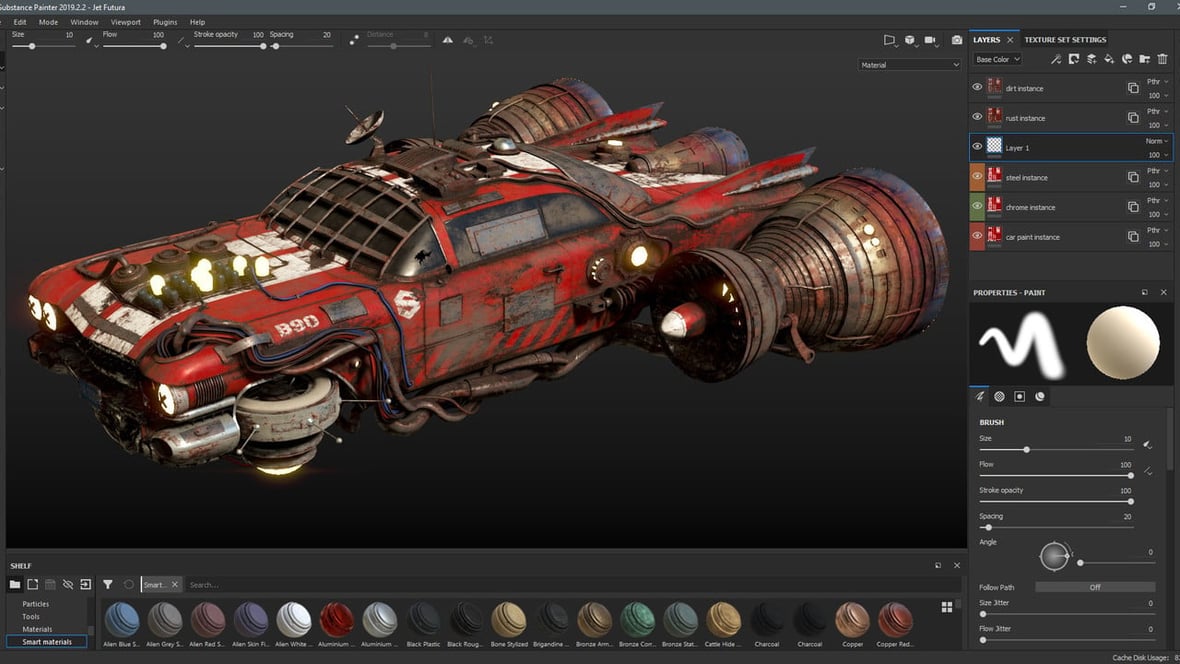
The hybrid approach also extends to non-destructive workflows. Substance Painter’s layer system allows you to stack Smart Materials and hand-painted details, adjusting their opacity and blending modes to achieve the desired effect. This means you can experiment freely, swapping out materials or refining your hand-painted details without losing your original work. It’s a level of flexibility that would be impossible with a purely manual or purely procedural approach.
Choosing Your Path: Efficiency vs. Expression
At the end of the day, the choice between Smart Materials and hand-painting comes down to your project’s needs and your personal philosophy as an artist. If you’re working on a project with tight deadlines or a large scope, Smart Materials are an invaluable tool—one that allows you to iterate quickly and maintain consistency across multiple assets. They’re the digital equivalent of a well-oiled machine, reliable and efficient.
But if you’re chasing a specific aesthetic, telling a story through your textures, or simply want to put your personal stamp on your work, hand-painting is the way to go. It’s where artistry meets craftsmanship, where every stroke is a deliberate choice that contributes to the final narrative. It’s slower, more labor-intensive, but the payoff is a texture that feels alive—one that resonates with viewers on a deeper level.
Perhaps the most fascinating aspect of this debate is how it reflects the broader evolution of digital art. In an era where algorithms can generate near-perfect textures in seconds, the act of hand-painting becomes an act of rebellion—a declaration that art isn’t just about efficiency, but about humanity. It’s a reminder that even in a world of automation, there’s still a place for the imperfect, the idiosyncratic, the real.
So, whether you’re a fan of Smart Materials or a devotee of hand-painting, the key is to embrace the tools at your disposal without losing sight of what makes texturing truly magical: the ability to transform the digital into the tangible, the virtual into the visceral. After all, the best textures aren’t just seen—they’re felt.


Leave a Comment