

In the heart of Florence, where the Arno River caresses the cobblestones of history, stands a marvel that defies the very laws of gravity. The dome of Florence’s cathedral, an architectural titan crowned with a lantern that pierces the Tuscan sky, was once deemed an impossible dream. For centuries, builders had gazed upward, their eyes tracing the curvature of the heavens, only to retreat in defeat. The problem was not merely one of scale—it was a battle against physics itself. Yet, in the early 15th century, a man named Filippo Brunelleschi not only dared to dream of such a structure but outsmarted the universe to bring it to life. How? By cheating physics. Not with sorcery, but with ingenuity so radical it rewrote the rules of engineering.
The dome of Santa Maria del Fiore was not just another vaulted ceiling. It was a gauntlet thrown at the feet of medieval masons, a challenge so audacious that many believed it could never be met. The cathedral’s foundation had been laid in 1296, but by the time Brunelleschi arrived on the scene, the nave was complete—save for the crowning glory. The problem? No one knew how to build a dome that vast without it collapsing under its own weight. Traditional wooden centering, the scaffolding method used for centuries, was impractical for a structure spanning 144 feet in diameter. The wood would have been colossal, the cost astronomical, and the risk of fire or rot catastrophic. Worse still, the dome’s octagonal shape defied the tried-and-true ribbed vaults of Gothic cathedrals. Brunelleschi faced a conundrum: build it too light, and it would crumble; build it too heavy, and it would sink into the earth.
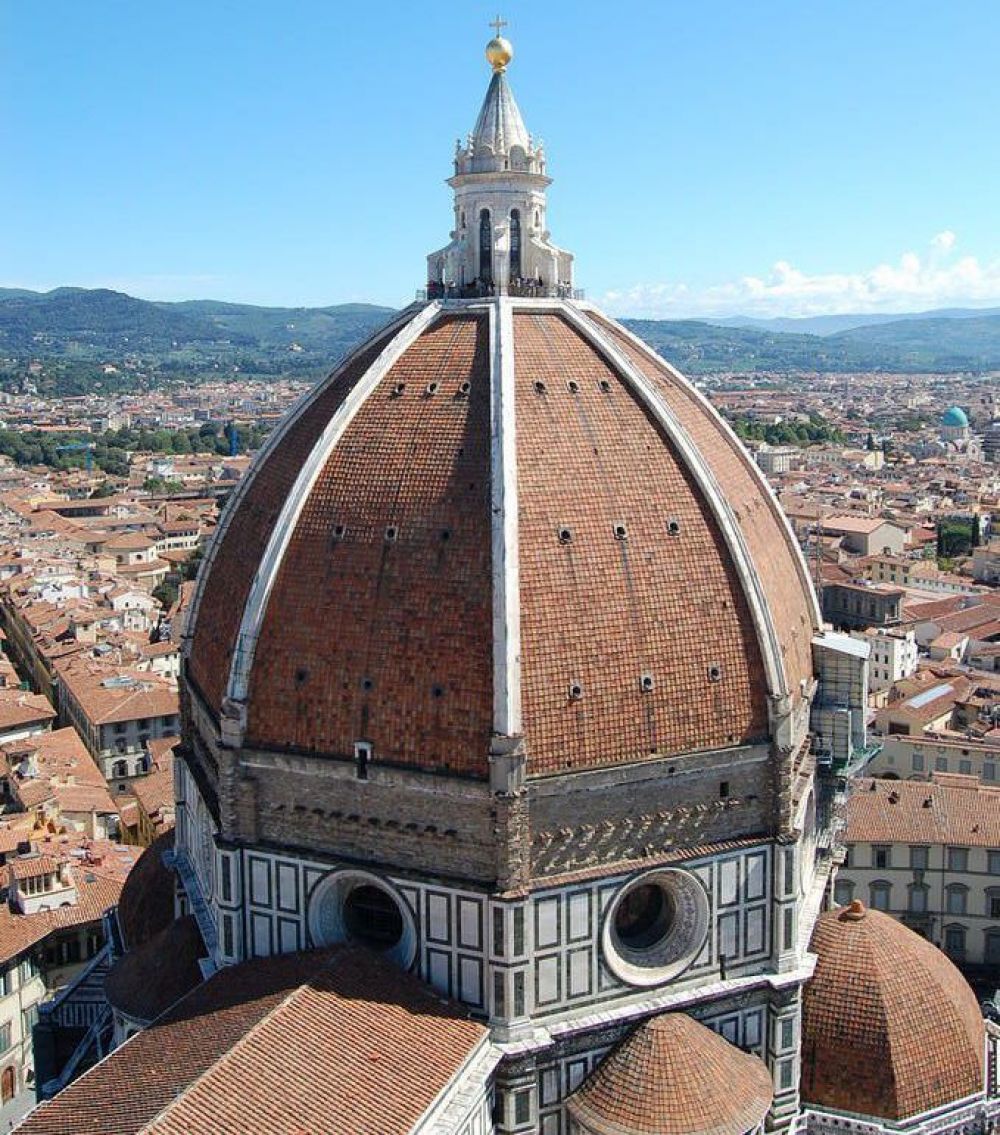
Enter Brunelleschi’s first act of rebellion against physics: the herringbone brick pattern. While masons of the day laid bricks in straight, uniform rows, Brunelleschi devised a lattice of bricks arranged in a zigzag, interlocking pattern. This wasn’t mere aesthetics—it was a structural masterstroke. The herringbone design distributed weight laterally, preventing the bricks from sliding downward under their own pressure. It was as if he had taught the bricks to hold hands, creating a self-supporting web that could bear immense loads without external scaffolding. The technique, borrowed from Roman opus spicatum but perfected by Brunelleschi, turned the dome’s walls into a living, breathing skeleton.
Yet the herringbone was only the beginning. Brunelleschi’s second act of defiance was the dome’s double-shell construction. Instead of a single, monolithic structure, he designed two concentric domes: an inner shell for stability and an outer shell for protection against the elements. The inner dome, built with lighter bricks, bore the brunt of the structural stress, while the outer dome, clad in terracotta tiles, shielded the inner workings from wind and rain. The space between the shells wasn’t just empty air—it was a hidden world of staircases, walkways, and even a small workshop where masons could repair cracks without descending to the ground. This dual-layered approach wasn’t just clever; it was a feat of spatial alchemy, turning a single structure into a dynamic, self-sustaining system.
But how did Brunelleschi ensure the dome wouldn’t topple like a house of cards? Here, he employed a third trick: progressive corbelling. Instead of building the dome straight up, he constructed it in horizontal layers, each one slightly inset from the one below. This created a series of overlapping rings, each bearing the weight of the layer above it. The result was a dome that grew inward as it rose, its curvature tightening like a coiled spring. It was a slow, deliberate dance with gravity, where each brick was placed with the precision of a chess grandmaster. The corbelling also allowed Brunelleschi to adjust the dome’s shape in real-time, compensating for any irregularities in the foundation or the brickwork. It was as if he had turned the dome into a living organism, one that could adapt and correct itself as it grew.
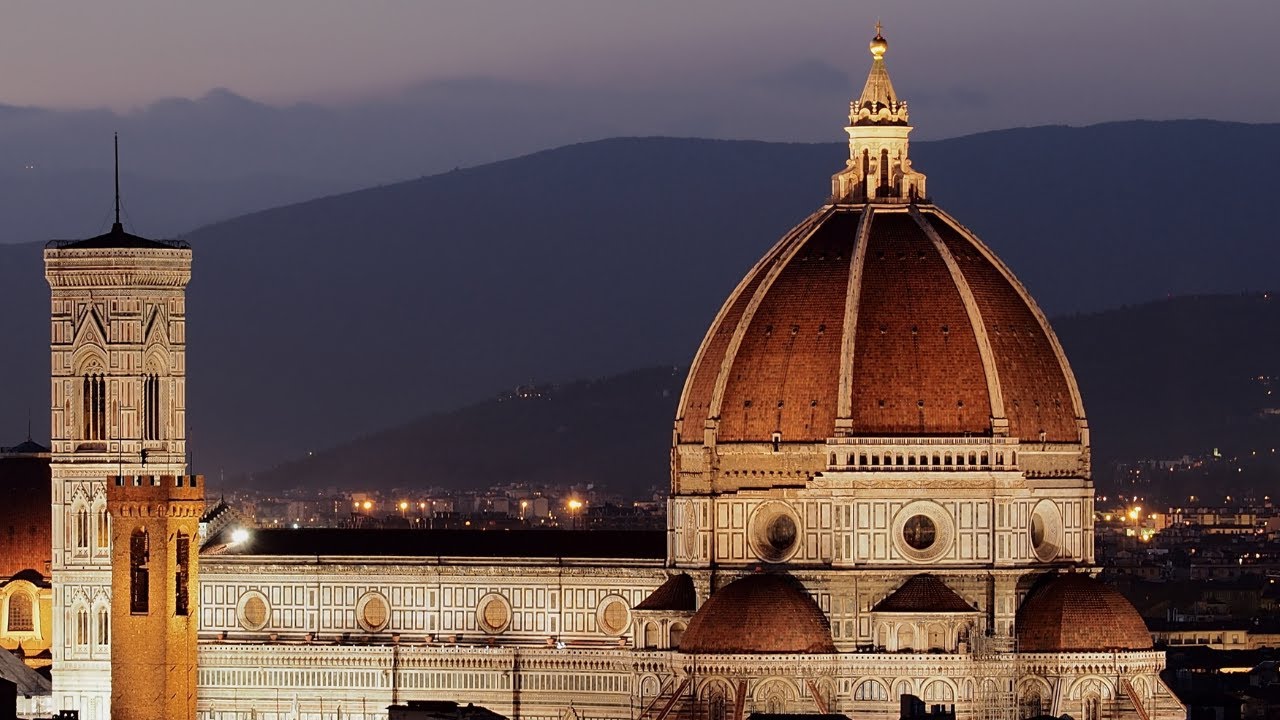
Of course, no discussion of Brunelleschi’s dome would be complete without addressing the elephant in the room: the lantern. Perched atop the dome like a crown, the lantern was the final piece of the puzzle—and the most dangerous. Its weight threatened to topple the entire structure if not distributed evenly. Brunelleschi’s solution? He designed the lantern with a series of iron chains embedded within its masonry, acting as a giant girdle to hold the dome together. These chains, invisible to the naked eye, were the dome’s secret armor, ensuring that even the heaviest stone wouldn’t pull the structure apart. It was a final, defiant act of engineering, a reminder that Brunelleschi had not just built a dome—he had woven a net to catch the sky.
Yet for all its brilliance, Brunelleschi’s dome was not without controversy. Skeptics of the time whispered that his methods were heretical, that he had consorted with forces beyond mortal ken. Some claimed he used a hidden crane or a system of pulleys to hoist the bricks, though no evidence supports this. Others believed he had discovered some lost Roman secret, a mythical technique buried in the sands of time. The truth was far simpler—and far more impressive. Brunelleschi had not cheated physics with magic; he had outmaneuvered it with logic. He had turned the dome into a self-regulating machine, a structure that could correct its own imbalances as it rose. It was a testament to the power of human ingenuity, a reminder that the universe’s laws are not immutable—only waiting for the right mind to bend them.
The dome of Santa Maria del Fiore was completed in 1436, after 16 years of labor, sweat, and sheer stubbornness. When the scaffolding was finally removed, Florence held its breath. Would it stand? Would it crumble? The moment the last plank fell away, the crowd erupted in cheers. The dome did not merely stand—it soared. It was a declaration of human ambition, a middle finger to the naysayers who had deemed it impossible. Brunelleschi had not just built a dome; he had redefined what was possible. He had shown the world that physics was not a prison, but a playground—and that with enough creativity, even the most unyielding laws could be coaxed into submission.
Today, the dome remains a symbol of Florence’s golden age, a beacon for architects and dreamers alike. It is a reminder that the greatest feats of engineering are not born from brute force, but from cunning, curiosity, and the willingness to challenge the status quo. Brunelleschi’s dome is not just a structure; it is a manifesto. It says: Look what we can do when we refuse to accept limits. And in a world where so many still whisper, “It can’t be done,” that manifesto echoes louder than ever.


Leave a Comment