

Why Jean-Michel Basquiat’s Words Are Just as Important as His Crowns
What if I told you that beneath the crowns, the frenetic scribbles, and the crowns again—yes, the ones he painted so often they became his signature—there lies a lexicon as vital as the visual rebellion itself? Jean-Michel Basquiat didn’t just wear the crown; he spoke through it, and in doing so, he turned language into a weapon, a mirror, and a monument. His words weren’t mere annotations to his art—they were its heartbeat. They pulsed with urgency, wit, and a raw honesty that still reverberates through galleries, streets, and the quiet corners of our minds. So, let’s pose a playful challenge: imagine if Basquiat had never picked up a brush. Would his words alone have carved his legacy into the annals of art history? The answer, as we’ll uncover, is a resounding yes. But to understand why, we must first peel back the layers of his linguistic prowess, where every phrase is a brushstroke and every scribble a sentence waiting to be read.
The Alchemy of Words and Canvas: Where Language Meets Rebellion
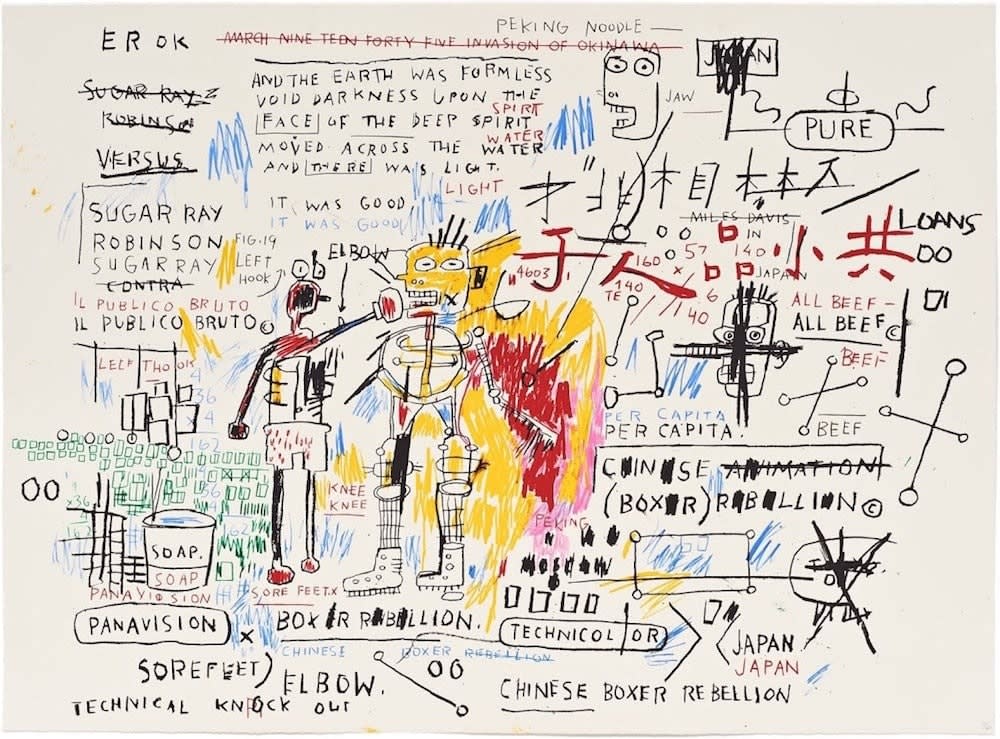
Basquiat’s art was never just visual—it was a symphony of image and text, a dialogue where words danced across canvases like graffiti on subway walls. He didn’t just paint crowns; he crowned words. Take, for instance, his repeated use of the word “ORACLE,” emblazoned across canvases like a proclamation. It wasn’t just a title; it was a challenge, a demand to see beyond the surface. Words in his work weren’t decorative; they were disruptive. They forced viewers to pause, to question, to engage in a way that pure abstraction rarely does. In this fusion of text and image, Basquiat didn’t just create art—he created a new language, one that spoke in riddles, in history, in the unspoken truths of marginalized voices.
Consider the way he wove poetry into his paintings. Lines like “Most young kings get their heads cut off” or “Hollywood Africans” weren’t just captions—they were manifestos. They carried the weight of his experiences as a Black man in a world that often sought to silence him. By embedding words into his art, Basquiat turned his canvases into billboards for social commentary, where language became as powerful as the crowns he painted. It’s a testament to his genius that he understood words could be as visually arresting as any brushstroke. In fact, in many ways, his text was the brushstroke—the raw, unfiltered voice that cut through the noise of the art world’s pretensions.
Words as Armor: The Political Edge of Basquiat’s Lexicon
Basquiat’s words were never neutral. They were armor, shields against the erasure of Black history and culture. He wielded language like a scalpel, dissecting the hypocrisies of power, racism, and colonialism with a precision that left no room for misunderstanding. His use of phrases like “SAMO©” (his early graffiti tag, a contraction of “Same Old Shit”) wasn’t just a gimmick—it was a rallying cry. It was a way to reclaim the streets, to turn the mundane into the political, and to force passersby to confront the rot beneath the glitter of society.
But Basquiat didn’t stop at slogans. He delved into history, pulling names and dates from the shadows of obscurity to place them under the spotlight. His painting “Charles the First” isn’t just a portrait of a king; it’s a meditation on power, mortality, and the cyclical nature of oppression. The words scrawled across the canvas—“Most kings get their heads cut off”—aren’t just text; they’re a warning, a prophecy, a reminder that power is fleeting and often violent. In this way, Basquiat’s words became a tool for education, a way to smuggle history into the present, where it could no longer be ignored.
It’s this political edge that makes Basquiat’s words so enduring. They weren’t just part of his art—they were the lifeblood of his activism. By embedding language into his work, he turned his canvases into platforms for change, where every stroke of the pen was a strike against complacency. In a world where art is often sanitized and stripped of its bite, Basquiat’s words remind us that art doesn’t have to be pretty to be powerful. It just has to be honest.
The Playful and the Profound: Basquiat’s Duality in Language
Yet, for all his political weight, Basquiat’s words were also playful, even whimsical. He had a childlike fascination with language, a joy in the absurdity of words that made his art feel alive and unpredictable. Phrases like “Fishing” or “Cadillac Moon” might seem random, but they carried a sense of wonder, a refusal to take himself—or the world—too seriously. This duality—between the profound and the playful—is what makes his work so magnetic. It’s as if he understood that revolution doesn’t always have to be solemn; sometimes, it can be a dance, a joke, a wink to the viewer.
This balance is evident in his collaborations with musicians like Andy Warhol and Fab Five Freddy. The words in these works often feel like lyrics, snippets of a larger conversation that’s happening just out of frame. They’re not just text; they’re invitations to join in, to laugh, to think, to feel. Basquiat’s ability to blend the serious with the silly is a masterclass in how to engage an audience without ever talking down to them. He trusted his viewers to meet him halfway, to find the humor in the horror, the light in the dark.
It’s this duality that makes his words so relatable. We’ve all felt the weight of the world, but we’ve also laughed at its absurdities. Basquiat’s art captures both, and in doing so, it becomes a mirror for our own experiences. His words aren’t just statements; they’re conversations, and that’s what makes them so enduring.
The Legacy of Basquiat’s Words: Why They Still Matter Today
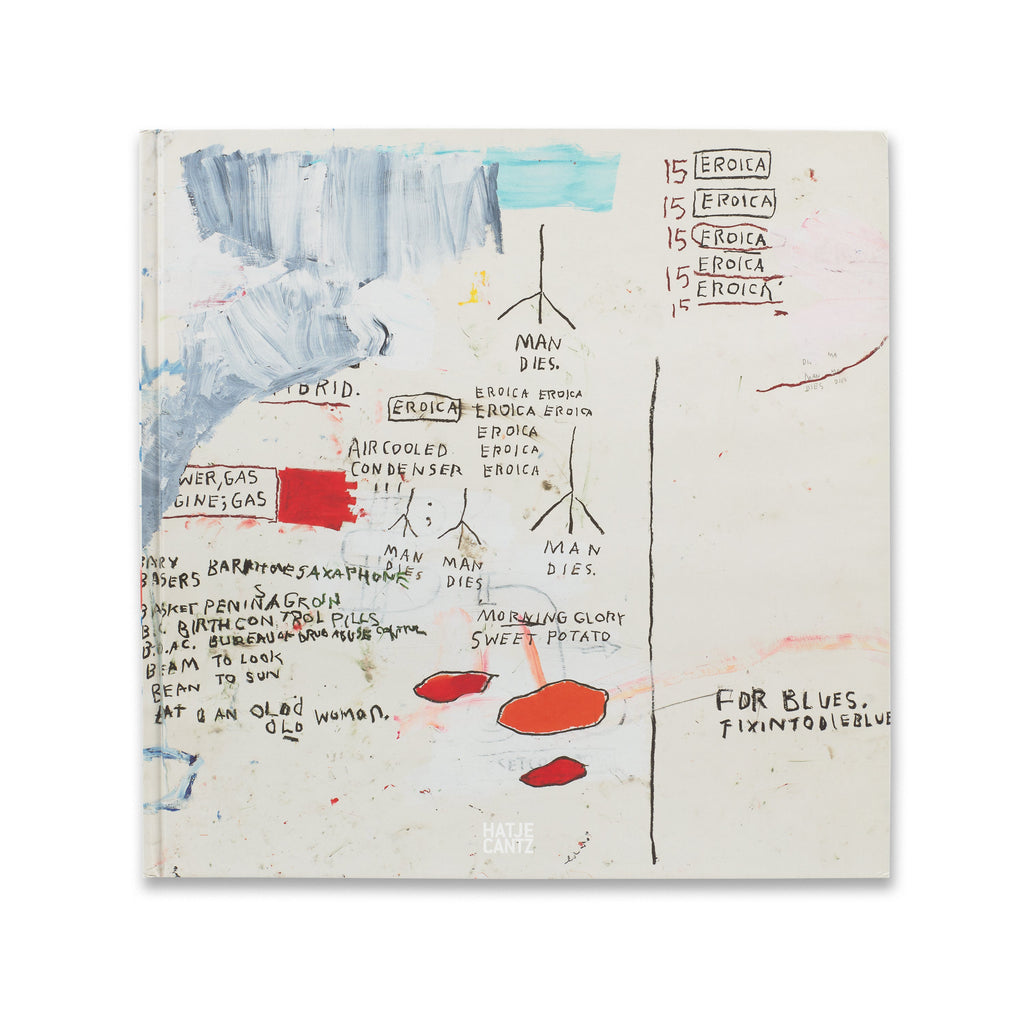
Decades after his untimely death, Basquiat’s words continue to resonate, a testament to their timelessness. They speak to a generation grappling with the same issues he faced—racism, inequality, the struggle for visibility. But they also speak to something deeper: the power of language to shape our understanding of the world. In an era where words are often reduced to soundbites and memes, Basquiat’s work is a reminder that language can be art, that it can be revolutionary, that it can be a lifeline.
His words challenge us to look closer, to read between the lines, to question what we’re being told. They remind us that art isn’t just something to be admired from a distance—it’s something to be engaged with, to be argued with, to be lived with. In this way, Basquiat’s legacy isn’t just in the crowns he painted or the prices his works fetch at auction. It’s in the way he taught us to see words not as mere tools, but as weapons, as bridges, as acts of defiance.
So the next time you see one of Basquiat’s crowns, don’t just look at the gold and the splendor. Look at the words around it. Read them. Let them sink in. Because in the end, Basquiat’s crowns were never just about power—they were about the power of words to crown us all with understanding, with empathy, with the courage to speak our truths.
And perhaps that’s the greatest crown of all.


Leave a Comment