

Have you ever glided into a ballet studio, only to realize halfway through class that your hair is a tangled mess, your shoes are untied, and you’ve just committed a faux pas so glaring it could make a seasoned ballerina wince? If so, you’re not alone. Ballet class isn’t just about perfecting pliés and arabesques—it’s a symphony of unspoken rules, where every gesture, every glance, and even the way you tie your ribbons can either elevate your presence or mark you as a well-meaning outsider. What if I told you that the biggest obstacle standing between you and a flawless ballet experience isn’t your turnout or your flexibility, but the etiquette blunders you don’t even realize you’re making?
Ballet class is a microcosm of discipline, tradition, and artistry, where every detail matters. From the moment you step into the studio to the final reverence, your behavior reflects your respect for the art form—and for your fellow dancers. Yet, even the most passionate students often stumble over the subtle nuances of ballet etiquette, unaware that they’re breaking rules that have been honed over centuries. So, are you guilty of any of these ballet class etiquette offenses? Let’s find out.

The Arrival: Timing is Everything (And So Is Silence)
Picture this: You arrive at the studio five minutes late, breathless, and still adjusting your bun as the teacher begins the warm-up. The room falls silent. Every head turns. The pianist’s fingers hover over the keys. You’ve just violated the first rule of ballet class: punctuality is sacred. Arriving late disrupts the flow of the class, distracts the teacher, and signals a lack of respect for the art form. But timing isn’t the only issue—your entrance itself can be a misstep.
Ballet studios are sanctuaries of focus, where the outside world is left at the door. A loud, boisterous arrival shatters the tranquility, drawing attention away from the dancers who are already warming up. Instead, slip in quietly, greet your teacher with a nod or a soft “good morning,” and take your place at the barre without fanfare. If you must arrive late, wait until the teacher gives you permission to join—never barge in unannounced. Remember, in ballet, silence is golden, and timing is everything.

The Warm-Up: Barre Manners That Matter
Once you’ve settled in, the barre becomes your sanctuary—and your teacher’s eyes become your judge. But are you using it correctly? One of the most common etiquette breaches is treating the barre like a crutch rather than a tool. Leaning heavily on it, resting your head against it, or using it to stretch your hamstrings instead of supporting your balance is a surefire way to earn disapproving glances. The barre is there to assist, not to bear your weight.
Another faux pas? Chatting with your neighbor while the teacher demonstrates a combination. In ballet, the barre is a place of concentration, not camaraderie. Save your gossip for the dressing room. And if you’re struggling with a combination, resist the urge to sigh dramatically or roll your eyes—it disrupts the class’s energy and shows a lack of professionalism. Instead, focus on refining your technique, even if it means repeating the exercise until it’s perfect.
Finally, never adjust your shoes or clothing at the barre. If your pointe shoe ribbons come undone or your bun slips, step away from the barre to fix it. The barre is for dancing, not for primping. By respecting these unspoken rules, you’ll not only improve your technique but also earn the respect of your peers and teachers.
The Center Floor: Where Grace Meets Discipline
As the class transitions from the barre to the center, the stakes rise. The center floor is where you’re truly on display, and every movement is scrutinized. One of the most overlooked etiquette rules here is the order in which you enter the center. If you’re not part of the first group called, resist the urge to rush ahead. Wait your turn, and when it’s your moment, take your place with confidence—not arrogance. Cutting in line is a cardinal sin in ballet.
Another common mistake? Talking during corrections. If the teacher is giving feedback to another dancer, listen attentively. Interrupting or whispering to a friend shows a lack of focus and respect. Instead, use this time to observe, learn, and refine your own understanding of the material. And when it’s your turn to receive corrections, listen without defensiveness. A good dancer knows that feedback is a gift, not a criticism.
Finally, never walk through the center while a combination is being taught. If you need to cross the floor, wait until the teacher has finished demonstrating. Walking through the center mid-combination disrupts the flow and shows a lack of awareness. Instead, plan your movements carefully, and if you must move, do so with purpose and precision.
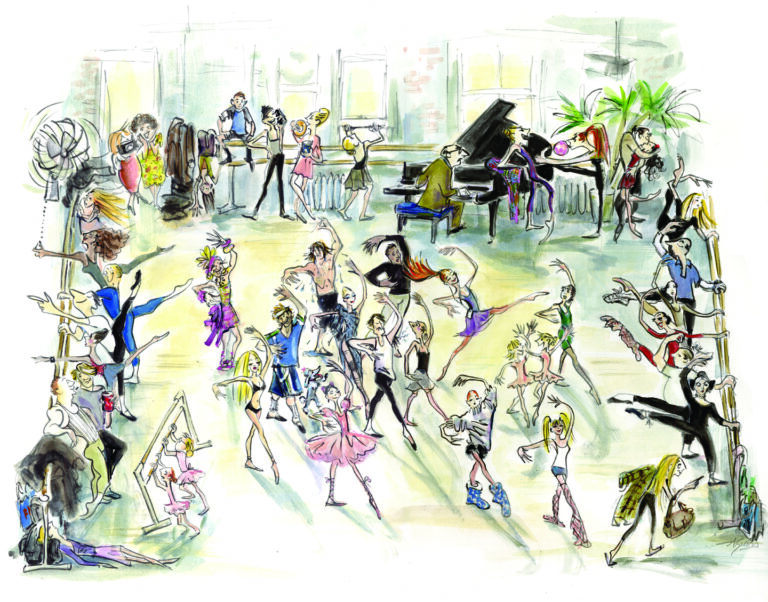
The Exit: Reverence and Respect
The class may be over, but your etiquette responsibilities aren’t. As the final reverence begins, it’s time to show your gratitude. A proper reverence isn’t just a curtsy—it’s a moment of connection between you, your teacher, and your fellow dancers. Make eye contact, smile, and thank your teacher for the class. If you’re taking class with live music, acknowledge the pianist as well. These small gestures go a long way in showing your appreciation for the art form.
But the exit isn’t just about the reverence—it’s also about how you leave the studio. Avoid packing up while the teacher is still speaking, and never rush out the door without saying goodbye. If you’re sharing a dressing room, be mindful of others’ space and time. Leave the studio as you found it: tidy, respectful, and ready for the next dancer to take the floor.
The Unwritten Rules: Beyond the Basics
Ballet etiquette isn’t just about what you do—it’s also about what you don’t do. For instance, never wear jewelry to class. Bangles can clang against the barre, necklaces can get caught in your hair, and rings can snag your tights. Keep it simple: a neat bun, minimal jewelry, and clean dancewear. And speaking of dancewear, make sure it’s appropriate for the level of class you’re taking. Wearing pointe shoes to a beginner ballet class can be just as disruptive as wearing sneakers to an advanced class.
Another unwritten rule? Don’t compare yourself to others. Ballet is a journey, not a competition. If you see a dancer executing a perfect pirouette, use it as inspiration—not as a reason to feel inadequate. And if you’re struggling, don’t hide it. Ask for help, take corrections graciously, and remember that every dancer, no matter how advanced, was once a beginner.
Finally, always bring a positive attitude to class. Ballet is as much about mental discipline as it is about physical skill. A sour mood or a negative attitude can poison the atmosphere for everyone. Instead, approach each class with enthusiasm, curiosity, and a willingness to learn. Your energy will not only improve your own experience but also lift up those around you.
So, are you guilty of any of these ballet class etiquette offenses? If so, don’t despair. Awareness is the first step toward improvement. The next time you step into the studio, take a moment to reflect on your behavior. Are you arriving on time? Are you respecting the barre and the center floor? Are you listening attentively and showing gratitude? If you can answer yes to these questions, you’re well on your way to mastering the unspoken rules of ballet etiquette.
Ballet is a dance of precision, tradition, and artistry. By honoring its etiquette, you’re not just following rules—you’re becoming part of a legacy. And who knows? With a little more awareness and a lot more grace, you might just find yourself not only improving your technique but also earning the respect and admiration of your fellow dancers. After all, in the world of ballet, the smallest details can make the biggest difference.


Leave a Comment