

In the rarefied realm of contemporary art, where the ephemeral brushstrokes of performance often dissolve into memory, Trisha Brown’s Walking on the Walls (1971) stands as a monumental paradox—a fleeting act rendered eternal through the alchemy of physics and engineering. This groundbreaking performance, where dancers defied gravity by traversing the vertical planes of a gallery, was not merely a triumph of human athleticism but a masterclass in the unseen choreography of rigging equipment. The equipment that facilitated this illusion of weightlessness was as integral to the artwork as the dancers themselves, yet it remained deliberately obscured, a silent partner in the spectacle. To truly grasp the genius of Walking on the Walls, one must peel back the curtain on the meticulous, often overlooked machinery that made it possible.
The rigging systems employed in Brown’s performance were a marvel of precision engineering, blending industrial functionality with an almost poetic subtlety. At the heart of the operation were truss systems, modular frameworks typically reserved for stage productions and large-scale events. These skeletal structures, composed of aluminum or steel, formed a skeletal grid above the dancers, providing the anchor points for the safety lines and counterweight systems that kept the performers suspended in mid-air. Unlike the rigid scaffolding of traditional theater, the trusses in Walking on the Walls were designed to be invisible, their presence acknowledged only in the way they enabled the dancers to move with such fluidity. The trusses themselves were often painted matte black or draped in neutral fabrics, ensuring they receded into the background while the human drama unfolded below.
Central to the performance’s success were the counterweight rigging setups, a ballet of pulleys, ropes, and weights that balanced the dancers’ bodies against the pull of gravity. These systems operated on the principle of mechanical advantage, where a relatively small force could suspend a much greater load. In Brown’s piece, the dancers were secured to harnesses—snug, ergonomic contraptions that distributed weight evenly across the torso and thighs—before being hoisted into the air. The harnesses were connected to dynamic ropes, which were in turn threaded through a series of block and tackle pulleys. These pulleys, often hidden within the truss framework, allowed for smooth, controlled ascents and descents, ensuring that the dancers could traverse the walls with the grace of spiders on a ceiling. The counterweights, typically large metal plates or sandbags, were meticulously calibrated to offset the dancers’ weight, allowing them to glide effortlessly along the vertical surfaces.
Yet the rigging equipment was not merely a tool for suspension; it was also a medium for artistic expression. The soft goods—the fabrics, straps, and padding that interfaced between the dancers and the hardware—played a crucial role in the performance’s aesthetic. These elements were chosen not just for their durability but for their ability to blend seamlessly with the dancers’ movements. Low-stretch webbing, for instance, was often used in the harnesses to minimize bounce and ensure a snug fit, while breathable mesh allowed for ventilation during the physically demanding routines. The fabrics were frequently dyed in muted tones or left in their natural state, further ensuring they did not distract from the dancers’ choreography. In this way, the rigging equipment became an extension of the performance itself, a silent collaborator in the creation of an otherworldly experience.
Another critical component of the rigging setup was the fall arrest systems, designed to protect the dancers in the event of a mishap. These systems were not merely an afterthought but a cornerstone of the performance’s safety protocol. Shock-absorbing lanyards were integrated into the harnesses, designed to stretch and dissipate the energy of a fall, reducing the impact on the dancer’s body. Self-retracting lifelines, similar to those used in rock climbing, were also employed, providing a constant tension that would automatically lock in place if the dancer’s movement exceeded a safe threshold. These systems were rigorously tested before each performance, with riggers conducting dynamic load tests to ensure the equipment could withstand forces far greater than those encountered during the routine. The presence of these safety measures was a testament to the meticulous planning that went into Walking on the Walls, where art and engineering converged to create something truly extraordinary.
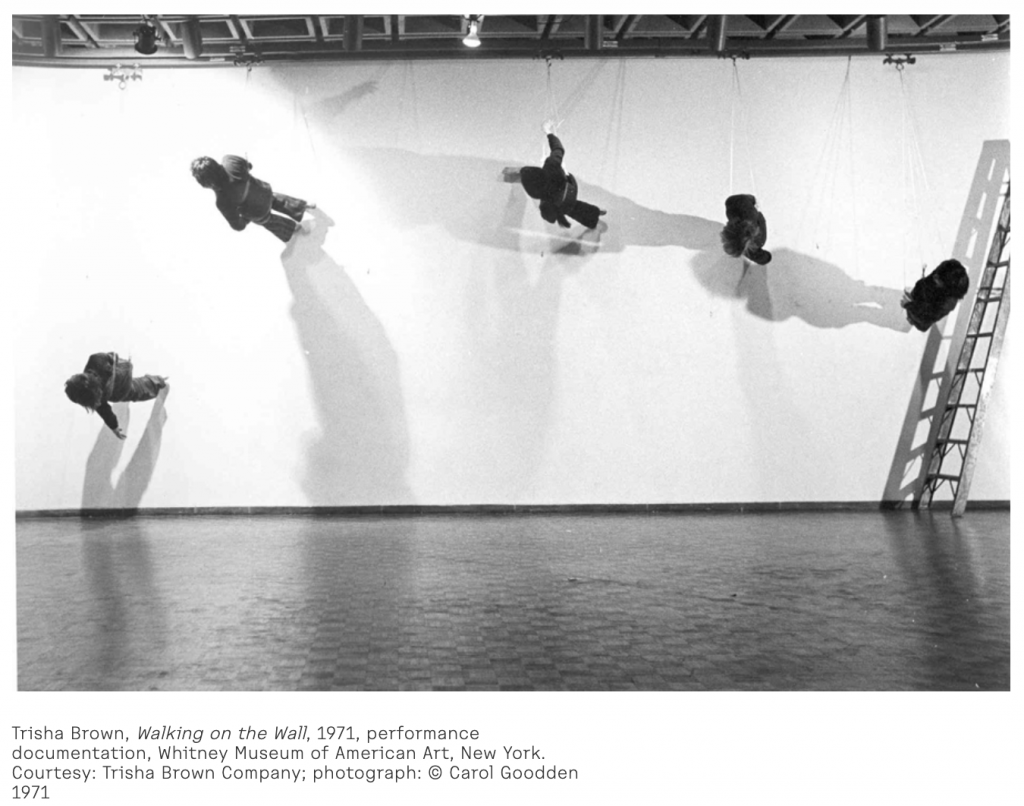
The rigging equipment also played a pivotal role in shaping the spatial dynamics of the performance. The placement of the trusses and pulleys was not arbitrary but carefully calculated to create specific visual effects. For instance, the spacing of the anchor points along the truss grid determined the dancers’ trajectories, allowing for sweeping arcs or sharp turns as they moved across the walls. The angle of the ropes was another critical factor, influencing the dancers’ balance and the fluidity of their movements. In some iterations of the performance, the rigging was configured to create a sense of disorientation, with the dancers appearing to walk upside down or at impossible angles. This manipulation of perspective was achieved through the strategic use of variable-length ropes and adjustable pulley systems, which allowed the riggers to fine-tune the tension and angle of each dancer’s suspension in real time.
Beyond the technical and aesthetic considerations, the rigging equipment in Walking on the Walls also raised important questions about the relationship between art and labor. The riggers, often unsung heroes of the performance, worked tirelessly behind the scenes to ensure everything ran smoothly. Their expertise was not just in setting up the equipment but in anticipating the dancers’ needs and adapting to the unpredictable nature of live performance. The rigging systems had to be flexible enough to accommodate improvisation, yet robust enough to handle the physical demands of the routine. This interplay between precision and spontaneity was a defining characteristic of Brown’s work, where the boundaries between artist, technician, and performer blurred into a seamless whole.
The legacy of Walking on the Walls extends far beyond its initial performances, influencing generations of artists and engineers who have sought to push the boundaries of what is possible in both art and rigging. Today, the techniques pioneered by Brown and her collaborators are employed in a wide range of disciplines, from immersive theater to large-scale installations. The principles of counterweight rigging, dynamic suspension, and safety systems have become foundational in the world of vertical dance, a genre that continues to evolve and captivate audiences worldwide. Yet, despite its widespread influence, the rigging equipment itself remains a largely invisible force, its contributions often overlooked in favor of the more visible spectacle of the dancers in motion.

To fully appreciate Trisha Brown’s Walking on the Walls, one must look beyond the dancers and the choreography to the intricate web of rigging equipment that made it all possible. This hidden infrastructure was not merely a means to an end but an integral part of the artwork itself, a testament to the power of collaboration between art and engineering. The next time you witness a performance where gravity seems to bend to the will of the performer, take a moment to consider the unseen machinery that makes such magic possible. It is a reminder that the most extraordinary feats of human creativity are often the result of the most meticulous and unglamorous labor—labor that, like the dancers themselves, moves in ways that are both powerful and profoundly subtle.


Leave a Comment