

Picture this: a dimly lit hall, the scent of polished wood floors and old vinyl records lingering in the air. A caller stands before a crowd of eager dancers, their voice rising and falling like a conductor’s baton, weaving a tapestry of calls that guide the dancers through intricate patterns. The music swells—a fiddle’s cry, a banjo’s twang, the steady pulse of a bass drum—yet the true magic lies not in the instruments, but in the caller’s mind. This is square dancing before computers, before digital cues, before any screen could dictate the next move. It’s live coding, but not with lines of code—with the cadence of a voice, the rhythm of a phrase, and the unspoken trust between caller and dancer.
What if the caller’s mind is the original algorithm? What if the dance floor is the server, and every twirl, swing, and promenade is a perfectly executed subroutine? Before the age of automation, square dance callers were the unsung architects of spontaneous joy, crafting an ever-evolving performance in real time. They didn’t just recite pre-written sequences; they improvised, adapted, and responded to the room’s energy like jazz musicians riffing on a familiar melody. The challenge? To keep the dance alive, the patterns fresh, and the dancers enchanted—without a single digital assist.
The Caller as the Living Compiler
In the world of square dancing, the caller is both the compiler and the interpreter. They take a set of basic calls—dosado, allemande left, promenade—and weave them into a cohesive narrative that unfolds over minutes, sometimes hours. Each call is a command, a directive that dancers execute with precision. But unlike a computer program, which follows a rigid syntax, a square dance caller’s “code” is fluid. One misplaced call can send the entire set spiraling into chaos, or, if delivered with flair, elevate the dance into something transcendent.
Imagine the caller as a jazz pianist, fingers dancing over the keys, each note a call, each chord a formation. The dancers are the audience, but also the instruments, responding in real time to the caller’s cues. A skilled caller doesn’t just bark orders; they paint with sound. A well-timed pause can build anticipation. A sudden shift in tempo can electrify the room. The challenge isn’t just remembering the sequence—it’s knowing when to deviate, when to repeat, and when to let the dancers breathe.
Consider the “hash” caller, a virtuoso who improvises entire sequences on the fly. They might start with a classic “allemande left,” but then pivot into a “right and left grand” without warning, testing the dancers’ adaptability. It’s a high-wire act, where one wrong step could leave the set tangled. Yet, when executed flawlessly, it’s a testament to the caller’s mastery. The dancers aren’t just following instructions; they’re co-creating the experience.
The Dance Floor as the Ultimate Feedback Loop
In the digital age, algorithms thrive on feedback loops—data streams that inform future decisions. Square dance callers, too, operate within a feedback loop, but theirs is immediate and visceral. A caller doesn’t need analytics to know if a call is working; they feel it in the dancers’ energy. A room that sways in unison, a collective gasp at a surprising formation, a burst of laughter after a playful call—these are the caller’s real-time metrics.
But what happens when the feedback is negative? A caller might sense hesitation in the dancers’ movements, a flicker of confusion in their eyes. In that moment, the true test of skill emerges. Do they double down on the call, hoping the dancers will catch on? Or do they pivot, simplifying the sequence to regain momentum? The best callers don’t just react; they anticipate. They read the room like a seasoned poker player, knowing when to bluff and when to fold.
There’s an art to managing the energy of the room. Too slow, and the dancers grow restless. Too fast, and they become overwhelmed. A caller must balance the tempo like a tightrope walker, adjusting their delivery to match the crowd’s stamina. It’s a dance within a dance—a meta-layer of awareness that separates the good from the great.
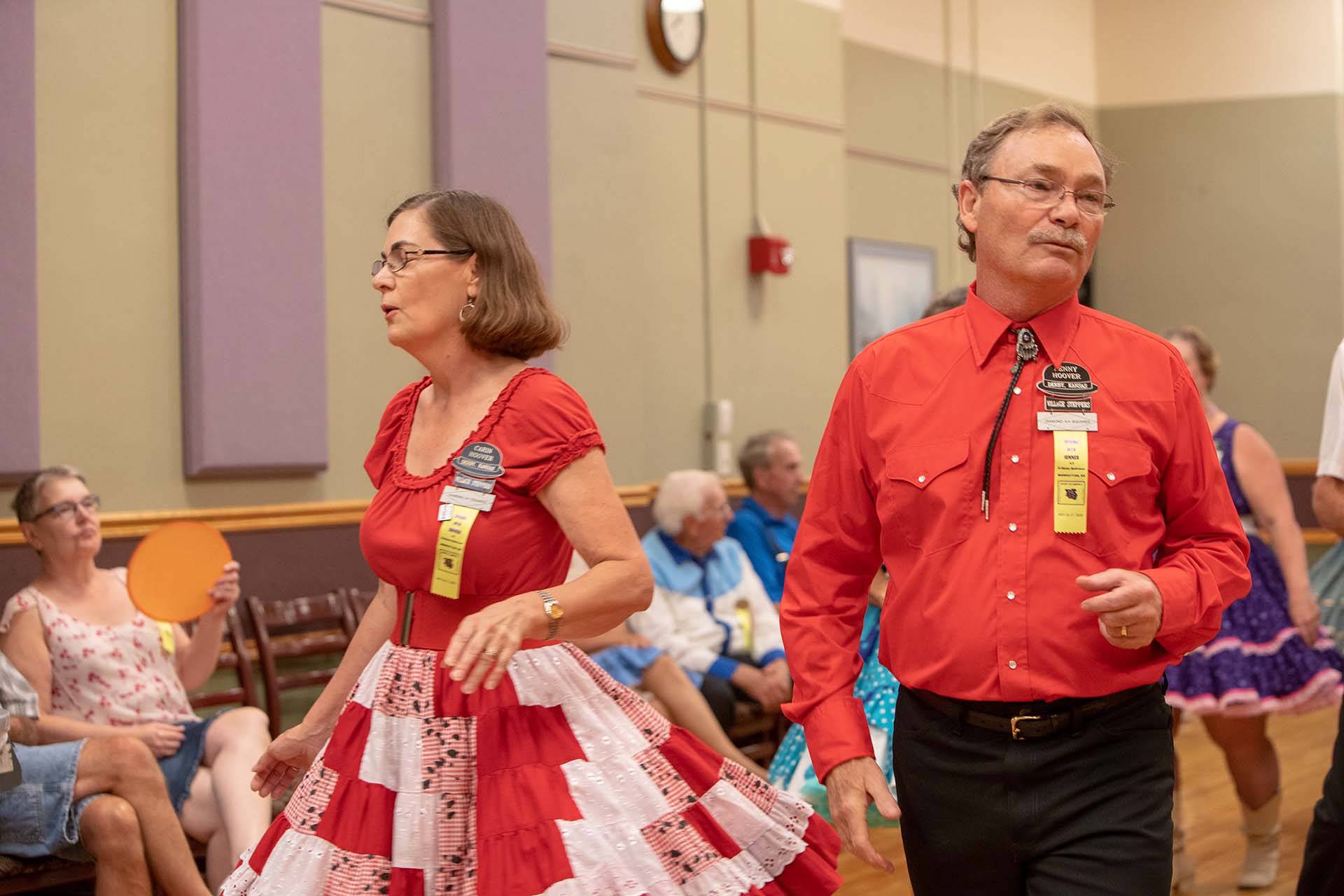
The Anatomy of a Call: More Than Meets the Ear
A square dance call isn’t just a word or a phrase—it’s a multisensory experience. The caller’s tone sets the mood. A deep, resonant voice might evoke a sense of tradition, while a lighter, playful tone can infuse the dance with humor. The pacing matters, too. A call delivered too quickly can feel like a machine gun, while one stretched out can lull the dancers into a trance.
Take the classic “promenade.” To the uninitiated, it’s a simple instruction: walk around the square. But to a skilled caller, it’s an opportunity. They might elongate the word, drawing out the “pro—me—nade,” letting the dancers savor the anticipation. Or they might inject a playful twist, like “promenade, but with a little sass!” The dancers respond in kind, their movements reflecting the caller’s energy.
Even the pauses are intentional. A well-placed silence can signal a shift in the dance’s direction, giving the dancers time to reset. It’s a form of punctuation, a way to structure the chaos into something beautiful. Without these pauses, the dance would feel like a runaway train, careening toward an inevitable derailment.
The Unwritten Rules of the Square Dance Code
Every programming language has its syntax, its rules of engagement. Square dance calls have their own, though they’re rarely written down. These are the unwritten codes that govern the caller’s craft—the etiquette of improvisation, the ethics of adaptation, the unspoken contract between caller and dancer.
For instance, a caller should never spring a call on the dancers without first establishing a rhythm. To suddenly demand a “right and left grand” in the middle of a gentle promenade would be like a programmer inserting a line of assembly code into a high-level script—it might work, but it’s jarring and unpredictable. The best callers build their sequences gradually, layering complexity like a composer building a symphony.
There’s also the matter of respect for the dancers’ skill level. A caller who caters only to experts risks alienating newcomers, while one who dumbs down the calls might bore the veterans. The sweet spot lies in the middle—a challenge that’s attainable but not impossible. It’s a delicate balance, one that requires empathy as much as technical skill.
And then there’s the matter of tradition. Square dancing is steeped in history, with calls that have been passed down for generations. A caller who ignores these roots risks losing the essence of what makes the dance special. Yet, innovation is also valued. The best callers honor the past while pushing the boundaries of the present, creating something that feels both timeless and fresh.
The Digital Age’s Paradox: Convenience vs. Craft
In an era where algorithms can generate music, write poetry, and even choreograph dances, one might wonder: why bother with live callers at all? Why not let a computer handle the sequencing, ensuring flawless execution every time? The answer lies in the intangible magic of human connection. A computer can’t improvise. It can’t read a room. It can’t infuse a call with personality, humor, or soul.
Yet, the digital age has undeniably changed square dancing. Apps now offer pre-programmed sequences, allowing callers to offload some of the mental burden. Recorded music has replaced live bands in many venues, stripping away another layer of spontaneity. The challenge for modern callers is to preserve the artistry of their craft in a world that increasingly values efficiency over experience.
Some purists argue that the rise of digital tools has diluted the essence of square dancing, turning it into a sterile, mechanical activity. Others see it as an evolution, a way to make the dance more accessible to new generations. The truth, as always, lies somewhere in between. The art of the square dance caller may be ancient, but it’s not immune to change. The best callers today are those who embrace technology without losing sight of the human element—the ability to connect, to adapt, and to inspire.
So, the next time you find yourself on a dance floor, surrounded by twirling couples and the rhythmic stomp of boots, take a moment to appreciate the caller. They’re not just shouting instructions; they’re conducting a symphony of movement, a living, breathing algorithm of joy. And in a world that’s increasingly ruled by machines, that’s a rare and precious thing.


Leave a Comment