

In the hushed corridors of a theatre, where the air itself seems to hold its breath, there exists a moment so potent it can shatter illusions, rewrite narratives, and pierce the soul with a single, unbroken silence. This is the Pinter Pause—a dramatic device so deceptively simple yet devastatingly effective that it has redefined the art of storytelling. Harold Pinter, the Nobel laureate whose name now synonymous with this technique, understood that words, no matter how carefully crafted, often pale in comparison to the raw power of what remains unsaid. Here, we unravel the enigma of the Pinter Pause, exploring how a fleeting stillness can speak volumes, reshape perceptions, and leave an indelible mark on both performer and audience alike.
The Genesis of the Pause: A Subversive Revolution in Dialogue
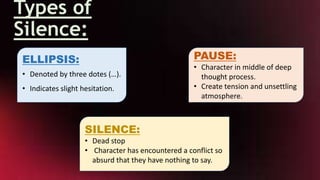
Before Pinter, silence in theatre was often a mere pause—a breath between lines, a momentary lull before the next volley of dialogue. But Pinter transformed it into something far more sinister and sublime. His pauses were not empty spaces; they were loaded with tension, dripping with unspoken threats, and pregnant with the unsaid. In plays like The Birthday Party and The Dumb Waiter, the silence becomes a character in its own right, a third presence in the room that looms larger than the actors themselves. It is the pause that exposes the fragility of human interaction, revealing the cracks in communication where lies and half-truths fester.
Consider the moment in The Homecoming when Teddy returns home after six years, only to be met with a stony, protracted silence from his family. The absence of welcome is more damning than any accusation. Pinter’s genius lies in his ability to weaponize the pause, turning it into a scalpel that dissects the veneer of civility and exposes the raw, unfiltered truth beneath. It is a subversive act, a rebellion against the tyranny of constant chatter, and a reminder that what is left unsaid can be just as explosive as the most vitriolic monologue.
The Psychology of the Pause: Why Silence Speaks Louder Than Words
Human beings are wired to fill silence. Evolution has conditioned us to seek patterns, to interpret gaps in conversation as either opportunities or threats. Pinter exploits this primal instinct, using the pause to manipulate the audience’s perception of time, space, and intent. When a character falls silent, the mind races—what are they hiding? What do they fear? What do they truly want? The pause becomes a mirror, reflecting the audience’s own anxieties and insecurities back at them.
Neuroscientists have long studied the phenomenon of “expectancy violation,” where unexpected silences trigger heightened cognitive processing. In Pinter’s world, this violation is not accidental; it is deliberate. The pause is a psychological ambush, a moment where the audience is forced to confront the gaps in their own understanding. It is in these gaps that the real drama unfolds—not in the words, but in the spaces between them. The Pinter Pause does not just interrupt the flow of dialogue; it hijacks the narrative, compelling the audience to become active participants in the storytelling process.
The Pause as a Mirror: Reflecting the Unspoken Truths of Human Nature
Pinter’s silences are not merely dramatic tools; they are philosophical inquiries into the human condition. What does it mean to be silent? Is it a sign of strength, a weapon of control, or a confession of weakness? In his plays, silence is a multifaceted entity, capable of conveying everything from defiance to despair. Take, for instance, the character of Goldberg in The Birthday Party, whose prolonged silences are not moments of absence but of overwhelming presence. His quietude is a force, a gravitational pull that draws the other characters into his orbit, forcing them to confront their own complicity in the absurdity of their existence.
Silence, in Pinter’s universe, is also a form of resistance. It is the refusal to engage, the silent protest against the tyranny of forced conversation. In a world that demands constant connectivity, where every thought must be shared, every emotion expressed, Pinter’s pauses are a radical act of defiance. They remind us that silence can be a sanctuary, a place of introspection, and a sanctuary from the noise of modern life. Yet, they also expose the fragility of that sanctuary, the way silence can be weaponized, used to manipulate, to intimidate, or to erase.
The Art of the Pause: Mastering the Craft of Controlled Stillness
Executing a Pinter Pause is no simple feat. It requires a level of precision that borders on the surgical. The actor must not only control their breath but also the audience’s breath, guiding them through the silence with an almost hypnotic rhythm. A pause that is too short feels like a stumble; too long, and it risks losing its potency entirely. The key lies in the preparation—the way the actor builds tension in the moments leading up to the silence, the way they use their body language to underscore the weight of what is not being said.
Directors often describe the Pinter Pause as a “breath held in the chest,” a suspended moment where time itself seems to dilate. The actor must resist the urge to rush, to fill the void with nervous laughter or awkward shuffling. Instead, they must embrace the discomfort, allowing the silence to linger until it becomes unbearable—until the audience is forced to confront the unspoken truths that fester in the gaps. It is a test of endurance, for both performer and spectator, a reminder that the most powerful moments in theatre are not always the loudest.
Beyond the Stage: The Pinter Pause in Everyday Life
The influence of Pinter’s silences extends far beyond the footlights. In our hyper-connected world, where communication is instantaneous and silence is often equated with failure, the Pinter Pause offers a radical alternative. It challenges us to embrace the power of stillness, to recognize that silence is not the absence of meaning but its amplification. In conversations, a well-placed pause can shift the dynamic entirely, giving the speaker time to gather their thoughts or the listener space to process what has been said. In relationships, silence can be a form of intimacy, a shared understanding that transcends words.
Even in the digital realm, where emojis and GIFs attempt to fill every conversational gap, the Pinter Pause endures. Consider the way a delayed response in a text message can evoke anxiety, or how the absence of a reply can feel like a judgment. The pause, in all its forms, is a reminder that what we do not say is often as important as what we do. It is a call to reclaim the power of silence, to use it not as a void to be feared but as a tool to be wielded with intention.
The Legacy of the Pause: A Timeless Technique in a Noisy World
Decades after Pinter’s death, his silences continue to resonate. They have seeped into the DNA of modern theatre, film, and even literature, where authors like Cormac McCarthy and J.M. Coetzee employ similar techniques to create a sense of unease and introspection. The Pinter Pause is no longer just a dramatic device; it is a cultural touchstone, a testament to the enduring power of what remains unspoken.
In an era where noise is the default, where every moment must be filled with content, stimulation, or distraction, the Pinter Pause is a radical act of rebellion. It is a reminder that silence is not emptiness but potential—a space where meaning can be forged, where truths can be uncovered, and where the human experience can be explored in all its complexity. It is, in every sense, worth a thousand words.
So the next time you find yourself in a moment of silence—whether on stage, in conversation, or in the quiet of your own thoughts—pause. Breathe. Listen. For in that stillness, you may just hear the echo of something profound, something that words alone could never capture.


Leave a Comment