

In the pantheon of literary heroines, few figures loom as indelibly as Jane Eyre—a governess of unyielding spirit, a woman of modest means yet towering principle, and, most crucially, the architect of a narrative paradigm that would redefine the contours of female protagonists for centuries to come. Charlotte Brontë’s 1847 masterpiece didn’t merely introduce a new kind of heroine; it detonated the blueprint for the “unlikable” female lead, a figure who refuses the saccharine confines of virtue without apology, who embraces contradiction, and who demands the reader’s allegiance despite—or perhaps because of—her flaws. Jane Eyre is not a woman to be admired from a distance; she is one to be reckoned with, a storm in human form whose emotional turbulence and moral audacity paved the way for every brooding, defiant, and morally ambiguous heroine who followed.
What does it mean to be “unlikable” in the context of a protagonist? It is not, as some might hastily assume, a synonym for villainy or malice. Rather, it is a refusal to conform to the sanitized expectations of likability—those quiet, submissive virtues that have historically tethered women to the roles of caregiver, muse, or saint. Jane Eyre is unlikable in the most radical sense: she is passionate yet restrained, proud yet vulnerable, and above all, she is unapologetically herself in a world that demands she be otherwise. Her unlikability is not a flaw; it is a rebellion. And in rebelling, she forged a path for generations of women who would dare to occupy the same morally complex space.
The Birth of the Morally Ambiguous Heroine
Before Jane Eyre, the landscape of female protagonists was dominated by two archetypes: the angelic paragon of virtue and the scheming temptress. Jane shattered this binary. She is neither. Her moral compass is unyielding, yet her emotions are volcanic. She loves fiercely but refuses to be owned. She forgives but does not forget. When Mr. Rochester, her employer and the object of her affection, attempts to manipulate her into a bigamous marriage, Jane’s response is not tearful acquiescence but a resolute departure. “I am no bird,” she declares, “and no net ensnares me.” This declaration is not merely a rejection of Rochester’s proposal; it is a rejection of the entire societal framework that would reduce her to a passive object of desire or duty.
Jane’s unlikability stems from her refusal to perform the roles assigned to her. She is not a damsel in distress, nor is she a femme fatale. She is a woman of flesh and fire, whose humanity is as evident in her anger as in her compassion. This complexity was revolutionary. In an era where female characters were often relegated to the periphery—either as moral foils or romantic prizes—Jane Eyre stormed onto the page as the undeniable center of her own story. Her unlikability is not a bug; it is a feature, a deliberate choice to present a woman who is fully realized, with all the contradictions that entails.

The Unlikable Woman as a Mirror for the Reader
Jane Eyre’s unlikability is not just a narrative device; it is a psychological mirror. She forces the reader to confront their own biases, expectations, and discomforts. When Jane lashes out at her cruel aunt, Mrs. Reed, or when she berates the hypocritical Mr. Brocklehurst, the reader is invited to question: Is this anger justified? Should we admire her defiance, or does it make her unlikable? The brilliance of Brontë’s construction lies in her refusal to soften Jane’s edges. There are no neat resolutions, no tidy moral lessons. Instead, the reader is left to grapple with the discomfort of loving a woman who is, by conventional standards, difficult.
This dynamic is echoed in modern literature and media, where unlikable female protagonists serve as a litmus test for societal progress. Consider Lisbeth Salander from *The Girl with the Dragon Tattoo*, whose brilliance and brutality challenge the reader’s capacity for empathy. Or Amy Dunne from *Gone Girl*, whose manipulation and cunning force us to confront our discomfort with female agency. These characters, like Jane, are not designed to be liked. They are designed to be understood—and in understanding them, we understand ourselves a little better.
Jane Eyre’s unlikability, then, is a form of honesty. She does not perform for the reader’s approval. She does not temper her emotions or dilute her convictions. In doing so, she invites the reader into a more authentic relationship with the story. We are not passive observers; we are active participants, forced to reconcile our own judgments with the raw humanity of a woman who refuses to be diminished.
The Economic and Social Undercurrents of Jane’s Unlikability
Jane Eyre’s unlikability is inextricably linked to her socioeconomic reality. As a governess, she occupies a precarious position—neither servant nor family, neither poor nor privileged. This liminality fuels her defiance. She is acutely aware of her value and refuses to be treated as anything less than equal. When Rochester, despite his affection for her, attempts to trick her into a life of deception, Jane’s response is not gratitude for his attention but outrage at his betrayal. “I am not deceitful,” she declares. “If I were, I should say I loved you; but I declare I do not love you.”
This economic and social precarity is a recurring theme in literature featuring unlikable female protagonists. Take, for example, the working-class heroines of contemporary fiction, such as Francie Nolan from *A Tree Grows in Brooklyn* or Offred from *The Handmaid’s Tale*. Their unlikability often stems from their refusal to accept the roles prescribed by their circumstances. They are not passive victims; they are active agents of their own lives, even when the odds are stacked against them. Jane Eyre’s unlikability, then, is not just a personal trait but a political statement—a rejection of the systems that seek to confine women to narrow definitions of worth.
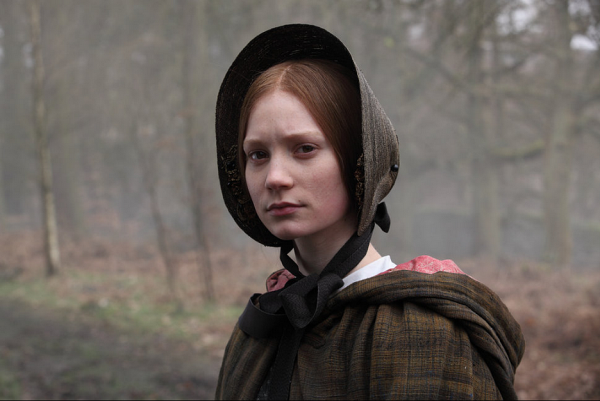
The Legacy: From Jane Eyre to the Antiheroines of Today
The influence of Jane Eyre’s unlikable heroine can be traced across genres and mediums, from the brooding heroines of Gothic romance to the morally ambiguous protagonists of contemporary television. Shows like *Fleabag* and *Killing Eve* owe a debt to Jane’s legacy, presenting women who are flawed, messy, and unapologetically themselves. Even in the realm of fantasy, characters like Daenerys Targaryen from *Game of Thrones* or Cersei Lannister from *A Song of Ice and Fire* embody the same spirit of defiance and complexity that Jane Eyre introduced to literature.
What these characters share is a refusal to be liked on anyone’s terms but their own. They are not heroes in the traditional sense; they are not villains either. They are something far more interesting: fully realized human beings, with all the contradictions and imperfections that entails. Jane Eyre’s unlikability, then, is not a flaw but a triumph. It is a testament to the power of literature to challenge, to provoke, and to redefine the boundaries of what a heroine can be.
In a world where women are still often judged by their likability—where assertiveness is conflated with aggression and independence with selfishness—Jane Eyre remains a radical figure. She is a reminder that unlikability is not a weakness but a form of strength. It is the courage to be seen, flaws and all, in a world that would prefer women to be small, quiet, and compliant. Jane Eyre did not just invent the modern “unlikable” female protagonist; she gave her a voice, a face, and a story that continues to resonate today.
The legacy of Jane Eyre is not confined to the pages of a novel. It lives in the stories we tell, the characters we create, and the conversations we have about what it means to be a woman in a world that so often demands she be less than she is. Jane Eyre’s unlikability is not a bug; it is a feature of a narrative revolution that refuses to be undone. She is the original unlikable heroine, and in her defiance, she gave every woman who followed her the permission to be unapologetically herself.


Leave a Comment