

The art of storytelling has always thrived on the delicate dance between truth and illusion, but in recent years, a new phenomenon has emerged—one that doesn’t just bend the rules but shatters them entirely. Welcome to the age of the Unnarrator, a narrative force so cunning, so disorienting, that the very foundation of the story trembles beneath its influence. Unlike the traditional unreliable narrator, who merely misleads or obscures, the Unnarrator doesn’t just distort reality; it dismantles it, leaving the reader adrift in a sea of fractured perspectives where the only certainty is uncertainty itself.
The Unnarrator is not a character but a concept—a spectral presence that haunts the edges of the narrative, whispering contradictions into the reader’s ear. It is the architect of labyrinthine plots where every clue is a red herring, every memory a fabrication, and every revelation a mirage. In this world, the story doesn’t just lie to you; it makes you complicit in its deception, forcing you to question not only the narrator’s motives but your own ability to discern truth from fiction. The Unnarrator doesn’t just tell an unreliable story—it is the unreliability, a chameleon that shifts its form with every turn of the page.
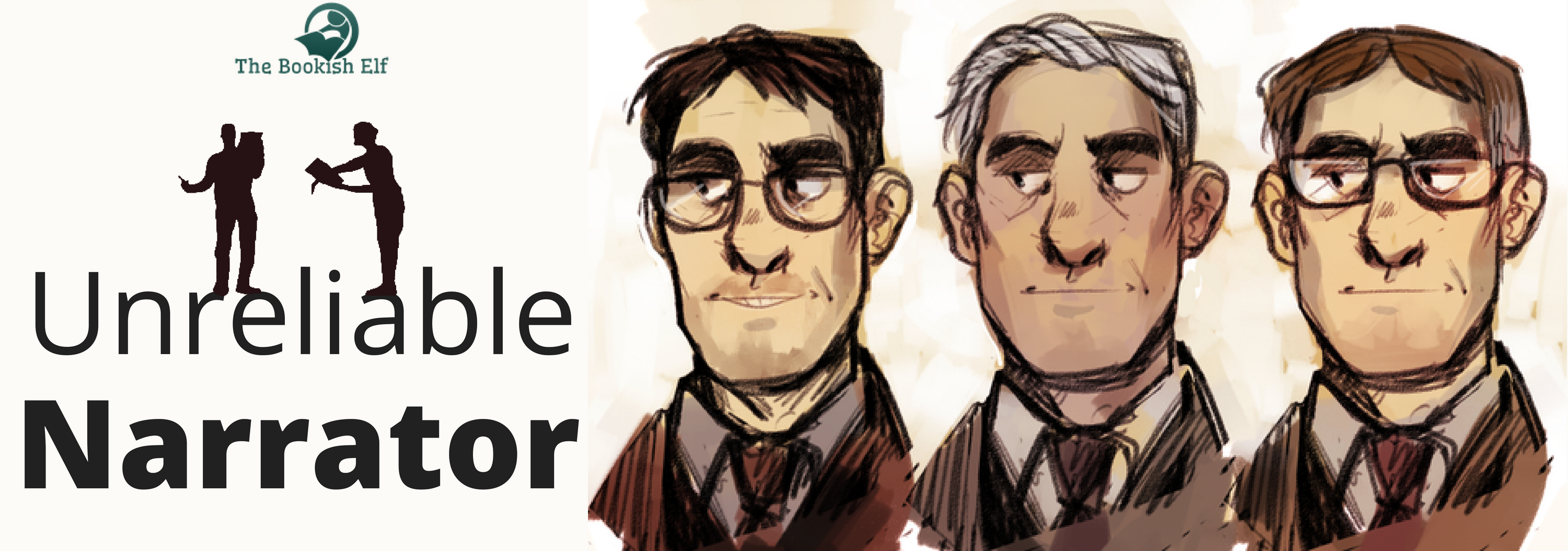
The Unnarrator as a Literary Parasite: Feeding on Doubt
The Unnarrator is a literary parasite, burrowing into the host of a story and feeding on the reader’s growing unease. It thrives in genres where ambiguity is currency—noir thrillers, psychological horror, and postmodern metafiction—where the boundaries between reality and illusion are deliberately blurred. Consider the works of authors like Paul Auster or Jorge Luis Borges, whose narratives often feel like puzzles missing half their pieces. The Unnarrator doesn’t just manipulate; it erases, leaving behind only the skeletal remains of what might have been a coherent tale.
What makes the Unnarrator so uniquely unsettling is its ability to weaponize the reader’s trust. In a conventional story, the narrator is the bridge between the reader and the tale, a guide whose credibility we take for granted—until it’s shattered. But the Unnarrator doesn’t wait for the reader to lower their guard. It preys on it. From the first sentence, it plants seeds of doubt, not through overt lies, but through omissions, half-truths, and deliberate misdirections. It is the literary equivalent of a magician who not only performs the trick but convinces you that the rabbit never existed in the first place.
Take, for example, a story where the protagonist insists they are being followed by a mysterious figure, only for the reader to later discover that the “figure” is a hallucination—a side effect of the protagonist’s unmentioned drug addiction. The Unnarrator doesn’t just reveal this twist; it retroactively alters the narrative, making every prior moment suspect. Was the protagonist’s fear justified, or was it a symptom of their unraveling mind? The Unnarrator leaves the answer dangling, a dangling thread that unravels the entire fabric of the story.
The Aesthetic of Disorientation: Why We’re Hooked
Human beings are wired to seek patterns, to impose order on chaos. The Unnarrator exploits this primal instinct, dangling the promise of coherence just out of reach. It is the literary equivalent of a funhouse mirror—distorting reality not to horrify, but to intrigue. The appeal lies in the thrill of the chase, the adrenaline rush of piecing together a puzzle where the pieces keep changing shape. In an era where information is abundant but truth is increasingly elusive, the Unnarrator offers a tantalizing escape: a story that mirrors the chaos of the real world, where nothing is as it seems.
This aesthetic of disorientation isn’t just a gimmick; it’s a revolution in storytelling. Traditional narratives rely on a clear throughline—a beginning, middle, and end, with cause and effect dictating the flow. The Unnarrator, however, thrives in the interstices—the gaps between events, the silences in dialogue, the unspoken motivations that fester beneath the surface. It is the storyteller as a saboteur, dismantling the scaffolding of narrative structure to force the reader to engage on a deeper, more active level.

Consider the rise of interactive fiction and choose-your-own-adventure narratives, where the reader’s choices shape the story. The Unnarrator takes this concept further, making the reader’s interpretation the story itself. In a sense, every reader becomes an Unnarrator, forced to confront their own biases, assumptions, and blind spots. The story isn’t just told to you—it’s co-created by your willingness to suspend disbelief, even as the narrative itself undermines that very act.
The Psychology Behind the Appeal: Why We Love to Be Fooled
At its core, the Unnarrator is a psychological experiment, a test of the reader’s ability to navigate uncertainty. Studies in cognitive psychology suggest that humans are drawn to mysteries not because they crave resolution, but because they crave the process of seeking it. The Unnarrator taps into this primal curiosity, offering a narrative that is less about answers and more about the journey through doubt. It is the literary equivalent of a labyrinth—designed not to trap you, but to make you enjoy the act of getting lost.
There’s also a darker, more primal allure to the Unnarrator. It preys on our fear of being deceived, a fear that has only grown in the age of deepfakes, misinformation, and algorithmic manipulation. By immersing ourselves in a story where the narrator is untrustworthy, we confront our own vulnerability to deception. It’s a form of controlled chaos, a safe space to explore the vertigo of not knowing what’s real. In a world where truth is increasingly subjective, the Unnarrator offers a cathartic release—a chance to embrace the chaos without consequence.
Moreover, the Unnarrator often serves as a metaphor for the human condition. We are all unreliable narrators of our own lives, filtering experiences through the lens of memory, emotion, and bias. The Unnarrator externalizes this internal fragmentation, making the abstract tangible. When a story’s narrator lies, it’s not just a plot device—it’s a reflection of how we all lie to ourselves, how we construct narratives to make sense of a world that often defies coherence.
The Unnarrator’s Toolkit: Techniques of Deception
The Unnarrator doesn’t rely on a single method of deception; it employs an arsenal of techniques designed to erode the reader’s confidence. One of its most potent weapons is selective omniscience—the narrator who claims to know everything but withholds critical details, leaving the reader to fill in the blanks with their own assumptions. Another tactic is chronological sabotage, where the order of events is scrambled, forcing the reader to reconstruct the timeline from fragmented clues. Then there’s linguistic sleight of hand, where the narrator’s word choices subtly manipulate perception, turning a neutral description into something sinister or benign.

Consider the use of unreliable focalization, where the narrative perspective shifts so frequently that the reader can no longer anchor themselves to a single truth. In Gillian Flynn’s Gone Girl, the dual perspectives of Nick and Amy Dunne create a hall-of-mirrors effect, where each character’s version of events is so diametrically opposed that the reader is left questioning not just the characters, but their own judgment. The Unnarrator doesn’t just tell two sides of a story—it forces the reader to become the arbiter of truth, a role they are ill-equipped to play.
Another hallmark of the Unnarrator is its use of metafictional sleights of hand. By drawing attention to the act of storytelling itself, the Unnarrator reminds the reader that they are, in fact, reading a story—a construct, a fabrication. This self-awareness can be disorienting, but it also invites the reader to question the nature of narrative itself. If the narrator can lie, can the story itself be trusted? The Unnarrator doesn’t just break the fourth wall; it dissolves it, leaving the reader standing in the rubble of their own assumptions.
The Future of the Unnarrator: A Narrative Evolution
The rise of the Unnarrator isn’t just a passing trend—it’s a paradigm shift in storytelling, one that reflects our increasingly complex relationship with truth. As technology advances, so too does the Unnarrator’s potential for deception. Imagine a narrative where the story adapts in real-time based on the reader’s biometric data—heart rate, eye movement, even brainwaves—creating a personalized experience of unreliability. Or consider the possibilities of AI-generated Unnarrators, where the narrator’s voice shifts dynamically, tailored to exploit the reader’s psychological vulnerabilities.
Yet, for all its potential for innovation, the Unnarrator also poses a challenge: how do we reconcile our love of deception with our need for meaning? If every story can be doubted, where does that leave the act of storytelling itself? The answer may lie in embracing the Unnarrator not as a destroyer of truth, but as its curator. By forcing us to confront the fragility of narrative, the Unnarrator reminds us that stories are not fixed entities but living, breathing things—subject to interpretation, revision, and reinvention.
In the end, the Unnarrator is more than a literary device; it’s a philosophical statement. It challenges us to ask: What is a story, if not a carefully constructed illusion? What is truth, if not a narrative we choose to believe? And what does it mean to be a reader, if not to willingly suspend disbelief—even when the story itself is the one doing the deceiving?
The age of the Unnarrator is upon us, and it is glorious. It is a world where nothing is certain, where every revelation is a mirage, and where the only truth is the thrill of the chase. So take a deep breath. Step into the labyrinth. The story is waiting—and you’ll never trust it again.


Leave a Comment