

Have you ever stood before a masterpiece, its brushstrokes whispering secrets of a bygone era, and wondered: What if the artist had a cosmic collaborator—one that could conjure infinite variations of light, shadow, and emotion in the blink of an eye? That collaborator is here. It’s not a mythical muse, nor a mad scientist’s experiment—it’s artificial intelligence, the silent revolution reshaping fine art as we know it. But here’s the twist: as AI paints dreams into pixels, it’s not just changing the canvas. It’s rewriting the rules of creativity, ownership, and even what it means to be an artist. Buckle up. The future of fine art isn’t just being written—it’s being algorithmically generated.
Imagine walking into a gallery where every painting on the wall is unique, yet none were touched by human hands. Where a single prompt—“melancholic surrealism in the style of Zdzisław Beksiński”—spawns a hundred interpretations, each more haunting than the last. This isn’t dystopian fiction. It’s the new reality. AI isn’t just a tool. It’s a co-creator, a disruptor, and, for some purists, a trespasser in the sacred temple of fine art. But what happens when the brush becomes binary? When the artist’s hand is replaced by a neural network’s whims? Let’s explore the 10 AI trends that are not just changing fine art—they’re redefining it from the ground up.

The Rise of Generative Adversarial Networks (GANs): When Two AIs Play Artistic Chess
Picture this: two neural networks locked in a silent duel. One, the generator, tries to create a painting so lifelike it fools the other. The second, the discriminator, scrutinizes every pixel, sniffing out fakes like a wine connoisseur detecting vinegar. This is the magic—and menace—of Generative Adversarial Networks (GANs). They’ve birthed masterpieces that never existed, blending Van Gogh’s swirls with Hokusai’s waves into something entirely new. But here’s the catch: GANs don’t just generate art. They generate identity. Who owns a GAN-born portrait when the algorithm’s training data was scraped from thousands of artists’ works without consent? The canvas is no longer just a surface—it’s a battleground of ethics and aesthetics.
Neural Style Transfer: When Picasso Meets Photoshop on Steroids
Ever wished you could wear the soul of a masterpiece? Neural Style Transfer (NST) lets you do just that. Feed an AI a photo of your cat and a painting by Klimt, and—voilà—your tabby becomes a golden, ornate deity draped in Byzantine patterns. NST isn’t just a filter. It’s a time machine. It lets artists dissect centuries of technique and reassemble them into something fresh. But it’s also a Pandora’s box. What happens when every Instagram selfie starts looking like a Caravaggio? Where’s the line between homage and theft when the AI remixes the entire history of art in seconds? The challenge isn’t technical. It’s philosophical: Can beauty exist without struggle? Without the artist’s sweat and soul?
AI as the Ultimate Art Historian: Decoding the Unseen in Masterpieces
Fine art isn’t just about beauty. It’s about buried stories. AI is now the detective of the art world, uncovering hidden layers in paintings that have baffled scholars for centuries. Using hyperspectral imaging and deep learning, algorithms can reveal underdrawings in Rembrandt’s sketches or detect forgeries in Vermeer’s oeuvre with eerie precision. But this isn’t just about authenticity. It’s about revelation. What if AI could tell us what Da Vinci was really thinking when he painted the Mona Lisa’s enigmatic smile? Or decode the subconscious symbols in Bosch’s Garden of Earthly Delights that even art historians have missed? The risk? We might lose the mystery—the delicious ambiguity that makes art timeless. Do we want to know everything, or is some magic meant to remain unsolved?
AI-Generated Portraits: The Death (and Rebirth) of Portraiture
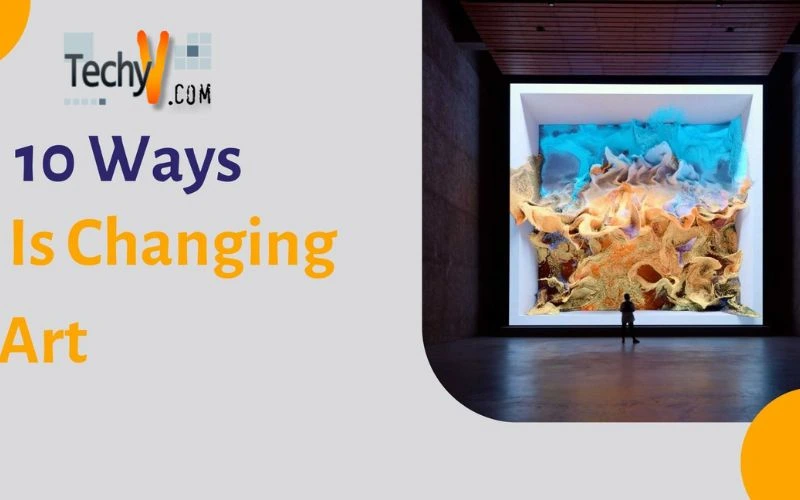
For centuries, portraiture was the ultimate status symbol. Kings, queens, and merchants paid fortunes to immortalize their likeness. But today, AI can generate a hyper-realistic portrait of a fictional aristocrat in seconds. No sitter. No commission. No ego. Just code. Artists like Refik Anadol are using AI to create immersive, data-driven portraits that evolve in real time, responding to audience emotions. Yet, this democratization comes at a cost. If anyone can generate a “Rembrandt” with a click, what becomes of the portrait’s soul? Is it still a portrait if the subject never existed? The challenge isn’t just technical. It’s existential: Can art still reflect humanity when humanity is optional?
AI in Sculpture: From Marble to Machine Learning
Sculpture has always been about touch—the artist’s hands shaping raw material into form. But AI is rewriting the tactile. Using generative design algorithms, artists can now create sculptures optimized for strength, beauty, and even emotion, all before a single chisel touches stone. Projects like Nervous System’s AI-generated vases or Mario Klingemann’s neural sculptures are blurring the line between organic and algorithmic. But here’s the rub: sculpture is about permanence. What happens when the AI’s “perfect” form is based on fleeting data trends? Can a sculpture born from code ever carry the weight of Michelangelo’s Pietà? The answer may lie not in the material, but in the intention behind it.

The Ethical Quagmire: Who Owns AI Art?
This is the million-dollar question—and the million-dollar lawsuit. When an AI generates a painting inspired by a living artist’s style, who gets the credit? The programmer? The AI? The artist whose work was scraped for training data? The legal landscape is a minefield. In 2023, the U.S. Copyright Office ruled that AI-generated art cannot be copyrighted—unless a human made a “meaningful” contribution. But what does “meaningful” even mean in an era where an artist might prompt an AI with a single sentence and call it their own? The challenge isn’t just legal. It’s moral. Can we build a system where artists are compensated fairly, where AI is a tool rather than a thief, and where creativity isn’t commodified into oblivion?
AI as the New Art Critic: Judging Beauty in Binary
Art critics have spent centuries debating taste, context, and intention. But now, AI is entering the fray. Algorithms can analyze thousands of artworks, spotting trends, predicting market value, and even curating exhibitions based on data. Companies like Art Recognition use AI to detect forgeries, while platforms like Artrendex predict which artists will rise to fame. But can a machine truly understand art? Can it grasp the raw emotion behind a Rothko, or the political fury in a Käthe Kollwitz print? The danger isn’t that AI will replace critics. It’s that it might homogenize taste, turning art into a popularity contest where the loudest algorithm wins.
The Democratization of Art: When Everyone’s a Picasso (Sort Of)
One of AI’s most radical promises is democratization. Suddenly, anyone with a smartphone can generate a masterpiece. Platforms like DALL·E, MidJourney, and Stable Diffusion have turned art creation into a game anyone can play. But democratization isn’t the same as mastery. The challenge isn’t access—it’s discernment. In a world where every toddler’s doodle can be upscaled into a “fine art” piece, how do we preserve the value of skill, tradition, and intention? The risk? Art becomes a sea of noise, where the signal—the true masterpiece—is drowned out by the algorithmic tide.
AI and the Future of Art Education: Teaching the Next Generation
Art schools are scrambling to adapt. Should students learn to paint traditionally, or master prompt engineering? The answer isn’t either/or. It’s both. AI is becoming a new medium, and the artists of tomorrow will need to understand not just brushes and pigments, but pixels and prompts. But here’s the catch: if AI can do 90% of the heavy lifting, what’s left for the human artist? The challenge isn’t just technical. It’s pedagogical: How do we teach creativity in an era where the tools can out-innovate most humans? The answer may lie in teaching students to ask the right questions—not just generate the right images.

The Uncanny Valley of AI Art: When the Beautiful Becomes Unsettling
There’s a reason why AI-generated faces often look almost human—but not quite. It’s the uncanny valley, and it’s haunting the art world. AI can mimic the style of the Old Masters, but it struggles to capture the essence of humanity—the wrinkles of experience, the spark of life in a subject’s eyes. The result? Art that feels sterile, soulless, or worse—creepy. The challenge isn’t just technical. It’s emotional. Can AI ever truly evoke the sublime, the tragic, or the transcendent? Or is it doomed to create echoes of emotion without the real thing?
The fine art world is at a crossroads. AI isn’t just changing it—it’s forcing us to ask fundamental questions about creativity, ownership, and humanity itself. Will AI be the brush that paints a new Renaissance, or the algorithm that erases the artist’s soul? The answer depends on us. On how we choose to wield this tool—not as a replacement for human ingenuity, but as its most dazzling collaborator yet.
So here’s the final question, the one that lingers like a half-finished sketch: If an AI paints a masterpiece in the forest, and no one knows it’s not human—does it still matter? The canvas is waiting. The algorithms are learning. The future of fine art isn’t just being painted. It’s being debated, dissected, and, perhaps, redefined—one pixel at a time.


Leave a Comment