

In the vast cosmos of art, shading is the gravitational force that pulls your drawings from flat, lifeless sketches into rich, dimensional worlds. Without it, your art remains a silent echo in a cavern of two dimensions. But master it, and suddenly, your drawings breathe—they whisper secrets, they cast shadows that dance, and they pull viewers into a realm where light and dark engage in an eternal waltz. Shading isn’t just technique; it’s alchemy. It transforms graphite into velvet, ink into mist, and charcoal into moonlight. Whether you’re sketching a serene landscape, a brooding portrait, or a whimsical creature from fantasy, the right shading technique can make your art not just seen—but felt. So, let’s embark on a journey through ten shading techniques that will elevate your drawings from ordinary to extraordinary, turning every stroke into a story and every shadow into a revelation.
The Hatching Waltz: Where Lines Become Light and Shadow
Imagine a field of wheat swaying in the wind, each stalk a thin, parallel line. Now, imagine those lines not as wheat, but as the very essence of light and shadow in your drawing. Hatching is the art of creating tonal variations through a series of parallel strokes, like the gentle ripples on a pond’s surface. The closer the lines, the darker the shadow; the farther apart, the brighter the light. This technique is the whisper of the artist’s hand—subtle, rhythmic, and endlessly versatile. It works beautifully for textures like fabric, skin, or even the rough bark of an ancient tree. The key? Consistency. Let your lines flow like a river, unbroken and purposeful, and watch as your drawing gains a quiet, understated depth that draws the eye in like a secret only the initiated can see.

Cross-Hatching: The Interwoven Tapestry of Contrast
If hatching is the river, cross-hatching is the delta—a complex network where lines intersect like the threads of an ancient tapestry. By layering hatching strokes in different directions, you create a lattice of shadows that feels almost tangible. This technique is a masterclass in control, where each new layer deepens the illusion of form. It’s perfect for rendering dense textures, like the fur of an animal, the crinkled folds of a cloak, or the weathered stone of a castle wall. The magic lies in the interplay: where lines converge, darkness intensifies; where they part, light breathes. Think of it as a conversation between light and shadow, where every stroke is a word, and every intersection, a moment of revelation.
Blending: The Soft Embrace of Gradation
Blending is the art of softening edges, of turning sharp lines into the gentle fade of a sunset. It’s the difference between a shout and a sigh—a technique that invites the viewer to linger. With tools like tortillons, stumps, or even your fingertip, you can smudge graphite, charcoal, or pastel into seamless gradients that mimic the delicate transition from light to dark. This method shines when depicting smooth surfaces: the porcelain smoothness of a teacup, the velvety petals of a rose, or the misty horizon of a distant landscape. The challenge? Patience. Rushing the blend can muddy your values, turning depth into a murky haze. But when done right, blending transforms your drawing into a dream—where edges dissolve, and forms emerge like figures in a fog.
Stippling: The Dance of Dots in the Dark
Stippling is the art of building tone through dots—tiny, deliberate punctuations that accumulate into a symphony of light and shadow. It’s a technique that demands precision and time, but the payoff is a drawing that feels almost sculptural, as if each dot is a bead of light caught in a web of darkness. Stippling excels in rendering textures that are granular or organic: the rough hide of a rhinoceros, the freckled skin of a child, or the stippled surface of a lizard’s scales. The density of the dots dictates the value—closer together, they form deep shadows; spaced apart, they glow with light. It’s a method that rewards the patient artist, turning the act of drawing into a meditative practice where every dot is a breath, every cluster, a heartbeat.
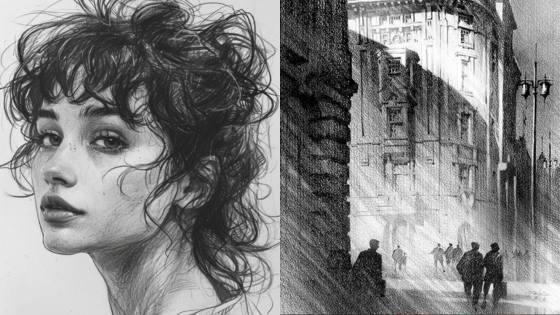
Scribbling: The Wild, Unruly Spirit of Spontaneity
Where other techniques demand order, scribbling revels in chaos. It’s the rebellious cousin of shading—a technique where lines twist, loop, and overlap in a frenetic dance that somehow, magically, defines form. Scribbling is perfect for capturing the energy of movement, the frenzy of a stormy sea, or the untamed wildness of a creature’s fur. It’s less about precision and more about capturing the essence of texture and emotion. The key is to let your hand move freely, trusting your instincts to guide the strokes. The result? A drawing that feels alive, as if the very act of creation is a performance. Scribbling reminds us that art doesn’t always need to be pristine—sometimes, it just needs to be real.
Chiaroscuro: The Drama of Light and Dark
Chiaroscuro is the grand opera of shading—a technique that pits light and dark against each other in a high-stakes battle for dominance. Originating in the Renaissance, this method uses stark contrasts to create a sense of volume and depth, often with a single, dramatic light source. Think of Caravaggio’s paintings, where a beam of light slices through darkness like a knife, illuminating a face in a moment of revelation. Chiaroscuro is ideal for dramatic portraits, still lifes, or scenes that demand intensity. The trick is to push your values to their extremes: pure black against pure white, with no in-between. It’s a technique that doesn’t just show form—it tells a story, evoking emotion and tension in every shadow.
Contour Shading: The Map of Form
Contour shading is the cartographer’s dream—a technique where lines follow the contours of an object, mapping its topography with precision. Unlike hatching or cross-hatching, which rely on parallel strokes, contour shading uses lines that curve and bend to mimic the undulations of the subject. It’s perfect for rendering organic forms like faces, hands, or the sinuous body of a snake. The lines don’t just define shadow; they define the very essence of the object’s shape. The result is a drawing that feels tactile, as if you could run your fingers along its surface. Contour shading is a reminder that art is not just about what you see—it’s about how you see it.
Scumbling: The Veil of Texture
Scumbling is the art of layering loose, scribbled strokes to create a textured veil that obscures or defines form. It’s like dusting a surface with a fine layer of powder, where the underlying shapes peek through like ghosts. This technique is ideal for rendering rough textures—weathered wood, crumbling stone, or the coarse fabric of a burlap sack. The beauty of scumbling lies in its unpredictability. The strokes don’t need to be perfect; in fact, the more organic and uneven they are, the more authentic the texture feels. It’s a technique that embraces imperfection, turning flaws into features and roughness into richness.
Negative Drawing: The Art of Subtraction
Negative drawing is the sleight of hand in shading—the technique where you don’t add lines or strokes, but instead, remove them. By erasing or lifting graphite, charcoal, or pastel from a dark background, you reveal the light within. It’s like sculpting with light, where the negative space becomes the subject. This method is perfect for creating luminous highlights, like the gleam of a dewdrop on a spider’s web or the sparkle in a character’s eye. Negative drawing forces you to see your subject in reverse, to understand not just its form, but its absence. It’s a technique that turns the act of drawing into a dialogue with the page itself.
Layered Glazing: The Alchemy of Transparency
Layered glazing is the slow-burning magic of shading, where translucent layers of medium build up to create depth and luminosity. Whether you’re using watercolor, ink, or colored pencil, glazing allows you to create rich, glowing shadows that seem to emit their own light. It’s the technique behind the ethereal glow of a stained-glass window or the shimmering depths of a mermaid’s tail. The key is patience: each layer must dry before the next is applied, allowing the colors to meld and mingle like whispers in a crowded room. Layered glazing is a testament to the power of subtlety—where the sum of many delicate layers creates a richness that no single stroke could achieve.
As you stand back from your drawing, the world you’ve created feels almost tangible—each shadow a whisper, each highlight a sigh. Shading is more than a technique; it’s the heartbeat of your art, the force that transforms the ordinary into the extraordinary. Whether you’re wielding the precision of hatching, the spontaneity of scribbling, or the drama of chiaroscuro, remember this: every stroke is a conversation between light and dark, between the artist and the page. So, pick up your tools, let your hand dance across the surface, and watch as your drawings come alive—not just on the page, but in the soul.


Leave a Comment