

In the grand ballet of creation, where ideas pirouette into reality, cardboard emerges not as a mere prop but as the prima ballerina—a malleable muse that bends to the whims of imagination before the first dollar is spent. It is the unsung hero of innovation, the silent sculptor of dreams, the humble vessel that cradles the embryonic stages of what may one day become a household staple. To prototype with cardboard is to dance with possibility, to flirt with form and function before committing to the permanence of steel, plastic, or code. It is the alchemy of turning airy nothingness into tangible whispers of what could be.
Imagine, if you will, the birth of a chair. Not the lumbering, unyielding monoliths of mass production, but a chair born of necessity, of curiosity, of the sheer joy of making. Before the CAD software hums to life or the 3D printer whirs into action, cardboard stands ready—a blank canvas draped in the unassuming garb of corrugated humility. It is the raw material of rebellion, the medium of the mischievous mind that refuses to be shackled by the tyranny of perfection. Here, in this realm of cardboard and tape, failure is not a foe but a friend, a stepping stone rather than a stumbling block. Each crease, each cut, each tentative fold is a dialogue between creator and creation, a conversation that grows louder with every iteration.
The Alchemy of Iteration: Where Mistakes Wear Crowns
Prototyping with cardboard is less about crafting a flawless artifact and more about orchestrating a symphony of trial and error. It is the art of embracing the glorious mess of creation, where every misaligned edge is a lesson in disguise. Think of it as sculpting with scissors—each snip a deliberate act of defiance against the tyranny of the blank page. The beauty lies not in the precision of the first attempt but in the evolution that follows. A cardboard prototype is a living entity, one that thrives on feedback, that bends under scrutiny, and that ultimately reveals its secrets only when pressed, poked, and prodded.
Consider the humble cardboard box, a vessel of infinite potential. Flattened, it is a blank slate; folded, it becomes a fortress; cut, it transforms into a labyrinth of ideas. This metamorphosis is the essence of prototyping. A designer might start with a rudimentary cube, only to realize that the angles are all wrong. No matter. Another sheet is summoned, another experiment begins. The cardboard does not judge. It does not scoff at the amateur’s fumbling hands. It simply waits, patient and pliable, ready to be reshaped into something new. This is the magic of iteration—where every failure is a brushstroke in the masterpiece of progress.
And let us not forget the tactile joy of it all. In an age where screens dominate our interactions, cardboard offers a tactile rebellion. The crinkle of a fresh sheet, the satisfying *snap* of a well-placed crease, the slight resistance of tape as it binds two pieces together—these are the sensory delights of prototyping. They ground the creator in the physical world, reminding them that innovation is not just a cerebral exercise but a visceral, hands-on affair. Cardboard does not hide behind pixels or algorithms. It demands to be touched, felt, and understood.
Form Follows Function—or Does It? The Cardboard Tango
There is a dance that occurs between form and function when cardboard enters the scene, a waltz where neither partner is willing to lead. Should the prototype prioritize aesthetics, or is it merely a vessel for testing an idea’s core mechanics? The answer, as with all great dances, is that it depends. Sometimes, the rough-hewn edges of a cardboard prototype are exactly what is needed to spark a conversation. Other times, a more refined silhouette is required to convey the essence of the final product.
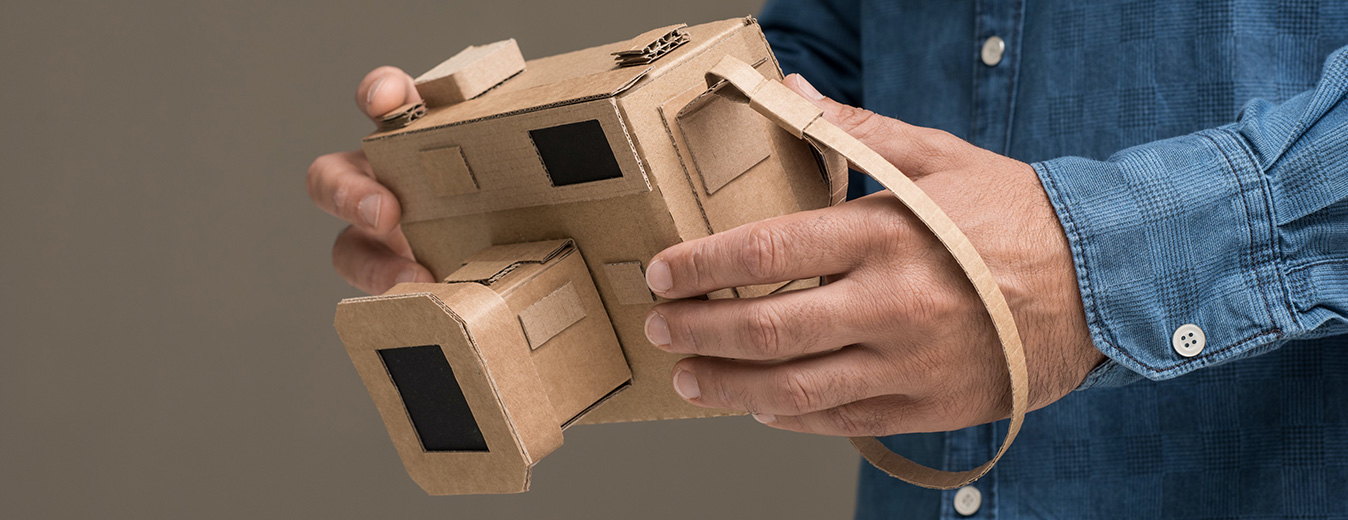
Take, for instance, the prototype of a futuristic lamp. The designer’s initial vision might be sleek, with curves that mimic the gentle arc of a crescent moon. But cardboard, with its linear grain and rigid structure, forces a reckoning. The curves must be approximated. The angles must be compromised. Yet, in this compromise lies innovation. The designer might discover that the “flaws” of cardboard—its inability to bend smoothly—lead to a new design language altogether. Perhaps the lamp takes on a geometric, almost brutalist aesthetic, where the sharp edges of the cardboard become a feature rather than a bug. This is the serendipity of prototyping: the unexpected detours that often lead to the most compelling destinations.
Cardboard also excels in its ability to strip away the noise. In a world where products are often over-engineered, over-polished, and over-complicated, cardboard forces clarity. It strips an idea down to its skeletal essence, revealing whether the concept has the strength to stand on its own. A prototype that wobbles on a table is a prototype that demands attention. It is a silent plea for improvement, a visual cue that the design is not yet ready for the spotlight. And in this vulnerability lies power—the power to iterate, to refine, to reimagine.
The Cardboard Economist: Spending Nothing to Save Everything
In the realm of product development, time is money, and money is the currency of progress. Yet, cardboard is the ultimate fiscal illusionist, a magician that makes budgets vanish into thin air. For the price of a single fancy coffee, a designer can purchase enough cardboard to prototype an entire product line. No expensive molds. No wasted materials. No sunk costs that haunt the balance sheets. Cardboard is the great equalizer, the democratizer of design, the tool that allows the solo inventor and the corporate titan alike to test their ideas without fear of financial ruin.
Consider the story of a startup that dreamed of revolutionizing the way we store our belongings. Their initial concept was a modular shelving system, a sleek, minimalist marvel of interlocking parts. But before they committed to injection-molded plastic, they turned to cardboard. With a few sheets and a roll of duct tape, they created a full-scale model of their shelving unit. They stacked books on it. They shook it. They asked friends to critique its stability. What they discovered was revelatory: the design was top-heavy. The shelves sagged. The joints creaked. Armed with this knowledge, they returned to the drawing board, refining the angles and redistributing the weight. By the time they invested in their first plastic prototype, they had already saved thousands in wasted materials and months of development time. Cardboard had been their financial guardian angel.
This is the true genius of cardboard prototyping: it allows creators to fail early, fail often, and fail cheaply. It is the financial equivalent of a safety net, a way to de-risk innovation without depleting resources. In a world where the fear of failure can paralyze even the most brilliant minds, cardboard is the antidote. It whispers, “Go ahead. Try. Break it. Fix it. Try again.” And in doing so, it transforms the act of creation from a high-stakes gamble into a playful experiment.
Beyond the Prototype: Cardboard as a Storytelling Medium
But cardboard’s role in the creative process extends beyond mere functionality. It is also a storyteller, a silent narrator that conveys the journey of an idea from conception to reality. A well-documented cardboard prototype is a visual diary of progress, a testament to the iterative nature of innovation. Each layer of tape, each hastily scribbled note, each modification tells a story of struggle and triumph. It is a narrative that engages stakeholders, investors, and team members alike, bridging the gap between abstract concept and tangible reality.
Imagine presenting a cardboard prototype to a room of skeptical investors. The rough edges, the uneven seams, the slightly lopsided silhouette—all of these imperfections become part of the pitch. They humanize the product, making it relatable, approachable. The investors see not just a prototype but a living, breathing entity that has evolved through countless iterations. They see the sweat, the tears, the triumphs of the creative process. And in that moment, cardboard transcends its humble origins to become a powerful tool of persuasion.
Cardboard also fosters collaboration in ways that digital tools cannot. A team gathered around a table, armed with scissors, tape, and a shared vision, is a team that is truly aligned. The act of building together—of passing around a sheet of cardboard, of debating the best way to reinforce a joint—creates bonds that transcend the digital divide. It is a reminder that innovation is not a solitary pursuit but a communal dance, one where every voice matters and every idea is worth exploring.
The Final Fold: When Cardboard Gives Way to Reality
There comes a moment in every prototyping journey when cardboard has served its purpose. The idea has been tested, refined, and validated. The prototype has outlived its usefulness, its edges frayed, its structure sagging under the weight of its own evolution. And yet, even in its twilight, cardboard’s legacy endures. It has paved the way for the next phase of creation, whether that be 3D printing, CNC machining, or mass production. It has given the creator the confidence to move forward, knowing that the core of the idea is sound.
But let us not mourn the passing of the cardboard prototype too deeply. For in its wake, it leaves behind a trail of lessons, a legacy of experimentation, and a reminder that the most groundbreaking ideas often begin in the most unassuming places. Cardboard is more than a material; it is a philosophy. It is the embodiment of the creative spirit—the willingness to start small, to embrace imperfection, and to trust in the power of iteration. It is the humble beginning of every great innovation, the silent partner in the dance of creation.
So the next time you find yourself staring at a blank page, paralyzed by the weight of expectation, reach for a sheet of cardboard instead. Let it be your guide, your muse, your silent collaborator. Cut, fold, tape, and repeat. Fail gloriously. Learn voraciously. And when the time comes, let cardboard bow out gracefully, its job done, its purpose fulfilled. For in the end, the greatest creations are not born from perfection but from the courage to begin—and the wisdom to iterate.


Leave a Comment