

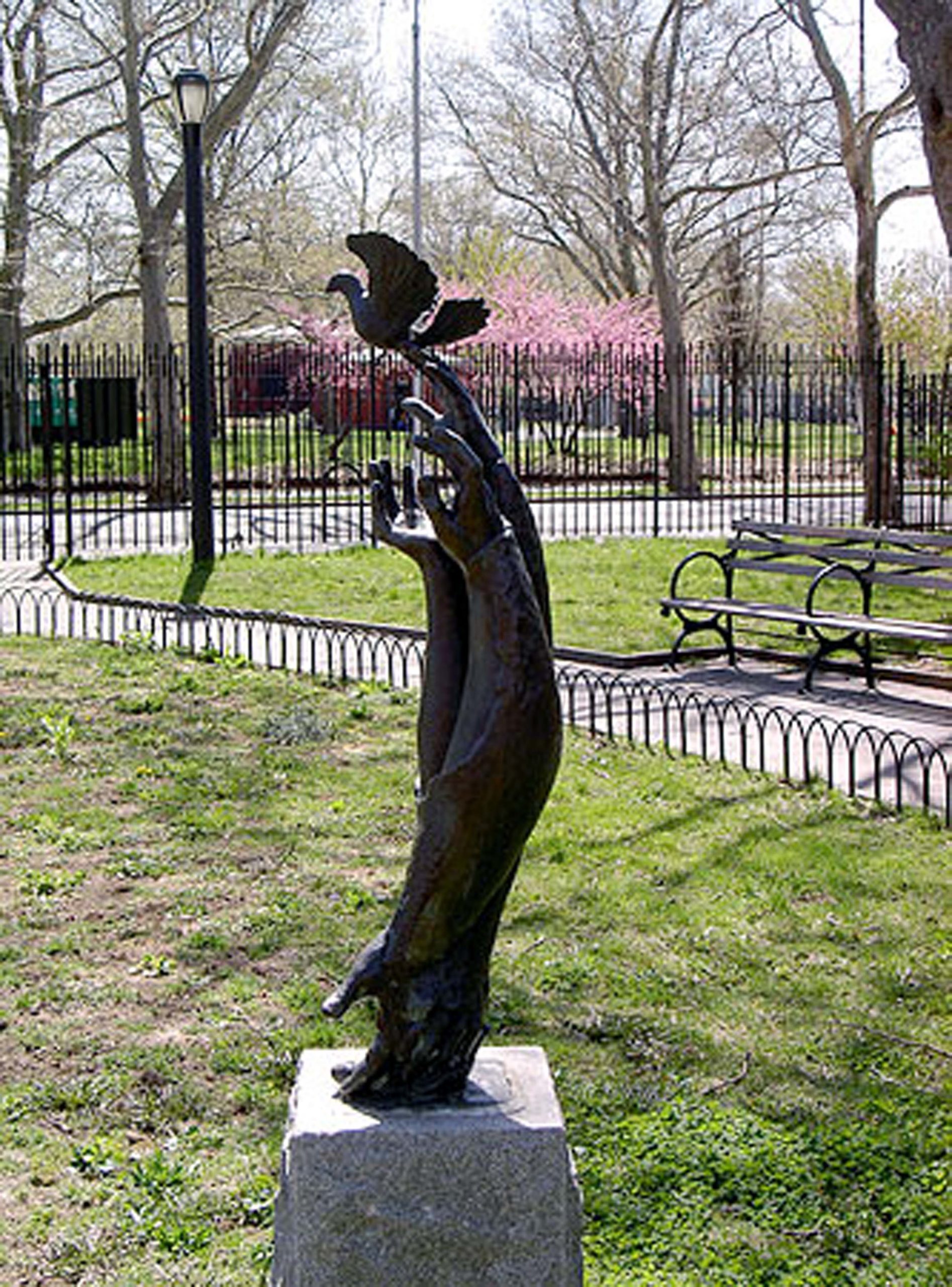
Imagine strolling through a sun-dappled park, where the air hums with the laughter of children and the rustle of leaves. Your gaze drifts upward, drawn to a towering bronze figure, its contours catching the light like liquid metal. This is no mere decoration—it’s a public sculpture, a silent storyteller etched in space and time. But as you marvel at its grandeur, a question lingers, unspoken yet profound: Who truly owns the rights to this silent sentinel? The answer isn’t as straightforward as you might think, and it’s a revelation that could reshape how you see the art that surrounds you every day.
The world of public art is a labyrinth of creativity, law, and unspoken agreements. Sculptures in parks aren’t just aesthetic embellishments; they’re cultural landmarks, historical markers, and sometimes, the subject of fierce legal battles. The copyright of these three-dimensional marvels is a topic that dances on the edge of intellectual property, public domain, and the very soul of artistic expression. To understand who holds the reins of these artistic titans, we must first peel back the layers of history, law, and intent that define their existence.
The Birth of Public Sculpture: A Marriage of Art and Accessibility
Public sculptures have roots that stretch back to antiquity, when monuments were erected to honor gods, rulers, and the collective memory of civilizations. Fast-forward to the modern era, and these artworks have evolved into democratic symbols—open to all, owned by none, yet claimed by many. The very essence of public art is its accessibility; it’s meant to be seen, touched (sometimes), and experienced by anyone who passes by. But this openness creates a paradox: How do you protect the rights of the artist while ensuring the public’s right to enjoy and share the work?
When an artist creates a sculpture for a public space, they’re often working under a commission or a grant. The terms of these agreements can vary wildly. Some contracts stipulate that the artist retains full copyright, allowing them to control reproductions, derivatives, or even the removal of the piece. Others transfer ownership to the city or institution that commissioned the work, leaving the artist with little more than moral rights—the right to be credited and to object if the work is altered in a way that harms their reputation. This divergence in contracts is where the first cracks in the copyright narrative begin to show.
The Legal Tapestry: Copyright, Moral Rights, and the Public Domain
Copyright law, in its most basic form, grants creators exclusive rights to their work for a limited time. For sculptures, this includes the right to reproduce, distribute, and display the work. But when a sculpture is placed in a public park, the lines blur. Is the park now the “owner” of the sculpture, or does the artist retain control? The answer often hinges on the specifics of the commission agreement, the jurisdiction, and the intent behind the placement of the artwork.
In the United States, for example, the Visual Artists Rights Act (VARA) of 1990 grants artists moral rights, which persist even if the copyright is transferred. These rights include the power to prevent the destruction of the work or its distortion in a way that harms the artist’s reputation. This means that even if a city owns the physical sculpture, the artist may still have a say in its fate. Contrast this with the European Union, where moral rights are perpetual and inalienable, ensuring that artists—or their heirs—retain a degree of control over their work indefinitely.
Then there’s the matter of the public domain. Sculptures created by artists who have been dead for more than 70 years (in most jurisdictions) are no longer protected by copyright, allowing them to be freely reproduced, modified, or even sold. This is why you’ll often see replicas of ancient statues in parks—their copyrights have long since expired, leaving them free for public consumption. But for contemporary works, the story is far more complex, with copyrights often extending for decades beyond the artist’s lifetime.
The Artist’s Dilemma: Control vs. Legacy
For many artists, the decision to place a sculpture in a public space is fraught with compromise. They yearn for visibility, for their work to be seen and appreciated by thousands. Yet, they also fear the loss of control over how their creation is perceived or used. Some artists insist on clauses in their contracts that restrict how the sculpture can be photographed, reproduced, or even moved. Others embrace the idea of their work becoming part of the public’s collective consciousness, even if it means relinquishing some rights.
Consider the case of a sculptor who creates a piece for a city park. The city commissions the work, pays for its creation, and installs it in a prominent location. The artist signs a contract transferring copyright to the city. Years later, the city decides to use an image of the sculpture in a promotional brochure. The artist, now long forgotten by the public, receives no compensation for this commercial use. Is this fair? It depends on who you ask. The city might argue that the sculpture was created for public enjoyment, and its use in promotional materials benefits the community. The artist, however, might see it as a violation of their creative vision.
This tension between control and legacy is at the heart of the copyright debate. Some artists choose to license their works under Creative Commons, allowing free use for non-commercial purposes. Others opt for strict copyright enforcement, ensuring that every reproduction or derivative work is approved—and often monetized. The choice reflects not just legal strategy, but a deeper philosophy about the role of art in society.
The Public’s Stake: Who Really Owns the Art?
At its core, public art belongs to the people. It’s a shared experience, a communal memory, and a visual language that transcends individual ownership. Yet, the legal frameworks that govern these artworks often prioritize the rights of creators, institutions, or even corporations over the public’s right to engage with and reinterpret the work. This raises a critical question: Should the public have a say in how art is used, shared, or even altered?
In some cases, the answer is a resounding yes. Cities and institutions that commission public art often include clauses in their contracts that ensure the work remains accessible and unaltered. They may even encourage community engagement, inviting local artists to contribute to or reinterpret existing pieces. This collaborative approach fosters a sense of ownership among residents, turning passive viewers into active participants in the artistic process.
But not all public art is treated with such reverence. Some sculptures become victims of neglect, vandalism, or even removal due to changing political tides. When this happens, who has the authority to decide the sculpture’s fate? The artist? The city? The public? The answer is rarely clear-cut, and the resulting debates can be as contentious as the artworks themselves.

The Future of Public Sculpture: A New Paradigm?
The digital age has introduced a new layer of complexity to the copyright debate. With the rise of social media, 3D printing, and virtual reality, sculptures can now be shared, replicated, and even reimagined in ways that were unimaginable just a few decades ago. This has led to calls for a reevaluation of how public art is governed, with some advocating for a more flexible, open-source approach to copyright.
Imagine a world where public sculptures are licensed under terms that encourage sharing, remixing, and reinterpretation. Where artists and institutions collaborate with the public to create ever-evolving artworks. Where the line between creator and consumer blurs, and the act of engaging with art becomes a communal experience rather than a transaction. This isn’t a utopian fantasy—it’s a movement that’s already gaining traction in some corners of the art world.
The shift toward open licensing and participatory art isn’t just about convenience; it’s about redefining the relationship between art and society. It’s about recognizing that public art isn’t a static object to be admired from afar, but a living, breathing entity that belongs to everyone. And as technology continues to evolve, so too must our understanding of who holds the copyright—and who truly owns the art.
The next time you find yourself standing before a sculpture in a park, take a moment to consider the invisible threads that connect you to the artist, the city, and the countless others who have passed by this same spot. The copyright of public sculptures isn’t just a legal technicality—it’s a reflection of our values, our aspirations, and our shared humanity. And perhaps, just perhaps, it’s time we reimagined what it means to own—and to belong to—something truly extraordinary.


Leave a Comment