

In the ever-evolving panorama of contemporary art, few figures exert an influence as transformative and compelling as Koyo Kouoh. Her trajectory transcends the conventional boundaries of curatorship, weaving a narrative that challenges entrenched paradigms and redefines artistic legacies. As the upcoming Venice Art Biennale 2026 unveils its theme under her discerning eye, it becomes clear that Kouoh’s legacy is not merely about exhibiting art; it is about orchestrating a profound shift in perspective—an invitation to listen closely to the understated, to the nuances, the minor chords that reverberate beneath dominant cultural melodies.
Reimagining Art History: The Power of a Minor Key
Art history, long dominated by a chorus of celebrated voices and canonical perspectives, is poised on the cusp of a renaissance. Koyo Kouoh’s curatorial vision dares to spotlight the subtle inflections and overlooked narratives that have historically been relegated to the margins. This “minor key” approach is anything but diminutive—instead, it acts as a transformative mechanism to recalibrate the cultural discourse. By centering less heard stories and artists from varied geographies, especially from the African continent, Kouoh invites a polyphonic dialogue that disrupts singular interpretations.
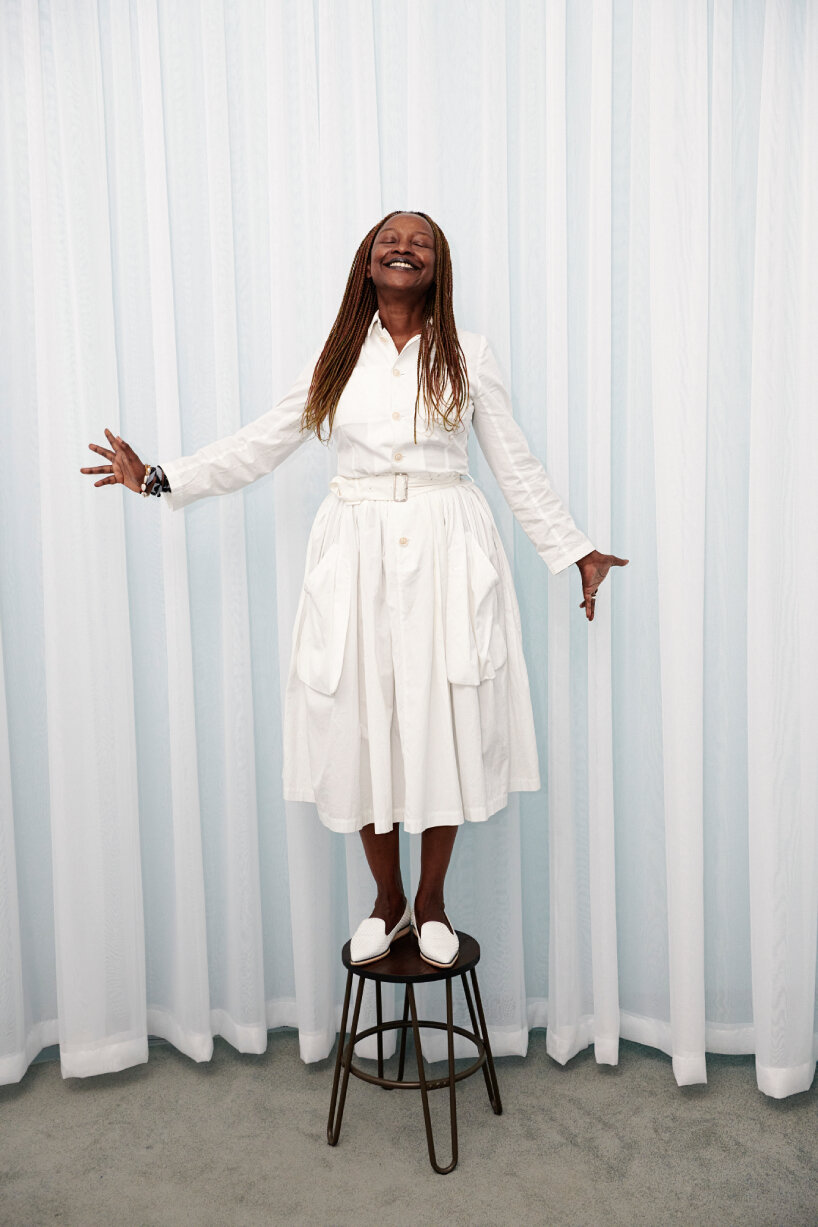
Her work embodies a visionary paradigm where the “minor” is not a background note but an essential voice—a pivot around which new narratives rotate. This strategy challenges the hegemony of Western art histories and fosters a more inclusive, multifaceted understanding of cultural production.
Championing Underrepresented Voices
At the heart of Koyo Kouoh’s philosophy lies a relentless commitment to amplifying voices seldom heard on the global art stage. Having built reputable institutions and curated seminal exhibitions across continents, she situates herself as an advocate for artists who interrogate identity, memory, and postcolonial realities. Kouoh’s methodology is not about mere inclusion but about interweaving these perspectives to fundamentally recalibrate global art discourses.

Her curatorial choices demonstrate an exhilarating refusal to accept superficial diversity. Instead, she magnifies the complexities of diaspora, hybridity, and cultural resilience, ensuring that art becomes a vessel for nuanced storytelling rather than stereotypical representation. Every exhibition she curates is a crucible of sociopolitical engagement, engaging audiences not only visually but intellectually and emotionally.
A New Cultural Cartography: Decolonizing the Art World
Kouoh’s legacy is inseparable from her dedication to decolonizing art institutions and narratives. Through her visionary leadership, she reconfigures where and how power operates within the art world. Heritage, aesthetics, and authority are interrogated through her lens, opening spaces for marginalized histories to surface and thrive. This decolonial impulse reverberates through her selections, often privileging artworks that disrupt normative visual languages and question systems of exclusion.
Her approach conjures what could be termed a “cultural cartography” that re-maps the lineage of contemporary art, centering voices from Africa and its diaspora as central rather than peripheral. This cartography not only revises historical omissions but also challenges the hierarchical structures of museums, academies, and biennales themselves.
The Venice 2026 Biennale: Heralding a New Epoch
The announcement of Koyo Kouoh as the curator of the 61st Venice Art Biennale signals a watershed moment. The Biennale, a preeminent global platform, serves as a grand stage where Kouoh’s minor key resonances will echo widely, shifting the conversation toward deeper inclusivity and critical reflection. This edition promises to engage viewers with an intricate symphony of artworks that explore multiplicity in identity, memory, and experience.
The choice of theme—a conceptual invitation to listen and perceive beyond the obvious—embodies Kouoh’s signature aesthetic. It suggests an immersive experience that transcends spectacle and fosters contemplative engagement, prompting audiences to witness the cacophony of histories converging in a shared space.

More than a curator, Kouoh acts as a conductor, deftly assembling dissonant yet harmonious elements that challenge spectators to rethink artistic value and cultural authority. The Biennale under her stewardship will no doubt be a landmark event, one that reaffirms art’s capacity to incite transformation and renewal.
Legacy and the Horizon Beyond
Koyo Kouoh’s work is a beacon for future generations of artists, curators, and audiences alike. Her legacy entails more than exhibitions; it is a foundational shift—a call to embrace complexity, to nurture empathy through diverse artistic expressions. In championing a minor chord, she has re-tuned the cultural ear to hear the full spectrum of human creativity, fostering a resonance that is rich, layered, and profoundly human.
As the art world prepares for the seismic shifts inspired by her vision, one is left with a palpable sense of anticipation. Kouoh’s commitment to rewriting art history assures that the future will be marked by plural narratives, poignant dialogues, and an unyielding quest for authenticity and justice within the arts.
This unfolding narrative is not merely about change—it is about reawakening. It encourages us all to listen carefully, beyond the usual melodies, to discover the profound beauty and urgency embedded in the world’s minor keys.


Leave a Comment