

What if the very fabric of our emotions and perceptions in 2026 could be distilled into shards—fractured yet strangely cohesive—each fragment telling a story of collective unease and digital disarray? Fragmented collage, as a visual language, emerges as an exquisite metaphor and medium for expressing the kaleidoscopic anxiety pulsing through society today. This art form, with its jagged juxtapositions and fragmented symmetries, beckons us to question: can disjointed imagery truly convey the unified emotional landscape of contemporary life, or does it risk amplifying our shared disquiet?
The Aesthetic of Disjunction: Why Fragmented Collage Captures Modern Anxiety
At the heart of fragmented collage lies a deliberate rupture—a tension between what is whole and what is broken. The visual discontinuities mimic the fractured reality we inhabit: fragmented relationships, interrupted narratives, and disintegrating certainties. This aesthetic disjunction resonates deeply with the pervasive anxiety that colors our daily experience in 2026. Unlike traditional collages’ harmonious amalgamation, these artworks revel in their splintered nature, mirroring the hyperconnected yet atomized digital age. Each jagged piece contrasts yet converses with its neighbor, much like conflicting thoughts firing simultaneously in an overstimulated mind.

These fractured visuals provoke a visceral reaction, challenging the viewer’s instinct to seek continuity and order. The sense of disorientation is not accidental; it is the essence of the message. Anxiety is rarely linear or neatly contained, and fragmented collage thrives in that ambiguous space, making visible the invisible tensions haunting the collective psyche.
Digital Narratives in Pieces: The Intersection of Technology and Fragmentation
In 2026, the digital medium breathes new life into fragmented collage, transforming it into a dynamic, multimedia tapestry of layered realities. The limitless scope of digital tools allows artists to splice, reanimate, and distort visual elements with unprecedented precision and freedom. This technological symbiosis encourages a flurry of simultaneity—multiple temporal layers coexist, echoing the ceaseless influx of notifications, media, and misinformation that bombard the mind each day.

The challenge here lies in navigating this overload: how does one find coherence—or is coherence even desirable? The inverted mirror of the fragmented collage forces us to embrace the complexity and multiplicity of our realities, compelling us to rethink singular narratives in favor of multifaceted truths. The collage becomes a visual palimpsest, where disparate elements refuse to fade but instead assert conflicting claims on our attention and understanding.
Psychological Resonance: Emotional Dichotomies and Visual Metaphors
Fragmented collage owes its potency not just to aesthetic rupture, but to its psychological resonance as a conduit for emotional turbulence. The sporadic layering of disparate images functions like a cognitive montage, reflecting the internal disarray reminiscent of anxiety’s grip. It embodies paradoxes—beauty amidst chaos, clarity in confusion—that invoke the emotional ambivalence gripping so many in this epoch.
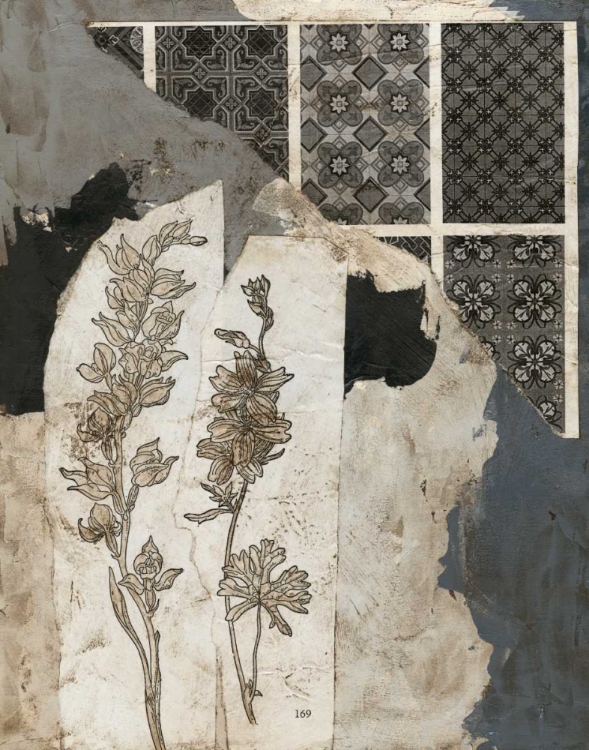
In this fragmented visual language, negative space becomes just as eloquent as the collaged pieces bursting into existence. It is a territory where absence speaks volumes and the interruptions in image flow conjure the fissures within human experience. Viewers find themselves oscillating between empathy and estrangement, confronting their anxieties through the mirror shards scattered before them.
The Challenge of Interpretation: Does Fragmented Collage Obscure or Illuminate?
By its very nature, fragmented collage resists facile interpretation. This ambiguity presents an intriguing challenge: can this visual approach simultaneously obscure meaning and offer profound illumination? The answer may lie in the participatory nature of contemporary art consumption. Fragmented collage invites active engagement; meaning is not dictated but co-created by the beholder grappling with incomplete narratives.
This democratization of interpretation aligns uniquely with the zeitgeist of 2026, where filtered realities and personalized media consumption shape individual worldviews. The collage mirrors our reality’s construction—not a singular truth but an assemblage of experiences and perspectives layered like torn fragments waiting to be pieced together. In doing so, it pushes us to question the coherence we seek in our discourse—and whether fragmentation might actually be the most authentic representation of our fractured world.
Fragmentation as Play: Finding Liberation in Chaos
Amid the dissonance, fragmented collage offers another, perhaps unexpected, invitation: play. The arrangement and rearrangement of elements mimic the spontaneity of thought, the improvisation of memory, and the serendipity of poetic association. This playfulness tempers anxiety’s severity, suggesting that fragmentation can lead to creative liberation rather than paralysis.
Could embracing fragmentation be a means of survival—a way to navigate the overload of stimuli and emotions swirling around us? Instead of imposing order, fragmented collages celebrate the fugitive, the ephemeral, and the incomplete. The potential challenge becomes not to mend the broken pieces into a seamless whole but to revel in their disarray, finding beauty precisely in their divergence.
Thus, fragmented collage emerges not just as an artistic expression but as a philosophical stance—one that invites us to reconceive anxiety not as something to be eradicated but as a condition to be understood, felt, and perhaps even embraced.
In the visual lexicon of 2026, fragmented collage speaks eloquently and urgently. It asks us to lean into uncertainty, decode the fractured signals of our times, and recognize that within dissonance lies a profound, if challenging, truth. Will we accept this fractured mirror and see ourselves reflected in all our complexity, or will we turn away, uncomfortable with the shards? The choice, like the art, remains a dynamic assemblage of possibilities.


Leave a Comment