

In the vibrant, unpredictable world of contemporary art, a particular genre demands a profound recalibration of the way we perceive value: the chaoticist market. At first glance, these pieces appear as if born from frantic brushstrokes, accidental drips, or haphazard collages. They flirt with disorder, sometimes mimicking mistakes with an almost defiant bravado. Yet beneath this apparent anarchy lies an intricate dance of intentionality and conceptual depth. How does one price an artwork that feels like a mistake? Welcome to an exploration that promises to disrupt conventional notions of worth and beauty.
The Aesthetics of Chaos: Embracing the Unruly
Chaoticist art challenges the very foundations upon which traditional aesthetics stand. Unlike classical paintings where form and precision reign supreme, these artworks revel in exuberant disorder. Imagine a bustling marketplace bauble — colors collide without restraint, shapes overlap without clear definition, and subjects morph into fleeting memories. This deliberate embrace of unpredictability forces us to question what we deem as ‘errors’ versus what might be vital expressions of spontaneity and emotion.
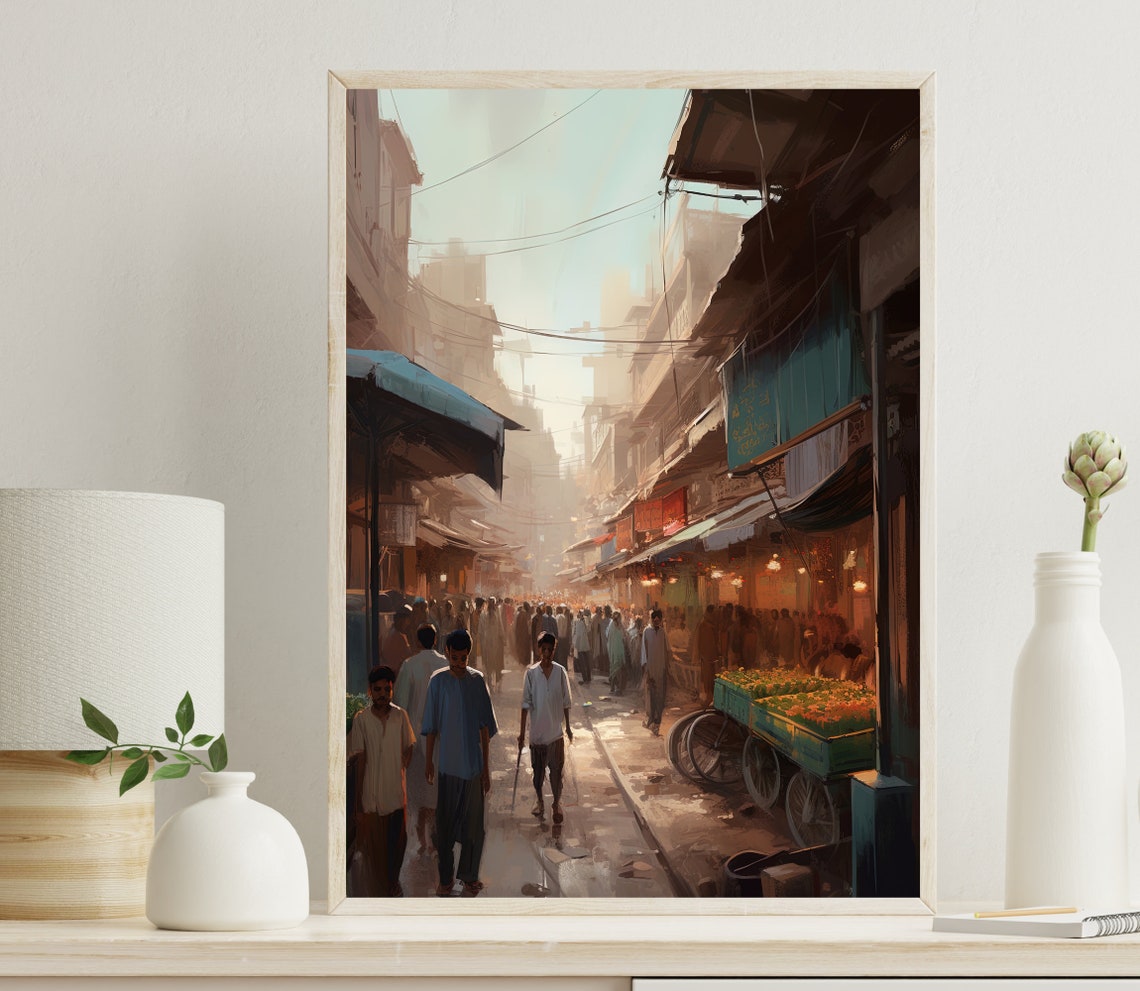
The market scene in Lahore, a jigsaw of vibrant chaos, exemplifies this philosophy. The cacophony of colors and overlapping figures mirrors the real-world frenzy, yet it is entirely choreographed within the artist’s vision. Here, chaos is not a flaw; it is a deliberate compositional strategy that brings life and kinetic energy to the canvas.
Pioneering a New Lens: The Psychology Behind Perceiving Mistakes as Art
Our brains are hardwired to seek order and symmetry, finding comfort in patterns and predictability. When confronted with chaoticist art, this predilection is upended. The mind encounters ambiguity—at times bewildering, sometimes invigorating. The initial reaction might be perplexity, even dismissal. Yet, as viewers acclimate, the disorder evolves into a stimulus for deeper introspection.
This cognitive dissonance becomes a conduit for discovery. The artist, through perceived ‘mistakes,’ invites a dialogue between the viewer’s expectations and the canvas’s unpredictability. These ‘errors’ disrupt passive consumption and compel active engagement, transforming aesthetic confusion into intellectual curiosity.
Market Mechanics: Pricing the Intangible
When the tangible precision of form gives way to chaotic abstraction, how does one assign monetary worth? Pricing such artwork transcends traditional metrics like technical mastery or realistic accuracy. Instead, value is often extrapolated from its conceptual resonance, emotional impact, provenance, and the artist’s cultural narrative.
In chaoticist markets, buyers often invest not just in what the eye perceives but in the cryptic universe the piece represents. The ‘price tag’ becomes an emblem of the artwork’s disruptive capacity—its potential to provoke, unsettle, and redefine norms. It is a reflection of scarcity, demand, and the intangible aura of originality.

Consider the bustling market scenes from Lagos, a riotous landscape teeming with life and layered narratives. Such artworks command value because they encapsulate a specific zeitgeist, cultural vibrancy, and a snapshot of human unpredictability—all elements that resist commodification yet enrich the price with their rare authenticity.
The Role of Narrative: Context as Currency
In chaoticist art, the story behind the creation often holds as much weight as the piece itself. Who is the artist? What inspired the seemingly erratic strokes? What cultural or social upheavals swirl beneath the surface? Collectors and critics gravitate toward works embedded with narratives that resonate deeply or illuminate hidden societal contours.
In effect, the narrative operates as a form of currency analogous to provenance in classical art. It amplifies desirability and legitimizes the chaos. The more compelling the tale—whether it’s a personal struggle, a political statement, or an abstract conceptual experiment—the higher the artwork ascends in value.
Challenging Collectors: The Embrace of Risk and Subjectivity
Acquiring a chaoticist piece is not a passive transaction but an act of embracing ambiguity. Collectors embark on a journey guided more by intuition than by formulaic appraisal. They accept the risks of investing in art that defies conventional appraisal metrics and may alienate mainstream audiences. This makes the chaoticist market particularly vibrant but volatile.
Yet, therein lies its allure. For the aficionado, owning such artwork is akin to stewarding a living conversation on modernity, creativity, and the human condition. It is less about possessing a flawless gem and more about championing a disruptive force that expands artistic paradigms.
Conclusion: Recalibrating Our Perception of Art and Value
The chaoticist market offers an exhilarating challenge to our ingrained perceptions of art, mistakes, and pricing. It urges us to peel back layers of assumption and acknowledge that beauty and worth may coexist in disorder, spontaneity, and seeming imperfection. Pricing such art is less about exactitude and more about embracing a spectrum of subjective truths.
In this marketplace of organized chaos, every stroke that looks like a mistake is a deliberate proposition—a vibrant manifesto that compels us to transform skepticism into wonder, confusion into clarity, and randomness into resonance. To engage with chaoticist art is to embark on an odyssey where the extraordinary blossoms from the unpredictable, reminding us that sometimes, the greatest treasure lies in what initially appears to be a flaw.


Leave a Comment