

The Venice Biennale’s “Chaoticist” National Pavilions: A Tapestry of Unpredictability and Innovation
Every two years, the Venice Biennale transforms the floating city into a crucible of artistic experimentation, where nations curate pavilions that oscillate between sublime coherence and delightful disarray. The 2024 edition, in particular, has embraced a “Chaoticist” ethos—an unapologetic celebration of controlled chaos, where boundaries blur between architecture, performance, and immersive storytelling. This year’s pavilions are not mere exhibitions; they are labyrinthine odysseys, each a microcosm of cultural identity rendered through fractured narratives and sensory overload. For the discerning art enthusiast, the Venice Biennale is no longer a passive viewing experience but a full-bodied engagement with the unpredictable. Here’s what to expect when stepping into these pavilions of controlled pandemonium.

Architectural Alchemy: Where Structures Dissolve into Experience
The National Pavilions at the Venice Biennale have long been battlegrounds for architectural bravado, but this year, the discipline itself is under siege. Architects are no longer content with static structures; they are dismantling them, repurposing them, and reimagining them as vessels for ephemeral encounters. The Turkish Pavilion, for instance, presents a “floating ruin”—a skeletal framework suspended above the lagoon, its rusted beams echoing the city’s own decay while simultaneously defying it. Visitors navigate this precarious marvel via a series of catwalks that sway with the tide, turning the act of viewing into a vestibular challenge. It’s architecture as performance, where the building itself becomes a participant in the chaos.
Meanwhile, the Spanish Pavilion has embraced a “liquid architecture” approach, with walls that undulate like water and floors that shift underfoot. The space is designed to disorient, its fluid forms reflecting the Biennale’s broader theme of uncertainty. Here, the traditional white cube is nowhere to be found; instead, visitors are enveloped in a sensory environment where light, sound, and movement coalesce into an immersive dreamscape. The message is clear: in a world of increasing instability, art must mirror the fragmentation of modern existence.
Narrative Collisions: Stories That Unravel and Reassemble
If the pavilions’ architectures are chaotic, their narratives are even more so. Gone are the days of linear storytelling. This year’s exhibitions thrive on fragmentation, juxtaposition, and the deliberate erasure of context. The German Pavilion, for example, presents a “non-linear archive” where historical artifacts are scattered across the space, their origins obscured by cryptic labels and shifting projections. Visitors are left to piece together narratives that refuse to cohere, a deliberate rejection of the Biennale’s traditional role as a repository of national identity.
The Italian Pavilion takes this approach further with a “reverse archaeology” installation, where modern objects are buried beneath layers of faux-historical debris. The effect is disorienting: a 21st-century smartphone lies half-buried in what appears to be ancient Roman ruins, its screen flickering with contemporary advertisements. The curators argue that this collision of time periods reflects Italy’s own cultural schizophrenia—a nation simultaneously obsessed with its past and intoxicated by the present. It’s a provocative statement, one that forces visitors to question how history is constructed and who gets to define it.
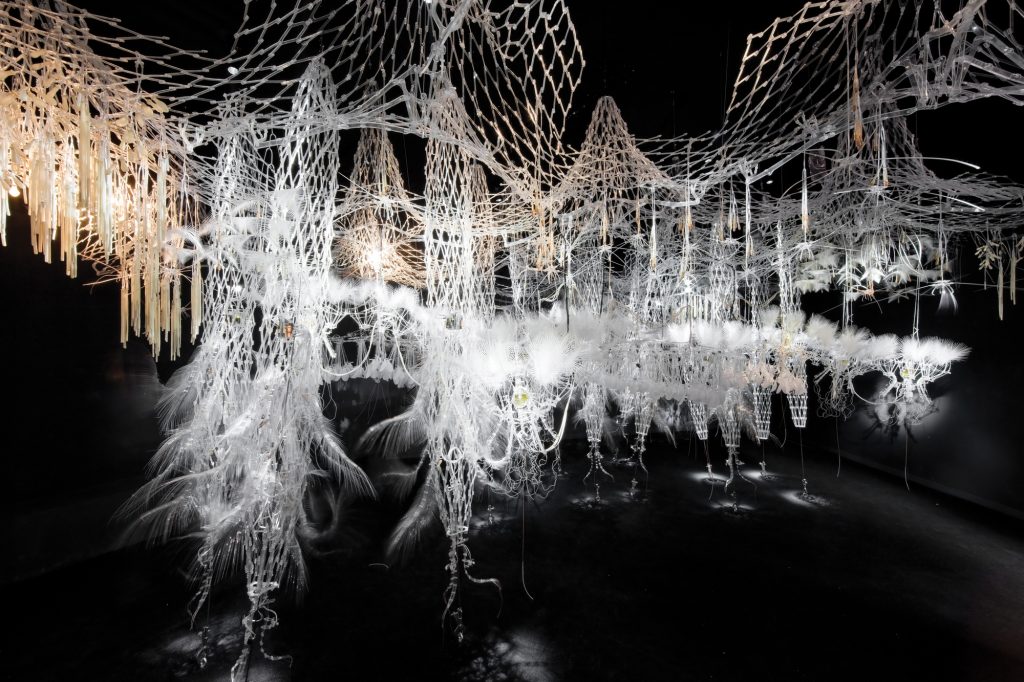
Immersive Provocations: When Art Demands Participation
The most memorable pavilions are those that refuse to be passive. This year’s Biennale is rife with works that demand engagement, whether physical, emotional, or intellectual. The Brazilian Pavilion, for instance, features a “participatory archive” where visitors are invited to contribute their own stories to a growing digital collage. The result is a living, breathing tapestry of voices that evolves with each new participant. It’s a radical democratization of art, one that challenges the Biennale’s traditional top-down structure.
The Nordic Pavilion, meanwhile, presents a “silent disco” of sorts, where visitors don wireless headphones and are transported into a soundscape that shifts based on their location within the space. The audio is a mix of archival recordings, ambient noise, and original compositions, creating an aural labyrinth that mirrors the Biennale’s visual chaos. The effect is mesmerizing—a reminder that art doesn’t always need to be seen to be felt.
For those seeking a more visceral experience, the Japanese Pavilion offers a “body horror” installation where visitors are strapped into harnesses and suspended above a pit of writhing, mechanized sculptures. The works, which resemble grotesque hybrids of human and machine, move in erratic patterns, their metallic limbs clanking against the floor. It’s a disquieting spectacle, one that forces viewers to confront their own discomfort with the uncanny. The curators describe it as a meditation on the dehumanizing effects of technology—a theme that resonates in an era of AI and algorithmic control.
Political Undercurrents: Art as a Weapon of Subversion
No discussion of the Venice Biennale would be complete without acknowledging its role as a stage for political dissent. This year’s pavilions are no exception. The Palestinian Pavilion, for instance, presents a “ghost archive” of objects and documents related to the Nakba, the 1948 displacement of Palestinians. The installation is deliberately sparse, with artifacts displayed in a way that evokes both reverence and erasure. The message is unmistakable: history is not a static monument but a living, contested narrative.
The Ukrainian Pavilion, in contrast, embraces a more confrontational approach. Its centerpiece is a massive, cracked mirror that reflects the Biennale’s Grand Canal, its surface marred by bullet holes. The work, titled “Fractured Reflection,” is a visceral response to the ongoing war, a reminder that even in the heart of Europe, violence is never far away. The curators describe it as a “wound in the landscape,” a deliberate rupture in the Biennale’s otherwise polished facade.
The Biennale as a Mirror: Reflecting the World’s Fractures
What emerges from this year’s Biennale is a portrait of a world in flux—a place where certainties crumble and new forms of expression rise from the rubble. The “Chaoticist” pavilions are not just exhibitions; they are interventions, designed to disrupt, provoke, and unsettle. They challenge visitors to embrace the discomfort of uncertainty, to find beauty in fragmentation, and to recognize that art is not a refuge from chaos but a lens through which to examine it.
For the first-time visitor, the Biennale can feel overwhelming. The sheer volume of work, the density of ideas, the relentless sensory stimulation—it’s enough to induce a kind of artistic vertigo. But that’s precisely the point. In a world that often feels like it’s spinning out of control, the Venice Biennale offers a space where chaos is not just tolerated but celebrated. It’s a reminder that creativity thrives in the cracks, that innovation emerges from the collision of disparate ideas, and that the most powerful art is often the kind that refuses to be tamed.
So step into the fray. Let the pavilions disorient you. Let the narratives unravel. Let the architectures challenge you. In the end, you might just find that the chaos is where the magic happens.


Leave a Comment