

Why does the most radical art movement of our decade hide in plain sight, disguised as a fleeting notification or a misdelivered text? What if the true disruptors aren’t the artists in white cube galleries, but the algorithms that hijack our attention, the memes that derail our focus, and the strangers who suddenly appear in our Zoom calls? Welcome to the era of Human Interruption—a movement so pervasive, so subversive, it doesn’t need a manifesto or a museum. It just needs you to glance at your phone.
Imagine, for a moment, that interruption isn’t the enemy of creativity—it’s its most potent collaborator. What if the jarring ring of a phone during a concert isn’t a disruption but a new kind of symphony? What if the pop-up ad for socks midway through your deep work session is the modern equivalent of a Duchampian readymade? Human Interruption doesn’t just challenge art; it weaponizes distraction, turning the chaos of modern life into a canvas where spontaneity reigns supreme. This isn’t just an art movement. It’s a rebellion against the tyranny of uninterrupted focus—a movement that asks: What if the most profound art isn’t created, but stumbled upon?
The Aesthetics of Disruption: Why Interruptions Are the New Avant-Garde
Art has always been a conversation between creator and audience, but Human Interruption flips the script. It doesn’t wait for an invitation. It barges in unannounced, armed with a meme, a typo in a text, or the sudden realization that your to-do list is a lie. This movement thrives on controlled chaos, where the artist isn’t the one holding the brush, but the one who rigs the easel to collapse mid-stroke.
Consider the ambient interruption—those moments when life inserts itself into art without permission. A child’s laughter bleeding into a gallery’s silence. A power outage during a performance, turning the stage into a shadow play. These aren’t accidents; they’re deliberate acts of artistic sabotage. The Surrealists dreamed of automatism; Human Interruption delivers it via autocorrect. The Dadaists sought to dismantle meaning; this movement dismantles attention itself, forcing us to confront the fragility of our own focus.
Take, for example, the phenomenon of digital déjà vu—when an ad for a product you just thought about appears on your screen. Is this a glitch in the matrix or a masterstroke of modern art? Human Interruption doesn’t just acknowledge these moments; it elevates them. It turns the uncanny valley of targeted advertising into a meditation on consumerism, or the endless scroll of social media into a performance piece about dopamine addiction. The artist’s role? To curate the chaos, to frame the interruption as the main event.
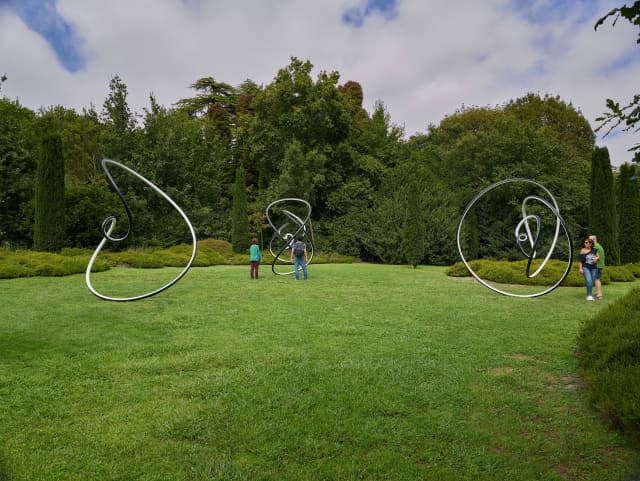
In this movement, the gallery isn’t a white cube—it’s your phone’s lock screen. The masterpiece isn’t a painting; it’s the notification that makes you drop everything. The curator isn’t a person; it’s the algorithm that decides which interruption deserves your attention. Human Interruption doesn’t just challenge art’s boundaries; it erases them, replacing the sacred with the serendipitous.
The Paradox of Attention: Can We Love Interruption Without Losing Ourselves?
Here lies the movement’s most delicious paradox: It demands our attention while simultaneously mocking our inability to hold it. Human Interruption is both a love letter to distraction and a cautionary tale about its cost. It asks us to embrace the flicker of a screen in a dark room, the buzz of a phone in a quiet café, the sudden urge to abandon a task for something shinier. But it also whispers a warning: What happens when we can no longer tell the difference between art and algorithm?
This isn’t just an aesthetic dilemma—it’s an existential one. In a world where every ping is a potential masterpiece, how do we decide what’s worth our gaze? The movement’s answer? You don’t. You surrender. You let the interruption choose you, rather than the other way around. It’s a radical act of trust in the chaos, a rejection of the curated life in favor of the unplanned.
But there’s a catch. Human Interruption isn’t democratic. It favors those who are already drowning in notifications, those whose attention spans are shorter than a TikTok video. It’s an art form for the overstimulated, the multitaskers, the people who check their phones before they check their own thoughts. For the rest of us, it’s a gentle (or not-so-gentle) nudge toward surrendering to the algorithm’s whims.
Consider the interruption economy, where every notification is a transaction. Your attention is the currency, and the artists of this movement are the brokers, the influencers, the meme lords who profit from your inability to look away. Is this exploitation? Or is it the purest form of performance art, where the audience is both the performer and the victim?
Human Interruption forces us to confront a terrifying truth: We are the art. Our distracted scrolling, our half-finished thoughts, our sudden urges to abandon everything for a viral video—these aren’t flaws in our humanity. They’re the raw materials of a new aesthetic. The question isn’t whether we can resist the interruption. It’s whether we can recognize it as art before it’s too late.
The Unlikely Heroes of Human Interruption: Memes, Algorithms, and the Stranger in Your DMs
If Human Interruption has a pantheon, its saints aren’t painters or sculptors. They’re the anonymous architects of the internet’s chaos—the meme creators who weaponize absurdity, the engineers who design apps to hijack our focus, the strangers who send you a text at 3 AM just to see if you’ll reply. These are the true disruptors, the ones who understand that art isn’t something you hang on a wall. It’s something that happens to you.
Take the meme, for instance. A meme isn’t just a joke—it’s an interruption in the fabric of reality. It appears unannounced, demands your attention, and then vanishes before you can fully process it. It’s the perfect embodiment of Human Interruption: fleeting, disruptive, and impossible to ignore. The meme artist doesn’t create meaning; they hijack it, bending it to their will before tossing it back into the void.
Then there’s the algorithm—the invisible hand that decides which interruption deserves your time. It’s the modern-day curator, the gatekeeper of chaos, the one who decides whether your next scroll will be a rabbit hole of enlightenment or a spiral of doom. The algorithm doesn’t just predict your desires; it manufactures them, turning every ping into a potential masterpiece.
And let’s not forget the stranger in your DMs—the unsolicited message that derails your evening, the typo-riddled text that makes you laugh, the voice note that arrives at the worst possible moment. These are not just interruptions; they’re collaborations. The sender may not even realize they’re participating in an art movement, but they are. Every unanswered message, every ignored call, every accidental like is a brushstroke in the grand canvas of Human Interruption.

The heroes of this movement aren’t the ones who seek the spotlight. They’re the ones who lurk in the shadows, the ones who understand that the most powerful art isn’t seen—it’s felt. It’s the jolt of a phone vibrating in your pocket. It’s the sudden urge to abandon everything for a viral tweet. It’s the realization that you’ve spent the last hour scrolling through nothing, and yet, somehow, it felt like everything.
The Future of Human Interruption: Will We Survive the Masterpiece?
As Human Interruption evolves, it’s not just an art movement—it’s a cultural reckoning. It’s the inevitable collision between human creativity and machine-driven chaos, a moment where the two can no longer be disentangled. The question isn’t whether this movement will last. It’s whether we’ll be able to recognize it before it consumes us.
Already, we see its tendrils creeping into every corner of our lives. The rise of micro-interruptions—those tiny, almost imperceptible pings that keep us tethered to our devices. The aestheticization of doomscrolling, where the act of consuming bad news becomes a form of performance art. The glorification of multitasking, where the ability to juggle five things at once is mistaken for productivity.
But here’s the twist: Human Interruption isn’t just a product of the digital age. It’s a reflection of something far older—a fundamental truth about human nature. We’ve always been drawn to disruption. We’ve always craved the unexpected. The only difference now is that the unexpected has a pulse, a voice, a presence that demands our attention.
So what’s next? Will Human Interruption fade into the background, becoming just another footnote in the annals of art history? Or will it evolve into something even more radical—a movement that doesn’t just interrupt our lives, but rewrites them? Perhaps the ultimate act of Human Interruption is the one we perform on ourselves: the decision to embrace the chaos, to let the interruptions guide us, to surrender to the beauty of the unplanned.
In the end, Human Interruption isn’t just an art movement. It’s a mirror. It reflects our fears, our desires, our inability to sit still. It asks us to confront the chaos within us and around us, to find meaning in the mess. And maybe, just maybe, it’s the first movement that doesn’t just challenge art—but becomes it.
The question isn’t whether you’ll be interrupted today. It’s whether you’ll recognize the interruption when it arrives.


Leave a Comment