

Like a whispered secret lost between the folds of a dream, the resurgence of the surrealist movement in recent years finds an unlikely harbinger in the evocative work titled In Minor Keys. This collection, resonating with enigmatic chords and veiled imagery, has done more than merely echo the eccentric imaginations of the early 20th-century surrealist pioneers—it has rekindled the very essence of surrealism, awakening dormant creative spirits and enticing a new generation towards the labyrinthine wonder of the subconscious mind.
The Haunting Refrain of “In Minor Keys”
At its core, In Minor Keys is akin to a sonorous elegy played softly on a piano whose keys are dipped in twilight shadows. It captures the profound melancholy and mystique that surrealism so often conveys, yet it does so with a novel cadence that reverberates with contemporary relevance. This creative opus is an intricate tapestry woven from subtle dissonances, a chiaroscuro of emotions that seduce and confound. Its allure is not immediate; rather, it beckons the observer into a slow dance with ambiguity, where perception folds over itself like origami shaped by dreams.
This mesmerizing quality grants it a unique appeal—like a secret passage concealed behind an ordinary wall—inviting exploration beneath its surface. The way In Minor Keys conjures feelings of nostalgia and uncanny wonder demonstrates how metaphorical language and suggestive imagery become gateways to an altered realm of experience. Here lies an artistic echo chamber where memory, fantasy, and intuition intertwine in perpetual interplay.
Reviving Surrealism: A Dialogue Between Past and Present
Surrealism, the audacious avant-garde movement born out of the chaos of early 20th-century Europe, has always thrived on fostering a dialogue between the conscious and unconscious, reality and dream. It employed striking, often jarring images to reveal the hidden workings of the psyche. With the advent of In Minor Keys, these foundational themes have been re-examined and re-contextualized through fresh creative lenses.
The work acts as a prism, fracturing traditional surrealist motifs—melting clocks, enigmatic figures, labyrinths—into newly fantastic configurations. It is as if a surrealist maestro were composing a symphony for a world steeped in digital immediacy and existential complexity. The revival inspired by In Minor Keys does not seek to replicate surrealism’s past glories; it rather amplifies its spirit of unbounded imagination and subversion.
This reawakening serves as a bridge, connecting the pantheon of historic surrealist giants with contemporary artists who are reinterpreting the movement’s legacy through the kaleidoscope of present-day anxieties and hopes.
Unpacking the Unique Appeal: Beyond the Surface of Dreams
What makes In Minor Keys distinctly compelling is its ability to manifest the ineffable—the intangible flickers of consciousness that evade straightforward representation. It crafts powerful metaphors that resonate on an emotional frequency, allowing viewers to embark on inward journeys that are at once personal and universally human.
The work’s carefully calibrated use of ambiguity serves as a catalyst for introspection. It challenges the audience to decipher, to delve beneath the obvious and wrestle with paradox. Like a delicate puzzle whose pieces are reflections of one’s own psyche, it tantalizes with glimpses into the surreal, imparting a sensation akin to entering alternate dimensions suspended in time.
This transcendent magnetism beckons not only admirers of surrealism but also seekers of deeper meaning in art. It embodies a rare alchemy where melancholia coalesces with beauty, and chaos converses with harmony. This potent blend transcends mere aesthetic appreciation, fostering an immersive emotional experience that is both unsettling and strangely comforting.
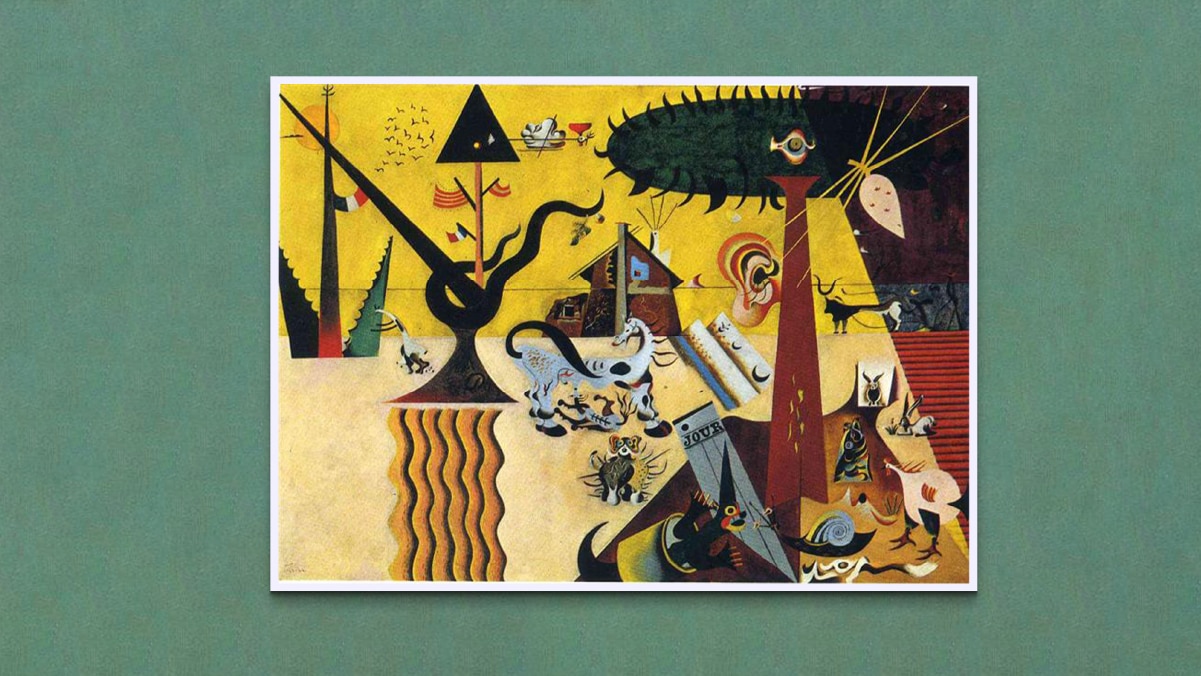
The Surrealist Revival: Catalyzed by “In Minor Keys”
The re-emergence of surrealism, galvanized by the enigmatic lure of In Minor Keys, is not a nostalgic retreat but a progressive evolution. This revival champions experimentation, pushing the boundaries of visual and conceptual expression. Contemporary artists are mining surrealism’s rich metaphorical lexicon to articulate contemporary dilemmas—identity crises, technological alienation, environmental anxieties—with an intensity that mirrors the early surrealists’ rebellious fervor.
Moreover, the metaphorical richness of In Minor Keys functions like a prism that disperses creativity across multiple disciplines: visual arts, literature, music, and even digital media. This cross-pollination fosters a fertile environment where surrealism is continually reimagined, redefined, and reasserted as a vital cultural force.
The movement’s renewed vigor underscores surrealism’s remarkable adaptability and timeless allure, proving that beneath every shadow and hidden corner of the mind, the surrealist flame still flickers, waiting to ignite anew.
The Lingering Echoes and Future Horizons
As the reverberations of In Minor Keys permeate the artistic landscape, they invite reflection on the enduring power of the surrealist impulse. It is a reminder that art is not solely a mirror reflecting reality but a transformative medium capable of reshaping perception itself.
The current revival, embodied by this hauntingly poetic work, signals an exciting horizon where surrealism’s entwined contradictions—reason and madness, clarity and obscurity—converge to produce fresh modes of imaginative expression. The dialogue engendered by In Minor Keys will doubtlessly inspire future creators to explore the shadowy alcoves of the human experience with renewed audacity and insight.
In a world often overwhelmed by the banal and the predictable, this surrealist renaissance offers a portal to mystery, wonder, and profound introspection—a timely reminder that sometimes the most illuminating truths are found in the quiet minor keys of the soul.


Leave a Comment